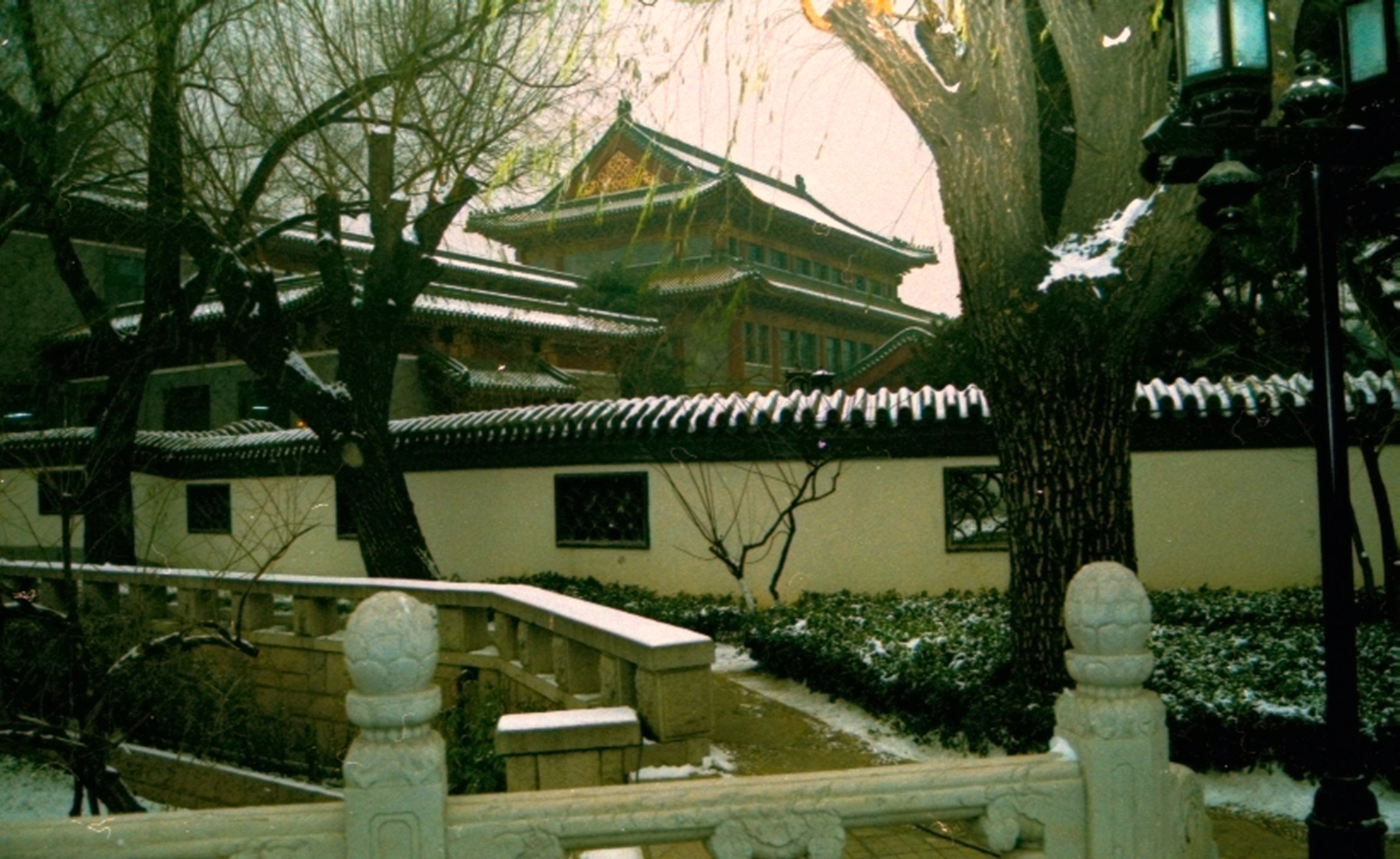
Diaoyutai State Guesthouse
Behind walls that most Beijing residents have never seen beyond lies a garden with roots older than the Forbidden City. The Diaoyutai State Guesthouse takes its name from a fishing platform built by Emperor Zhangzong of the Jin Dynasty more than 800 years ago -- diaoyutai means "fishing terrace" -- and the compound has been a place of imperial leisure, royal gardens, and state power ever since. Today, it is where visiting heads of state sleep, where diplomatic negotiations unfold in rooms decorated with Chinese art, and where some of the most consequential meetings of the 20th century took place behind closed doors.
Eight Centuries of Power and Water
The site's history begins with a Jin Dynasty emperor who liked to fish. Emperor Zhangzong built his platform beside what is now Yuyuantan, a lake whose name means "Jade Spring Pool." During the Qing Dynasty, the Qianlong Emperor ordered the lake dredged and a palace constructed on the grounds, transforming a fishing spot into a royal garden. The modern guesthouse was built between 1958 and 1959, when the government of the People's Republic converted the ancient scenic spot into a facility for visiting dignitaries. The result is a compound where centuries coexist: imperial garden landscapes, mid-century modern architecture, and the tight security of a state facility that hosts presidents, prime ministers, and monarchs.
Where History Was Negotiated
Diaoyutai's most famous moment came in February 1972, when Richard Nixon arrived in Beijing for the visit that would reshape the Cold War. Nixon and his delegation stayed at the guesthouse, and the compound became the backdrop for meetings that led to the Shanghai Communique. Henry Kissinger had already visited secretly the previous year, laying groundwork in the guesthouse's private rooms. Since then, virtually every major state visitor to China has stayed within these walls. The guesthouse has hosted meetings of APEC, bilateral summits, and diplomatic encounters too sensitive for public venues. Its combination of beauty, privacy, and security makes it the preferred setting when China wants to impress while also controlling the environment completely.
A Garden Behind Walls
The compound sits just east of Yuyuantan Park in the Haidian District, southwest of where Fucheng Road meets Sanlihe Road. For ordinary residents, the guesthouse is a presence felt rather than seen: high walls, security checkpoints, black sedans with tinted windows entering and departing. Inside, the grounds remain a classical Chinese garden at heart -- lakes, willows, pavilions, stone bridges -- overlaid with the infrastructure of modern diplomacy: conference rooms, banquet halls, and residential buildings designed to accommodate the specific requirements of state protocol. The compound has also given its name to a commercial brand: the Diaoyutai State Guesthouse has lent its prestige to a luxury hotel chain, extending its name beyond the walls while keeping the original compound reserved for those whose arrivals are noted in diplomatic cables rather than hotel registers.
From the Air
Located at 39.92N, 116.31E in western Beijing's Haidian District, on the east side of Yuyuantan Park. The walled compound is recognizable from the air by its large green grounds amid dense urban development, adjacent to the lake of Yuyuantan. The Central Radio & TV Tower rises nearby to the west. Nearest major airport is Beijing Capital International Airport (ZBAA/PEK), approximately 29 km northeast. Beijing Daxing International Airport (ZBAD/PKX) lies about 47 km south. Note: the compound is a restricted area. Best viewed at 4,000-6,000 ft.