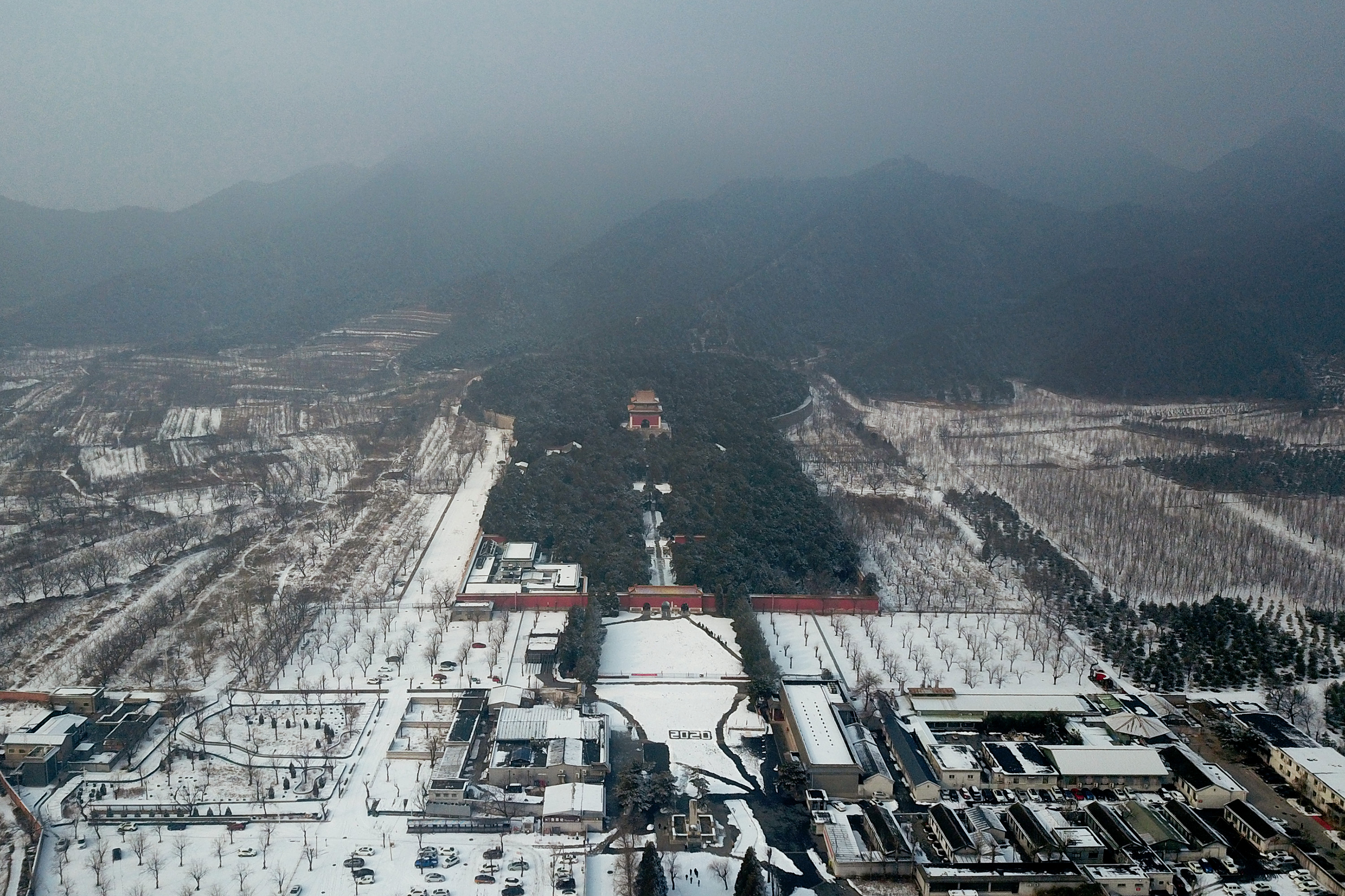
Ding Mausoleum
No imperial tomb in China has been excavated since 1956. The reason is Dingling. What happened inside this 180,000-square-meter mausoleum 45 kilometers north of Beijing, where the Wanli Emperor lay undisturbed for 336 years, became the most influential archaeological disaster in modern Chinese history, a catastrophe so complete that it changed the nation's entire approach to excavating the past.
The Emperor Who Waited Underground
The Wanli Emperor ruled the Ming dynasty for 48 years, from 1572 to 1620, the longest reign of any Ming emperor. He began planning his tomb early: construction of the Dingling started in 1584 and took six years to complete. The mausoleum consists of five underground halls, sunk 27 meters below the surface, occupying a vast subterranean space. Here the emperor was interred alongside his two empresses, Wang Xijie and Dowager Xiaojing, surrounded by the silks, porcelains, and gold that befitted a Son of Heaven. For centuries, no one disturbed them. The Ming tombs were forbidden to commoners during the dynasty, and while Li Zicheng's rebel army ransacked many of the tombs in 1644, Dingling's underground palace remained sealed.
The Experiment That Failed
In the 1950s, the historian and Beijing deputy mayor Wu Han and the scholar Guo Moruo campaigned to excavate Changling, the largest Ming tomb and resting place of the Yongle Emperor. Premier Zhou Enlai approved the plan, but archaeologists objected. Changling was too important to risk. Instead, Wu Han selected Dingling, the third largest tomb, as a trial excavation. Digging began in 1956 and revealed an intact tomb of 1,195 square meters containing more than 3,000 artifacts, including thousands of silk textiles, wood carvings, and porcelain. But the team had neither the technology nor the resources to preserve what they found. Silk was piled into a leaky storage room. Political pressure demanded speed over care, and the excavation report was rushed and incomplete. By 1957, the tomb was open. By 1959, a museum stood over it. And already, the damage had begun.
What the Revolution Consumed
The Cultural Revolution arrived at Dingling in 1966 with the force of ideological fury. Red Guards stormed the museum, dragged the skeletal remains of the Wanli Emperor and his two empresses to the front of the tomb, and subjected them to a posthumous denunciation rally. Then they burned the bones and destroyed the coffins. Artifacts that had survived three and a half centuries underground were smashed in an afternoon. Wu Han, the historian who had championed the excavation, became one of the first major targets of the Cultural Revolution. He was denounced, imprisoned, and died in jail in 1969. The bitter irony was inescapable: the man who opened the tomb to preserve history was destroyed by history's next convulsion.
The Policy That Followed
Archaeological work did not resume until after Mao Zedong's death in 1976, when surviving archaeologists finally prepared a formal excavation report. But the damage was irreversible. Most of the silks and textiles had deteriorated beyond recognition, and the museum displays replicas where originals once stood. The catastrophe at Dingling led to a new national policy: no historical site would be excavated except for rescue purposes. No proposal to open an imperial tomb has been approved since, even when entrances have been accidentally discovered, as happened at the Tang dynasty's Qianling Mausoleum. The original plan to use Dingling as preparation for excavating Changling was permanently abandoned. Today, visitors descend into the underground palace to see the empty chambers where an emperor once lay, a monument not to what was found but to what was lost.
From the Air
Located at 40.30N, 116.22E within the Ming Tombs complex in the Changping District, approximately 45 km north of central Beijing. The mausoleum is part of the UNESCO-listed Thirteen Tombs complex on the southern slopes of Tianshou Mountain. Nearest major airport is Beijing Capital International Airport (ZBAA/PEK), about 50 km to the southeast. The tomb mound and surrounding complex are visible from moderate altitude.