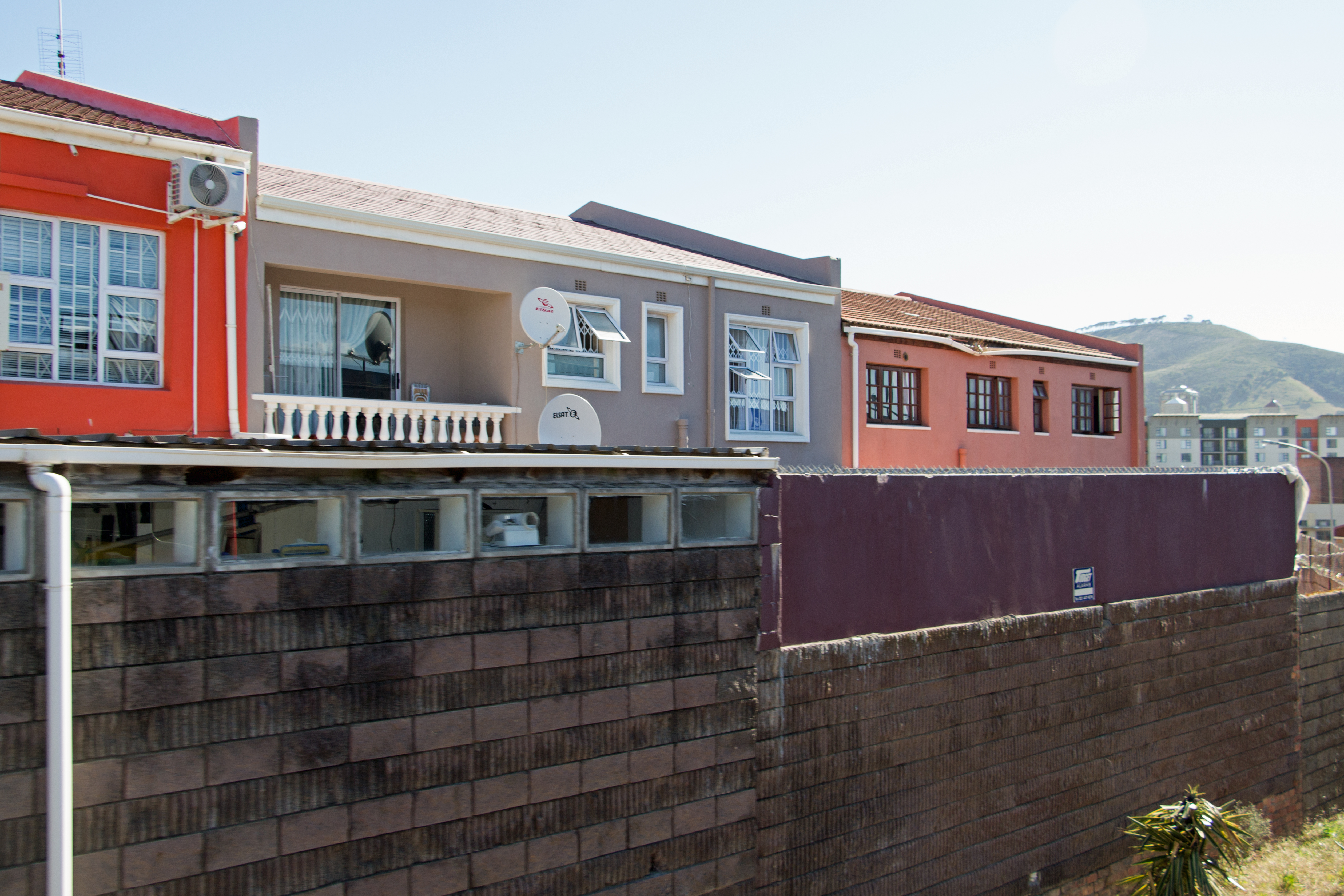
District Six
Abdullah Ibrahim, the pianist the world knew as Dollar Brand, described District Six to The Guardian as a "fantastic city within a city." In the late 1950s and 1960s, when the apartheid regime was tightening its grip across South Africa, District Six remained a place where people could mix freely - musicians, writers, politicians, families of every background sharing narrow streets on the slopes above Cape Town's harbor. "We played," Ibrahim said, "and everybody would be there." Then the bulldozers came. Between the mid-1960s and early 1980s, the apartheid government forcibly removed over 60,000 people from District Six under the Group Areas Act, declared their neighborhood a whites-only zone, and razed most of it to the ground. The area was renamed Zonnebloem, after an eighteenth-century colonial farm. The people were scattered to the Cape Flats, a wind-scoured plain far from the city center. The land they were forced from has remained largely empty ever since.
The Community They Destroyed
District Six was named in 1867 as the Sixth Municipal District of Cape Town. By the turn of the twentieth century it had become one of the most diverse neighborhoods in southern Africa - home to former enslaved people freed after 1833, Cape Malay families brought to South Africa by the Dutch East India Company, artisans, merchants, Jewish immigrants from Eastern Europe who arrived from the 1880s onward, and working-class families of every background. The neighborhood held almost a tenth of Cape Town's population, numbering over 1,700 to 1,900 families. It was not a paradise. The streets were crowded, the housing often poor. But it was alive with a culture that could not have emerged anywhere else: Cape jazz blending African rhythms with American swing, Cape Malay cuisine fragrant with Indonesian spices, Yiddish theatre and opera performances by the Eoan Group, which staged La Traviata and Carmen to sold-out audiences.
The Machinery of Removal
The government gave four official reasons for destroying District Six. It claimed that interracial interaction bred conflict and that the races must be separated. It declared the neighborhood a slum fit only for demolition. It portrayed the area as a den of vice - gambling, drinking, prostitution. Most residents saw through the pretexts. They believed the government wanted the land because of its proximity to the city center, Table Mountain, and the harbor. In October 1964, a departmental committee began investigating the "redevelopment" of District Six. By June 1965, all property transactions were frozen and a ten-year ban was imposed on construction or renovation. The forced removals proceeded methodically over the next decade and a half. Houses were demolished block by block. Schools, churches, and mosques were among the few structures spared. The community that had taken a century to build was erased in a generation.
What the Neighborhood Gave the World
The roster of people who were born, lived, or went to school in District Six reads like a roll call of South African culture. Basil Coetzee, the saxophonist, was born there and lived there until its destruction; his song "District Six" became an anthem for the displaced community. Johaar Mosaval became a principal dancer with England's Royal Ballet. Alex La Guma wrote A Walk in the Night, giving District Six its first place in literature. Richard Rive's novel Buckingham Palace, District Six - still prescribed reading in South African schools - chronicles lives before and during the removals. In 1986, David Kramer and Taliep Petersen created District Six: The Musical, which toured internationally. Even Neill Blomkamp's 2009 science fiction film District 9, set in an alternate Johannesburg, drew its premise from the events of District Six. The neighborhood was destroyed, but the art it produced ensured it could never be forgotten.
The Slow Return
On 11 February 2004 - exactly thirty-eight years after District Six was rezoned under apartheid - Nelson Mandela handed the keys of the first new houses to returning residents Ebrahim Murat, aged 87, and Dan Ndzabela, aged 82. It was a symbolic beginning to a restitution process that has proven painfully slow. About 1,600 families were scheduled to return within three years, but negotiations between the District Six Beneficiary Trust and the Cape Town Municipality repeatedly stalled, mired in political disputes and bureaucratic delays. The land itself tells the story of that unfinished reckoning: from the air, District Six is visible as a conspicuous gap in Cape Town's urban fabric, an unnervingly empty zone between the dense city center and the slopes of Devil's Peak, a wound in the cityscape that decades of democracy have not yet healed.
From the Air
District Six (33.933S, 18.434E) is located between Cape Town's CBD to the west and Devil's Peak to the southeast. From altitude, the area is strikingly visible as a largely vacant zone in an otherwise dense urban landscape - a direct result of the apartheid-era demolitions. The empty land stretches from the city center up toward the lower slopes of Devil's Peak. Cape Town International (FACT/CPT) is approximately 16km to the east. Table Mountain (1,085m) rises to the southwest. The District Six Museum sits at the western edge of the former neighborhood on Buitenkant Street.