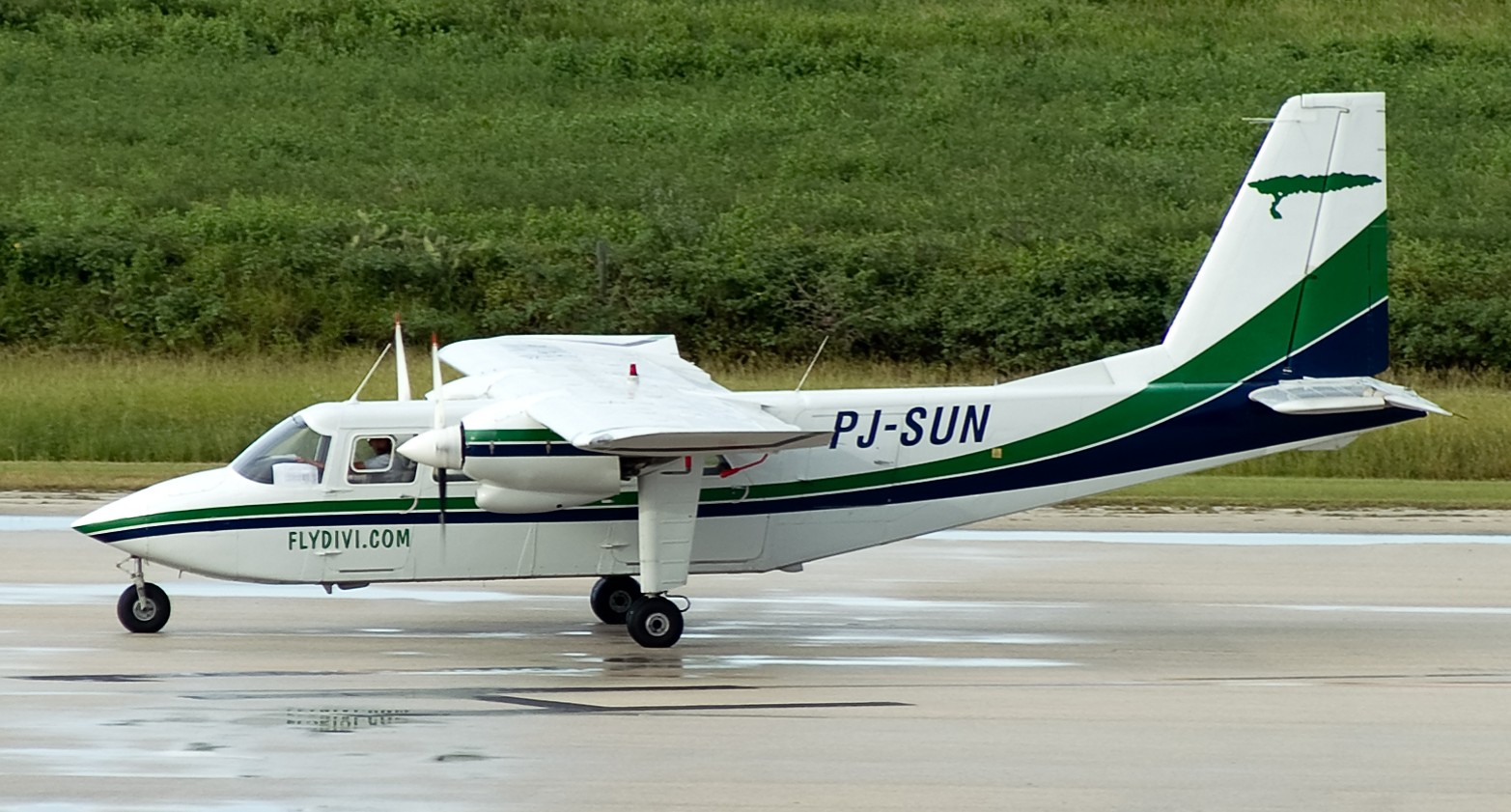
Divi Divi Air Flight 014
Robert Mansell looked back into the cabin and gave a thumbs up. His passengers had their life vests on. The water was coming up fast. Somewhere behind him, the starboard engine of the Britten-Norman Islander had already gone silent, and the remaining engine was losing its fight against gravity at two hundred feet per minute. In a few seconds, PJ-SUN would hit the Caribbean Sea half a nautical mile south of Klein Bonaire. Every one of his nine passengers would survive. Mansell, thirty-two years old, would not.
Twenty-Five Minutes Over Open Water
The flight was routine by Caribbean standards. Divi Divi Air operated small commuter hops between the ABC islands - Aruba, Bonaire, and Curacao - the kind of short, low-altitude flights that island residents treat like bus rides. On the morning of October 22, 2009, Flight 014 departed Hato International Airport in Curacao at 09:48, bound for Flamingo International Airport on Bonaire. The estimated flight time was twenty-five minutes. The aircraft was a Britten-Norman BN-2A Islander, registration PJ-SUN, a rugged twin-engine workhorse that had been flying since December 12, 1973 - nearly thirty-six years of Caribbean sun, salt air, and short-field landings. Ten people were aboard: one pilot and nine passengers, a full load for the compact Islander.
One Engine, No Options
Approximately ten minutes after departure, over open water with nothing but sea in every direction, the starboard engine failed. Mansell faced the decision every twin-engine pilot trains for but hopes never to confront: turn back to Curacao or press on to Bonaire. He chose Bonaire. At roughly twenty-four nautical miles west of the island, he radioed Flamingo Tower with a calm report - flying on one engine. But the Islander, fully loaded, could not hold altitude on a single powerplant. The aircraft began descending at about two hundred feet per minute, a slow and steady sink that turned the last stretch of ocean into a countdown. There would be no runway arrival. The math was merciless: too much distance, too little altitude, too heavy a load. Bonaire's coastline was visible ahead, but it might as well have been on the moon.
Ditching South of Klein Bonaire
At 10:17 - twenty-nine minutes after takeoff - PJ-SUN hit the water approximately half a nautical mile south of Klein Bonaire and three nautical miles west of the main island. The impact ripped the cockpit door from its frame and tore away the left main landing gear. But the fuselage held together, and the aircraft stayed on the surface long enough for the passengers to escape. A nearby dive boat - one of many that frequent the waters around Klein Bonaire's pristine reefs - reached the scene quickly and pulled all nine passengers from the sea. They were shaken but alive, every one of them. Mansell was not so fortunate. Passengers reported that after the ditching, the pilot appeared unconscious, likely injured on impact. Several tried to free him from his seat as the aircraft began to sink, but the plane was going down too fast. Robert Mansell went down with his aircraft into the Caribbean waters he had flown over countless times.
The Pilot's Last Gesture
What stays with the survivors is the thumbs up. Moments before the ditching, with the ocean filling the windscreen, Mansell turned around to check on his passengers. He confirmed their life vests were secure. He gave them a thumbs up - a gesture of reassurance from a man who must have known what was about to happen. He did not attempt to save himself first. He did not panic. He flew the airplane until there was no more sky left, and then he put it in the water as gently as physics allowed. The investigation by the Dutch Safety Board confirmed the engine failure and the subsequent ditching. The Britten-Norman Islander, a design known for its reliability in bush and island operations worldwide, had simply run out of the margin that a second engine provides. Mansell's decision to continue toward Bonaire rather than turn back was a judgment call made over open ocean with a sinking airplane - the kind of call that cannot be second-guessed from the ground.
A Quiet Stretch of Sea
The crash site lies in waters that are better known for their beauty than their tragedy. Klein Bonaire, the small uninhabited island nearby, is part of the Bonaire National Marine Park, surrounded by coral reefs that draw divers from around the world. The stretch of sea between Klein Bonaire and the main island is calm, turquoise, and shallow enough in places to see the sandy bottom. Dive boats and water taxis cross it daily. On most mornings, it is one of the most peaceful spots in the Caribbean. But on one October morning in 2009, it became the place where a pilot traded his life for the lives of nine strangers. No monument marks the spot. The sea closed over PJ-SUN and carried on, as the sea always does. The passengers went home to their families. Robert Mansell did not.
From the Air
The crash site is located at approximately 12.24°N, 68.55°W, in the waters south of Klein Bonaire and about 3 nautical miles west of Bonaire's main island. Flamingo International Airport (ICAO: TNCB) lies roughly 3nm to the east on Bonaire. The flight originated from Hato International Airport (ICAO: TNCC) on Curacao, about 40nm to the west. At low altitude, Klein Bonaire is visible as a flat, uninhabited island sitting in the crescent of Bonaire's western coast. The waters here are typically calm and crystal-clear. Pilots flying the inter-island route between Curacao and Bonaire cross open Caribbean Sea with limited diversion options.