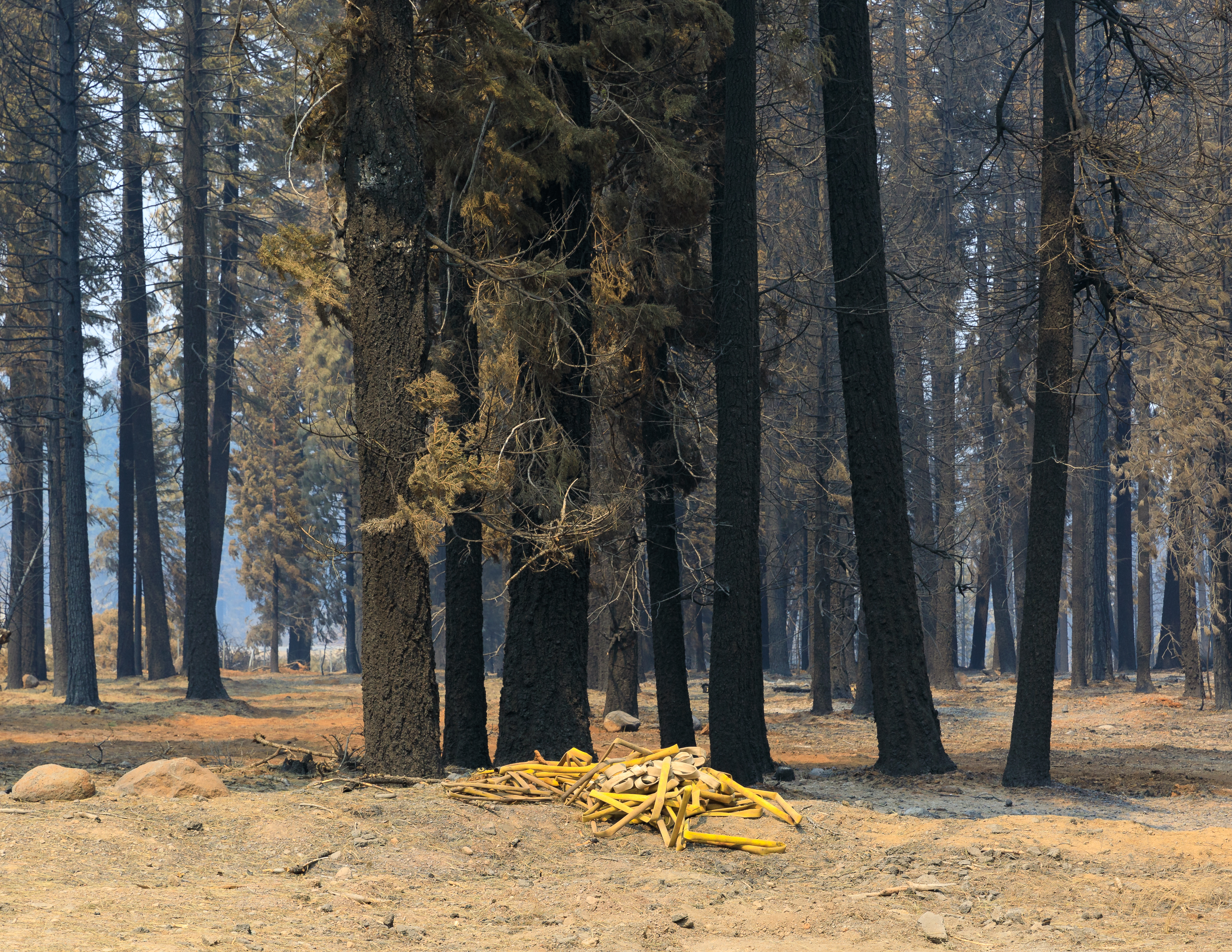
Dixie Fire
At 6:48 on the morning of July 13, 2021, a Douglas fir tree fell onto a Pacific Gas and Electric power line in the Feather River Canyon. Why the tree fell remains unknown, though an arborist determined fire had weakened it back in 2008. When it struck the line, two fuses blew, but one remained active. The tree, touching both the energized line and the ground, created an electrical fault. Over the following hours, electric arcing slowly ignited the bone-dry fuels beneath. By evening, what would become California's largest single-source wildfire had begun its 104-day march across nearly a million acres of Northern California.
Perfect Conditions for Disaster
The Dixie Fire arrived at the worst possible moment. The summer of 2021 became the hottest ever recorded in California, intensifying what scientists identified as the most severe megadrought in at least 1,200 years. During that water year, Northern California received less than half its usual precipitation. The Sierra snowpack measured just 59 percent of average, and runoff only 20 percent of forecasts. Decades of fire suppression had created overcrowded forests with little fire history. More than 163 million trees had died from bark beetle infestations between 2010 and 2019, their chemically altered wood more flammable and prone to intense crown fires. When the spark came, the landscape was ready to burn like it hadn't in a century. Only 12 percent of the eventual fire area had burned in the previous hundred years.
Thirty Minutes to Destroy a Town
On the evening of August 4, the Dixie Fire jumped containment lines at Indian Valley and entered Greenville. The firestorm that followed was compared to a huge tornado. In less than half an hour, flames destroyed an estimated 75 percent of structures in town, including much of the historic downtown whose buildings dated to the California Gold Rush. The fire then leaped to the other side of Indian Valley and continued racing northeast. The next day, it burned through Canyondam near Lake Almanor. By August 8, the Dixie Fire had surpassed the 2018 Mendocino Complex to become California's second-largest fire ever, with containment falling to just 21 percent. It became the first fire known to have burned across the crest of the Sierra Nevada, from the western slopes to the valley floor on the east side, putting communities near Susanville under evacuation warnings.
The Most Expensive Battle
Fighting the Dixie Fire required unprecedented resources. At its peak, nearly 4,000 firefighters and numerous aircraft battled flames across five counties: Butte, Plumas, Lassen, Shasta, and Tehama. The Union Pacific Railroad deployed its fire train, capable of delivering 30,000 gallons of water per load. In August, 200 soldiers from Fort Lewis arrived to assist, taking on the additional mission of protecting indigenous cultural sites threatened by flames. The fire burned over 34,000 acres within Lassen Volcanic National Park, destroying the historic Mount Harkness Fire Lookout. The Maidu's Tasmam Koyom valley, returned to the tribe in 2019 during PG&E's bankruptcy, lost a historic stagecoach stop. More than 9,500 people evacuated at the height of the crisis. When containment finally came on October 25, the suppression effort had cost $637.4 million, making it the most expensive wildfire fight in United States history.
A Separate Crime
While the Dixie Fire raged, federal investigators were tracking a different threat. Mountain bikers reported the Cascade Fire on Mount Shasta's slopes on July 20. A Forest Service investigator encountered Gary Maynard stuck in a rut on a nearby dirt road and photographed his car and tire tracks. The next day, identical tracks appeared at the Everitt Fire in the Shasta-Trinity National Forest. Surveillance footage and his EBT card usage linked Maynard to both fires. Agents placed a tracking device on his vehicle during an August 3 traffic stop in Susanville. On August 5, while tailing Maynard through an area under evacuation for the Dixie Fire, agents discovered another blaze, the Moon Fire, near his route. Two days later, the Ranch and Conard fires ignited near his campsite. Prosecutors argued these fires could have trapped firefighters between Maynard's blazes and the Dixie Fire. In February 2024, Maynard pleaded guilty to three counts of arson. He was sentenced in May 2024 to five years and three months in prison.
The Price of Neglect
Cal Fire's investigation concluded that a tree contacting PG&E power lines caused the Dixie Fire, though investigators noted the tree appeared healthy and green when it fell. This was the same Feather River Canyon where PG&E transmission lines had sparked the deadly Camp Fire just three years earlier. In April 2022, PG&E agreed to pay $55 million to avoid criminal prosecution. Counties reached a $24 million settlement in January 2023, and PG&E accepted a $45 million regulatory fine in 2024. The total 1,329 structures destroyed, including at least 600 homes, joined the legacy of a company whose equipment had now ignited fires across California multiple times. The smoke that drifted east created the worst air quality in the world in Salt Lake City on August 6 and degraded skies as far away as New York. The burn scar remains visible from the air, a dark stain across the Sierra Nevada foothills.
From the Air
The Dixie Fire burn scar extends across a massive area centered around 39.82N, 121.42W in Northern California. The ignition point was in the Feather River Canyon near Cresta Dam, between Paradise and Belden along Highway 70. Lake Almanor (to the north) and Lassen Volcanic National Park provide visual references. Nearby airports include Chico Municipal (KCIC, 40 miles west), Red Bluff Municipal (KRBL, 60 miles northwest), and Susanville Municipal (O44, 40 miles east). The burn scar is visible from high altitude as a patchwork of dead and recovering forest across Plumas, Butte, Lassen, Shasta, and Tehama counties. Best viewed at 5,000-10,000 feet AGL to appreciate the fire's scope.