Dock Street Theatre
On a February evening in 1736, a small audience filed into a narrow building on what was then called Dock Street in Charles Town, South Carolina. They had come to see "The Recruiting Officer," a British comedy, performed in what would become the first building in the Thirteen Colonies designed specifically as a theater. That original playhouse is long gone, but its spirit never left. The site on Church Street in Charleston's French Quarter has drawn performers and audiences for nearly three centuries, through revolution, civil war, economic collapse, and reinvention. Today's Dock Street Theatre is not so much a restoration as a palimpsest -- layers of ambition, artistry, and civic pride written one atop the other in black cypress and wrought iron.
From Wharf to Stage
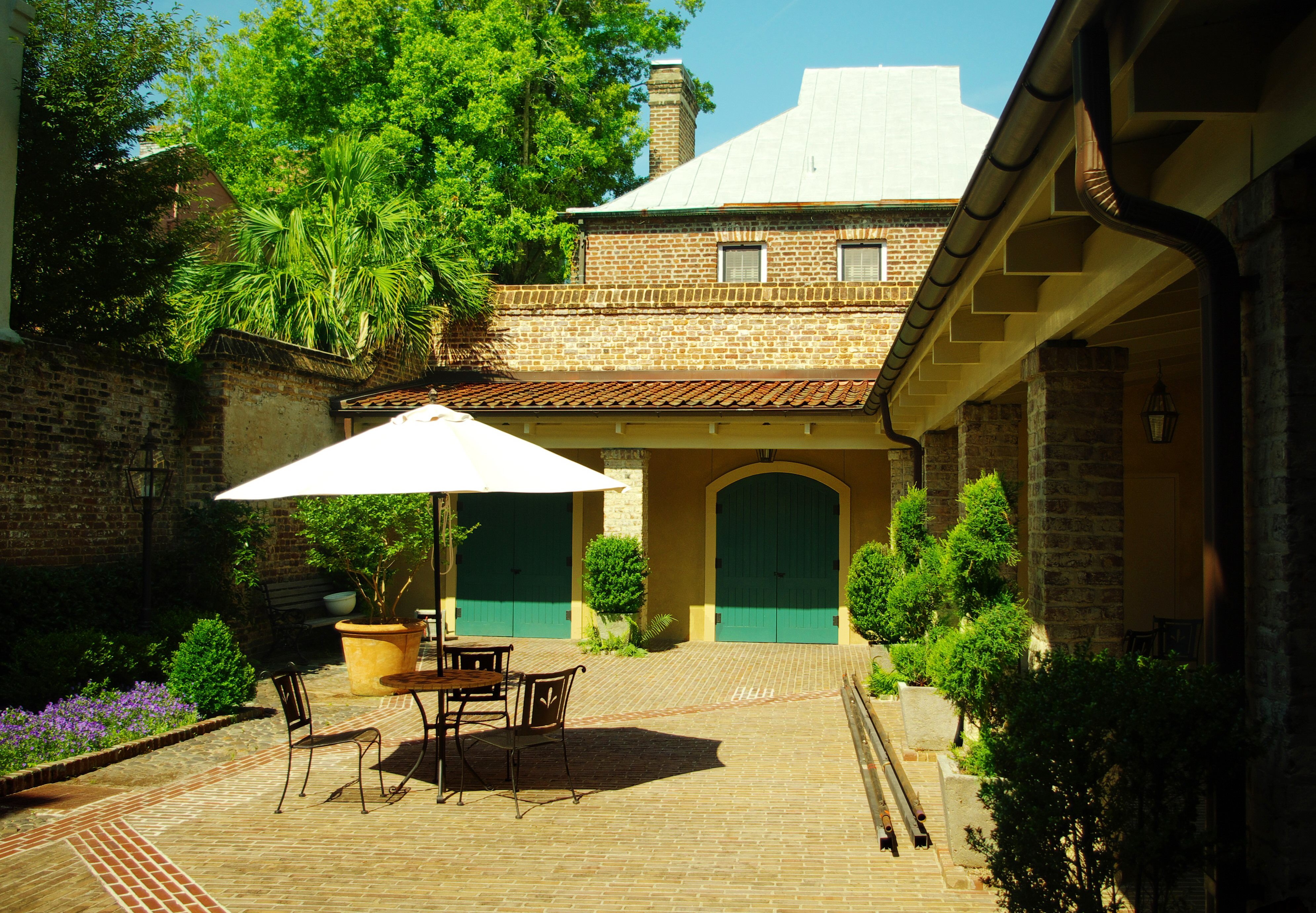
The original 1736 theater stood near the busy wharves that gave Dock Street its name. Colonial Charleston was the wealthiest city in British North America, its rice and indigo planters eager for the cultural trappings of London society. The theater satisfied that hunger, staging plays for an elite audience in a port town that fancied itself a provincial capital of the arts. But the original structure did not survive the colonial era. By the early 1800s, the site had been transformed into the Planter's Hotel, an elegant establishment built in 1809 that catered to the region's plantation aristocracy. The hotel's wrought-iron balconies and graceful courtyard became fixtures of the neighborhood. For more than a century, the building served travelers and locals while its theatrical origins faded into local lore.
A Depression-Era Resurrection
The Works Progress Administration gave Dock Street Theatre its second life. In 1935, with Charleston's economy battered by the Great Depression, the WPA funded a $350,000 conversion of the old Planter's Hotel into a working theater. Charleston architect Albert Simons, a pioneering preservationist, designed the new stage house and auditorium within the hotel's courtyard, modeling them on 18th-century London playhouses. Local carpenters -- employed as part of the Depression-era relief effort -- built the wooden interior from locally grown and milled native black cypress, giving the theater an amber warmth that electric light only deepens. The woodwork and mantels in the second-floor drawing room came from the demolished Radcliffe-King Mansion, a circa-1799 house razed to build the College of Charleston gymnasium. The Historic Dock Street Theatre held its second grand opening on November 26, 1937. In the audience sat DuBose Heyward, author of "Porgy," the novel that would become Gershwin's iconic opera. Heyward was named writer-in-residence, linking the theater to one of Charleston's greatest literary achievements.
Reinvention for a New Century
By the early 2000s, the Depression-era theater needed its own rescue. The building closed in 2007 for a three-year, $19 million renovation by the City of Charleston. Engineers made the structure seismically secure -- no small consideration in a city that remembers the devastating earthquake of 1886. They installed modern lighting and sound, climate control, new seating, and extensive soundproofing to keep the rumble of horse-drawn carriages on Church Street from intruding on performances. The Historic Dock Street Theatre reopened for the third time on March 18, 2010, now fully accessible and equipped for 21st-century production while retaining the intimacy that Simons designed into it decades earlier.
The Living Stage
Now owned and managed by the City of Charleston, the Dock Street Theatre anchors the city's cultural life. It serves as a principal venue for Spoleto Festival USA, the internationally acclaimed performing arts festival held each spring. Charleston Stage, the resident professional theater company since 1978, produces over 120 performances each season and draws more than 40,000 patrons annually. More than 15,000 South Carolina students attend special school-day performances each year, ensuring that the tradition of live theater reaches beyond the tourist economy. The building has been on the National Register of Historic Places since 1973, recognized not just for its architectural character but for what it represents: the stubborn persistence of the performing arts in a city that has made culture a cornerstone of its identity since colonial days.
A Theater Built on Memory
Walking into the Dock Street Theatre today, you pass beneath the Planter's Hotel balconies, through the old courtyard entrance, and into an auditorium that feels both intimate and grand. The black cypress paneling has aged to a deep honey color. The proportions of Simons's London-inspired design create the illusion of a much older room, as if the 18th-century playhouse had somehow survived. That illusion is the point. The Dock Street Theatre does not pretend to be the 1736 original, but it carries that original's purpose forward -- a place where a port city's ambitions find expression on stage. From colonial comedy to Depression-era revival to Spoleto performances, the site has been reinventing itself for nearly three centuries. In Charleston, where history is less a museum exhibit than a living presence, the Dock Street Theatre fits right in.
From the Air
Located at 32.78°N, 79.93°W in Charleston's French Quarter, on Church Street between Queen and Cumberland streets. The theater sits within the dense historic district on the Charleston peninsula, identifiable from the air by the surrounding grid of colonial-era streets and nearby church steeples. Charleston Executive Airport (JZI) is about 8 miles northwest; Charleston International Airport (KCHS) is 12 miles northwest. Best viewed at 2,000-3,000 feet AGL for context of the French Quarter neighborhood.