Dodge City
Dodge City earned its reputation. In the 1870s, this Kansas railroad town sat at the intersection of the Santa Fe Trail and the cattle drives from Texas, collecting every variety of frontier vice in one legendary location. Buffalo hunters sold hides at warehouses that reeked for miles. Cowboys fresh off three-month cattle drives spent their wages on whiskey, gambling, and the women of the south-side brothels. The killings averaged one per day; the dead were buried with their boots on in a cemetery called Boot Hill. The town hired gunslingers as lawmen: Wyatt Earp, Bat Masterson, Bill Tilghman. Dodge became synonymous with Wild West lawlessness - 'Get out of Dodge' entered the American language. When the cattle drives ended, so did the chaos. Dodge City settled into respectable Kansas agriculture, but the legend proved more durable than the reality.
The Buffalo
Dodge City's first boom was buffalo. The railroad reached this point on the Arkansas River in 1872, providing transport for hides to eastern markets. Hunters slaughtered millions of buffalo across the southern plains; Dodge City was the collection point. In one three-year period, 850,000 hides shipped through town. The stench was legendary. So was the roughness of the hunters and skinners who crowded the saloons. By 1878, the buffalo were essentially gone - the greatest wildlife destruction in American history, accomplished in a decade. Dodge needed a new industry.
The Cattle
The cattle drives replaced buffalo. Texas ranchers pushed longhorns north to Kansas railheads, and Dodge City became the largest cattle market in the world. A quarter million cattle might pass through in a season. Cowboys arrived after months on the trail, paid in cash, and ready to celebrate. Saloons, dance halls, gambling houses, and brothels clustered south of the railroad tracks - the 'wrong side of the tracks' that gave rise to the phrase. The respectable town was north; the sin was south. Gunfights were common; most victims ended up in Boot Hill.
The Lawmen
Dodge City hired famous gunfighters to control the chaos. Wyatt Earp served as assistant city marshal from 1876 to 1879, before moving on to Tombstone and the O.K. Corral. Bat Masterson was sheriff of Ford County; his brother Ed was killed in the line of duty. Bill Tilghman served multiple terms. These men were not simple heroes - they straddled the line between law and lawlessness, ran gambling operations, and were sometimes as dangerous as the men they arrested. But they kept order enough for business to continue. Dodge's ordinances against carrying guns within city limits were strictly enforced.
The End
The cattle drives ended in the mid-1880s. Barbed wire fenced the open range. Farmers blocked the trails. Railroads extended to Texas, eliminating the need to drive cattle north. Dodge City's wild years had lasted barely fifteen years. The town survived as an agricultural center, but the excitement was over. The real Boot Hill was plowed under in 1878; the bodies were moved elsewhere. Dodge became a quiet Kansas town - until Hollywood and television rediscovered it. 'Gunsmoke,' the longest-running prime-time drama in television history, was set in Dodge City, recreating a mythological version of the frontier town.
Visiting Dodge City
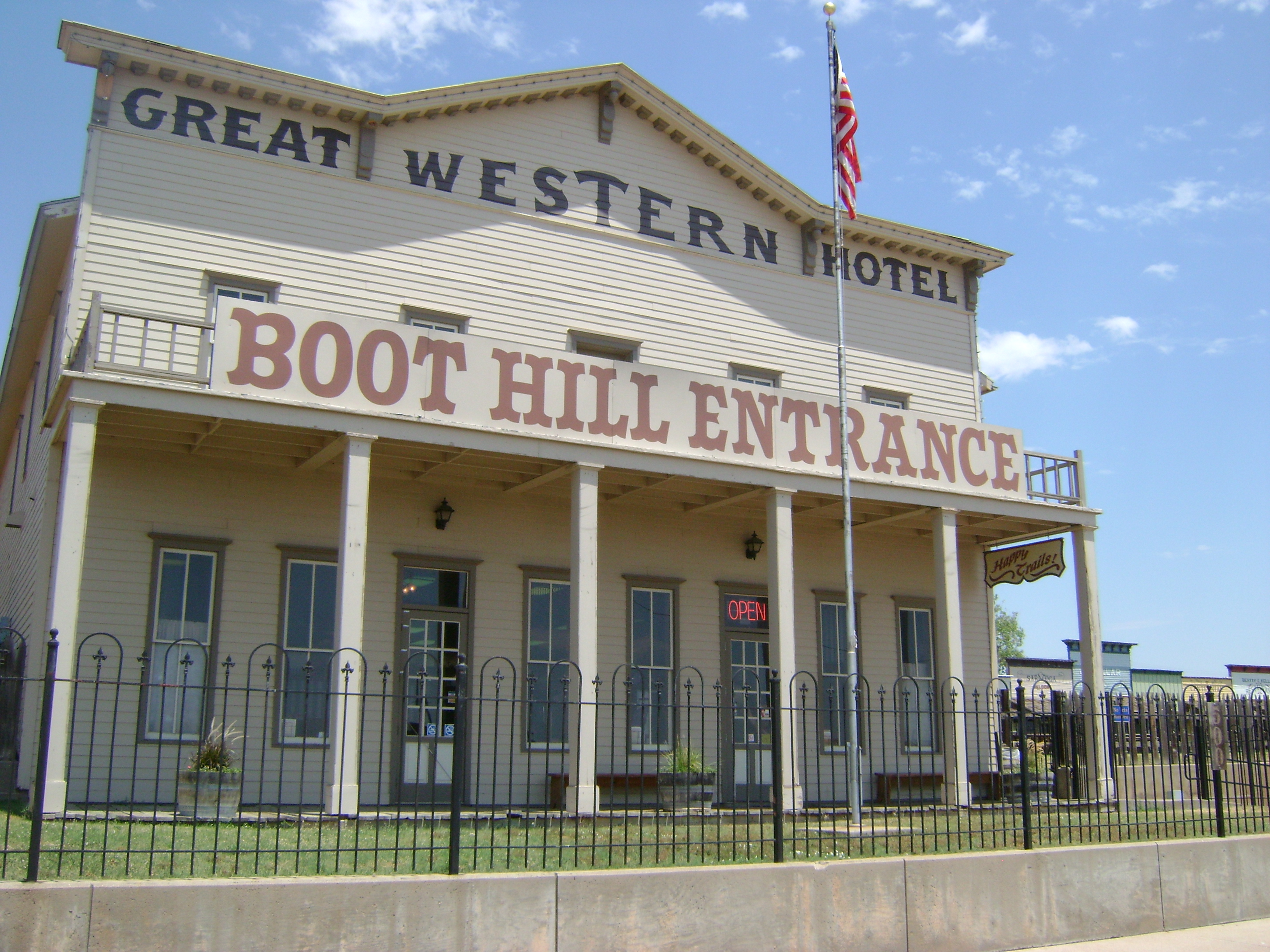
Dodge City embraces its Wild West heritage. Front Street has been recreated as a tourist attraction with staged gunfights, wooden boardwalks, and period buildings (the originals were replaced). The Boot Hill Museum tells the cattle drive story with artifacts and exhibits; the cemetery reconstruction includes markers for some of the original residents. The Mueller-Schmidt House Museum preserves one of Dodge's oldest homes. Fort Dodge, five miles east, was the military post that protected the Santa Fe Trail. The city is located on US-50/56 in southwestern Kansas; Dodge City Regional Airport (DDC) has limited service. The best time to visit is summer when reenactments run regularly. Winter can be harsh on the Kansas plains.
From the Air
Located at 37.75°N, 100.02°W on the Arkansas River in southwestern Kansas. From altitude, Dodge City appears as a small city on the flat High Plains, with the Arkansas River visible as a tree-lined ribbon. The grid of the town and surrounding agricultural land extends in all directions. The terrain is remarkably flat - the Kansas prairie that cattle drives crossed to reach the railroad. The Front Street historic area is visible in the downtown core.