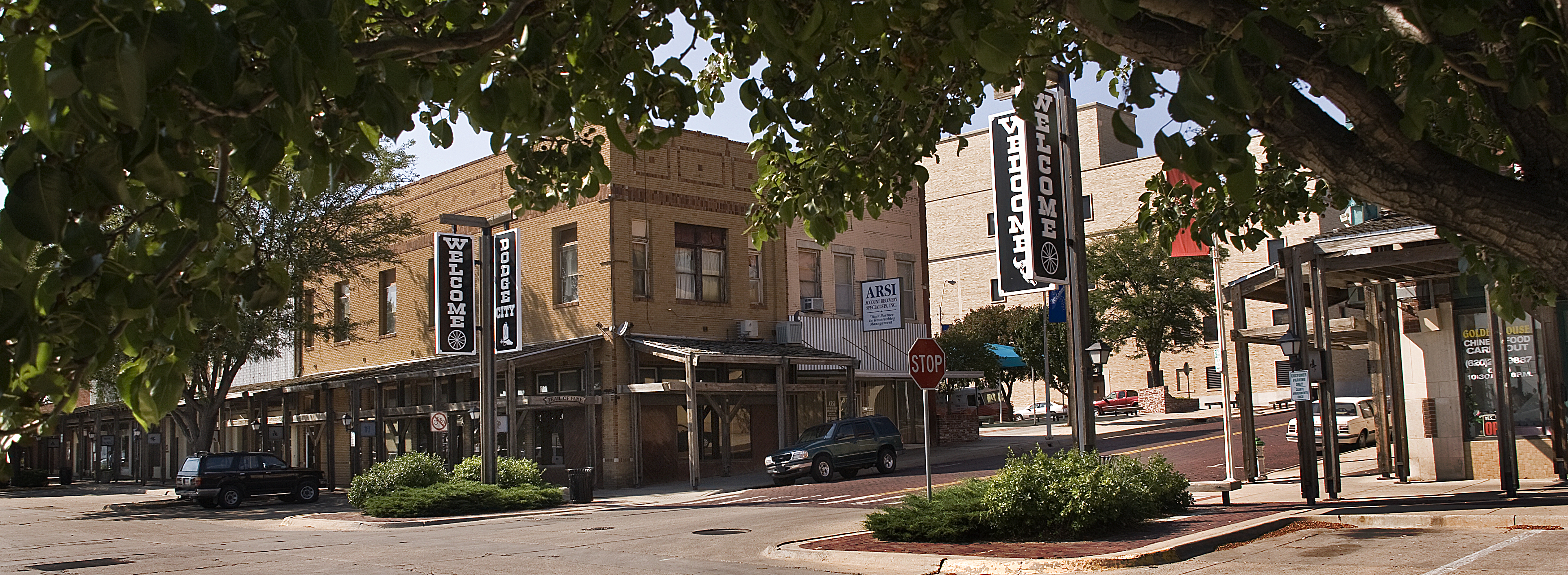
Dodge City: The Wickedest Little City in America
Dodge City earned its reputation. From 1876 to 1885, the town was the quintessential cattle trail terminus - the place where cowboys ended months-long drives from Texas, collected their pay, and promptly spent it on whiskey, gambling, and the services of the establishments south of the railroad tracks. The violence was real: gunfights, murders, brawls that spilled from saloons into streets. The lawmen who kept minimal order became legends: Wyatt Earp, Bat Masterson, Bill Tilghman. The phrase 'get the hell out of Dodge' entered American slang, meaning to leave trouble behind. The town that horrified Victorian moralists became the Hollywood prototype for Western depravity.
The Drives
Dodge City existed for cattle. The town was founded in 1872 as the Santa Fe Railway reached western Kansas, creating a shipping point for Texas longhorns driven north on the Western Trail. Cowboys spent months pushing herds across open range, then arrived in Dodge to load cattle onto trains bound for eastern slaughterhouses. The work was grueling; the release was explosive. Cowboys were paid and promptly sought entertainment - drinking, gambling, prostitution - concentrated along Front Street and the district south of the tracks known as the 'deadline' or 'dead line' for the trouble that lived there.
The Violence
Boot Hill Cemetery received its first residents in 1872. The exact body count is disputed - certainly dozens died violently during the boom years. The circumstances were typical: drunken arguments, gambling disputes, conflicts over women, simple hot tempers with ready pistols. The mythology exaggerates - Dodge City was not the deadliest town in the West, despite its reputation - but the violence was genuine. Newspaper accounts documented shootings and stabbings with regularity. The town's remote location, transient population, and alcohol saturation created conditions for bloodshed. Order required forceful men willing to use force.
The Lawmen
Wyatt Earp served as assistant marshal in 1876 and 1877. Bat Masterson was sheriff of Ford County and later a city marshal. Charlie Bassett, Bill Tilghman, and other lawmen maintained rough peace. Their methods were direct: armed confrontation, forced disarmament in city limits, willingness to shoot. Whether they were heroes or thugs depended on perspective; they kept the town functional for commerce while the cattle trade lasted. The lawmen's later fame - Earp's through dime novels and eventually Hollywood, Masterson's through newspaper columns - transformed them from frontier peace officers into American archetypes.
The Decline
The cattle era ended abruptly. Kansas quarantine laws blocked Texas herds starting in 1885, protecting local cattle from Texas fever. The drives shifted west, then ended entirely as railroads reached Texas. Dodge City's economy collapsed and rebuilt around agriculture and the meatpacking that replaced trail drives. The wickedest little city became a quiet county seat. Only the mythology persisted, amplified by dime novels, radio, and eventually the television series 'Gunsmoke' (1955-1975), which made Marshal Matt Dillon synonymous with Dodge. The real violence lasted a decade; the legend has lasted a century and a half.
Visiting Dodge City
Dodge City is located in southwestern Kansas, roughly 160 miles west of Wichita via US-400. The Boot Hill Museum complex recreates Front Street and offers historical interpretation. The original Boot Hill Cemetery relocated long ago; the current site is reconstruction. The Long Branch Saloon (named for the 'Gunsmoke' original) serves tourists. The Santa Fe Trail ruts are visible south of town. Dodge City Days, held each July, celebrates the cattle trail era with rodeo and festivities. The city has roughly 28,000 residents; meatpacking remains economically important. Allow half a day for the museum and downtown. The Wild West ended here in 1885; the mythology continues.
From the Air
Located at 37.75°N, 100.02°W in southwestern Kansas. From altitude, Dodge City appears as a small city on the Arkansas River in otherwise flat agricultural land. The meatpacking plants that replaced cattle drives are visible as industrial facilities. The river valley that drew cattle trails is evident as a linear green belt through brown plains. The terrain is classic Great Plains: flat, agricultural, endless horizon. Nothing from altitude suggests the violence that once defined the town - just a Kansas city like others, distinguished only by the mythology that persists long after the cattle drives ended.