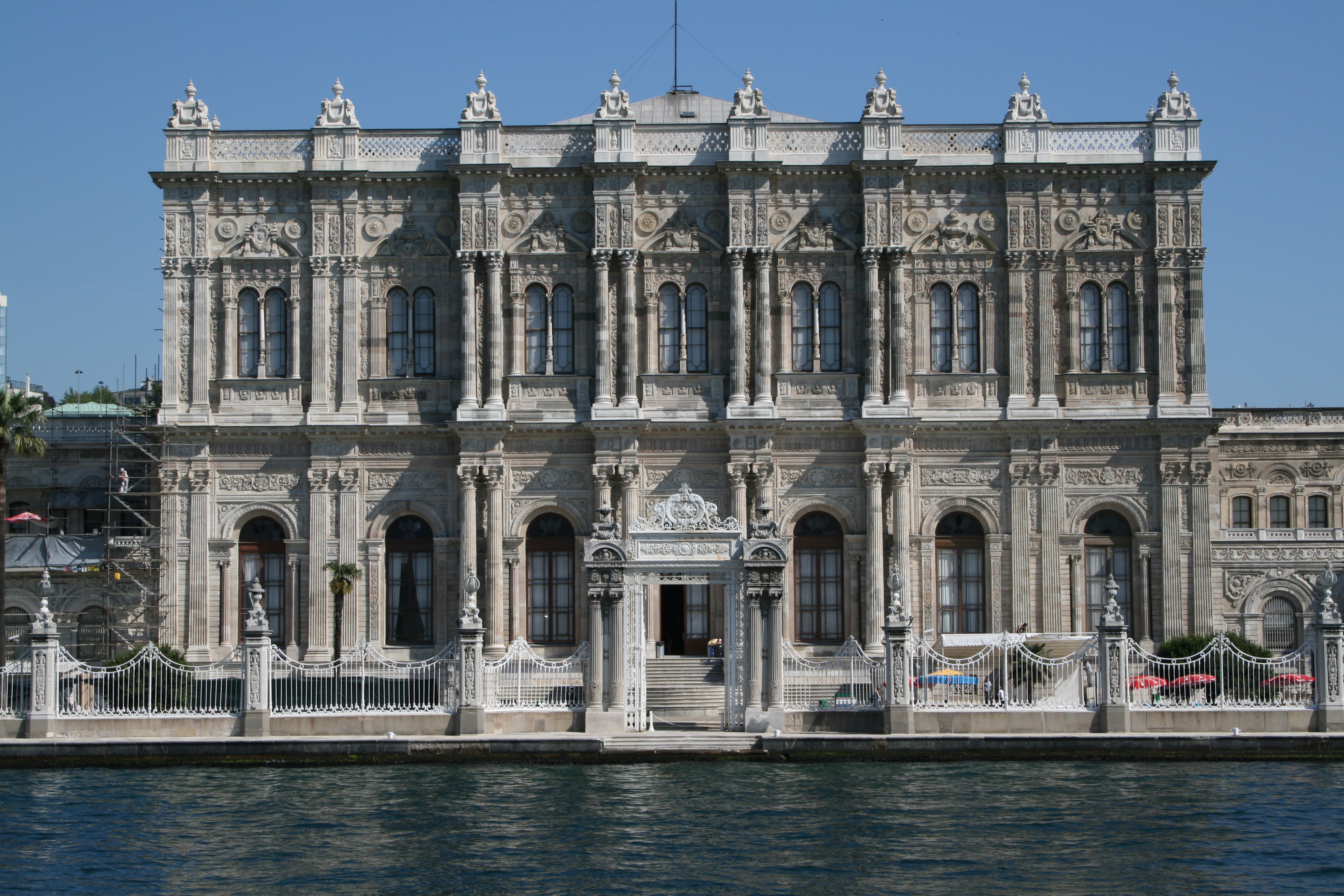
Dolmabahçe Palace
All the clocks in the bedroom point to 9:05. Outside that single room, the rest of the palace runs on Istanbul time, but inside, the hands have not moved since the morning of 10 November 1938, when Mustafa Kemal Atatürk - founder of the Republic of Turkey - died in a small bed at the western edge of the harem wing. After his death, every clock in Dolmabahçe was stopped to mark the moment. Most were eventually restarted. The clock in the death chamber was not. Eighty-eight years later it still reads five minutes past nine, the longest moment of silence in modern Turkey.
The Palace That Ate the Treasury
Sultan Abdülmecid I had a problem. He lived in Topkapı, the rambling medieval complex on the Old City's hill, and to him it looked nothing like what European monarchs called a palace. So in 1843 he ordered a new one along the European shore of the Bosphorus, and over the next thirteen years the architects Garabet and Nigoğayos Balyan - father and son of the famous Armenian Balyan family of court architects - built a 45,000-square-meter monoblock with 285 rooms, 46 halls, six hammams, and 68 toilets. The bill came to roughly five million Ottoman lira, the equivalent of 35 tonnes of gold and roughly a quarter of the empire's annual tax revenue. The state paid for it by debasing its currency, printing paper money, and borrowing abroad. In October 1875 the empire defaulted on its debts, and by 1881 European powers had set up the Ottoman Public Debt Administration to manage the finances of the so-called sick man of Europe. The palace was beautiful. It was also one of the bills that broke the empire.
The Largest Chandelier in the World
Inside, every surface boasts. Over a hundred kilograms of gold leaf cover the ceilings - by today's bullion price, six million dollars in decorative film. The world's largest crystal chandelier hangs from the dome of the Ceremonial Hall, four and a half tonnes of cut glass with 750 lamps, long assumed to be a gift from Queen Victoria until a receipt was unearthed in 2006 showing the Sultan had paid for it himself. The Crystal Staircase curves up in a double horseshoe of Baccarat crystal, brass, and mahogany. Marble came from the island of Marmara, alabaster from Egypt, porphyry from the ancient quarries near Pergamon. The collection of Bohemian and Baccarat chandeliers is the largest in the world. From the very beginning the place had gas lighting and water closets imported from Britain - amenities most European palaces still lacked. Later came electricity, central heating, and an elevator. It was, deliberately, a statement that the Ottomans could be modern.
The Name in the Mud
Dolmabahçe means filled-in garden, from Persian dolma and bahçe. The site was once a bay where the Ottoman navy anchored. Across the eighteenth century the bay was gradually reclaimed, planted with imperial gardens that the sultans loved enough to dot with summer pavilions. By the time the Balyans began work in 1843, the bay was solid ground, and the palace they built effectively buried what had been a working harbor under one of the most expensive buildings of the nineteenth century. The Bosphorus still laps at the seawall in front. The garden in the name is, literally, underfoot.
Six Sultans and a Caliph
From 1856, when Abdülmecid first moved in, six sultans called Dolmabahçe home, and after the formal end of the sultanate the last royal occupant was the Caliph Abdülmecid II - a painter and musician more comfortable with brushes than affairs of state, until the Caliphate itself was abolished in March 1924. The new Republic took the palace as national property. Atatürk used it as his presidential summer residence and worked here on some of his most important reforms. The palace had been built to imitate Europe; under Atatürk it became a place where Turkey decided what it would be on its own terms.
Five Past Nine
Atatürk's room is small. After all the gilded ceremonial halls, the marble columns, the painted walls hung with Boulanger and Gérôme and Ayvazovsky, the bedroom where he died feels almost ordinary. A bed, a table, a few framed photographs. The flag on the bed is freshly pressed. A clock on the wall reads 9:05. He had been ill for months with cirrhosis, and on the morning of 10 November 1938 he stopped breathing at five minutes past nine. The country he founded responded by halting time itself, at least in this corner. Today the palace is a museum run by the Directorate of National Palaces, open to the visitors who file through in slow lines. Most of them stop at the door of the small bedroom, look at the clock, and stand quietly for a moment. The man who built the Republic died here. The Republic decided he should never quite finish dying.
From the Air
Dolmabahçe Palace sits at 41.04°N, 29.00°E on the European bank of the Bosphorus, just south of the 15 July Martyrs (Bosphorus) Bridge. The long marble facade and clock tower are unmistakable from the water; from the air, look for the white frontage stretching along the strait between Beşiktaş and Kabataş. Istanbul Airport (LTFM) is about 35 km west; Sabiha Gökçen (LTFJ) about 25 km southeast across the Bosphorus. Best viewed at low altitude in clear conditions; the palace's white limestone glows in morning light.