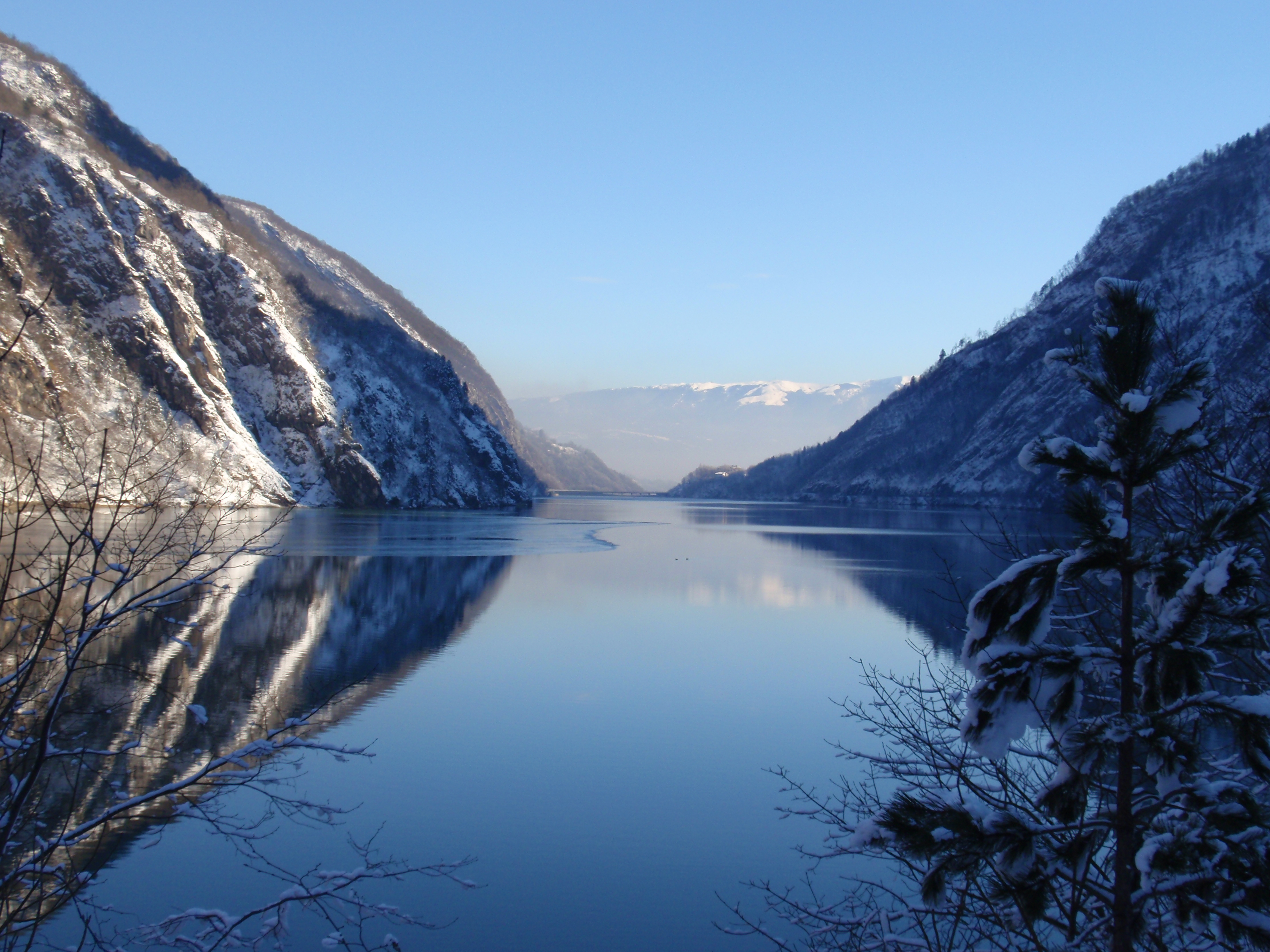
Dolomiti Bellunesi National Park
Most visitors to the Dolomites gravitate toward the famous ski resorts and postcard villages of the north. The Dolomiti Bellunesi National Park, tucked into the province of Belluno between the Cismon and Piave rivers, draws far fewer crowds -- and that relative obscurity is precisely its appeal. Established in 1990, the park protects 310 square kilometers of the southern Dolomites that UNESCO recognized as a World Heritage Site in 2009. Here, the pale limestone towers and karst landscapes that define the Dolomites take on a wilder, less manicured character, dropping into canyons carved by streams that have been cutting through stone since the last ice age.
Towers of Pale Stone
The park's mountain ranges read like a roll call of the southern Dolomites' most dramatic formations. The Alpi Feltrine include the Vette di Feltre, Cimonega, and Pizzocco, whose vertical walls of pale dolomite rock catch the light differently at every hour. To the west, the Monti del Sole live up to their name, their south-facing slopes baked bright by the Italian sun. The Schiara group anchors the park's northern edge, while Talvena, Pramper, and Spiz di Mezzoidi contribute their own jagged silhouettes. At higher elevations, the landscape shifts to karst terrain -- pockmarked limestone where water vanishes into underground channels and reappears miles away as springs. Debris slopes cascade from cliff bases, creating austere habitats where specialized alpine plants cling to existence between rock and sky.
Water in Every Form
Despite its karst geology, or perhaps because of it, the park is remarkably rich in water. Streams pour through it in every direction: the Cordevole, the Mis, the Caorame, the Ardo, and the Vescova among them. Several of these watercourses have carved deep canyons through the limestone, creating gorges where the rock walls close in and the light dims to a pale blue-green glow. The Val del Mis is the most dramatic of these -- a narrow valley where the stream has cut a sinuous path through stone over millennia. Springs emerge from the base of cliffs, swamps form in high meadows, and seasonal variations can transform a gentle brook into a torrent overnight. This abundance of water sustains the park's extraordinary biological richness, creating habitats that range from alpine lakes to mossy ravines.
Wings and Whiskers
The park's fauna list reads like an inventory of the Alps' most charismatic species. Golden eagles patrol the thermals above the peaks, sharing the airspace with Eurasian eagle-owls and northern goshawks. In the forests below, black woodpeckers drill into deadwood, and western capercaillie perform their elaborate mating displays on hidden leks. The mammal list includes chamois navigating the cliff faces with improbable grace, red deer moving through the beech forests, marmots whistling warnings from boulder fields, and the occasional mouflon -- a wild sheep introduced from Mediterranean islands. The park also shelters an unusually diverse bat population: greater mouse-eared bats, common pipistrelles, and both grey and brown long-eared bats roost in caves and hollow trees. Among the rocks, fire salamanders display their warning colors, alpine newts breed in cold pools, and the nose-horned viper -- Vipera ammodytes -- suns itself on south-facing ledges.
A Living Mosaic
The park's 15 municipalities, from Belluno to Val di Zoldo, represent communities that have lived alongside these mountains for centuries. Their relationship with the landscape has always been practical: forests managed for timber, pastures grazed by livestock, streams harnessed for mills. When the park was established in 1990, the Italian Ministry of the Environment set four objectives that tried to balance preservation with the reality of mountain life: protect natural and landscape values, improve living conditions for local populations, promote scientific research and environmental education, and safeguard traditional agricultural and forestry practices. The result is a park where rhododendron and edelweiss bloom on high meadows, pine forests grade into broadleaf woodland at lower elevations, and the marks of human habitation blend into the landscape rather than dominating it. In spring, the alpine meadows erupt with wildflowers, and the air fills with the calls of rock partridges and the distant piping of snowfinches.
From the Air
The Dolomiti Bellunesi National Park is centered at approximately 46.17N, 12.04E in the province of Belluno, Veneto. From the air, the park presents as a dramatic tract of pale limestone peaks and deep valleys between the Cismon and Piave river valleys. The park sits south of the main Dolomite chain and northwest of Belluno city. Major landmarks include the Schiara group on the northern edge and the Vette di Feltre to the south. Nearest airports are Belluno (not ICAO-coded) for local access and Treviso (LIPH) or Venice Marco Polo (LIPZ) for larger aircraft. The park is best viewed from 6,000-8,000 feet AGL, where the karst terrain, canyon systems, and mountain ridgelines are most apparent.