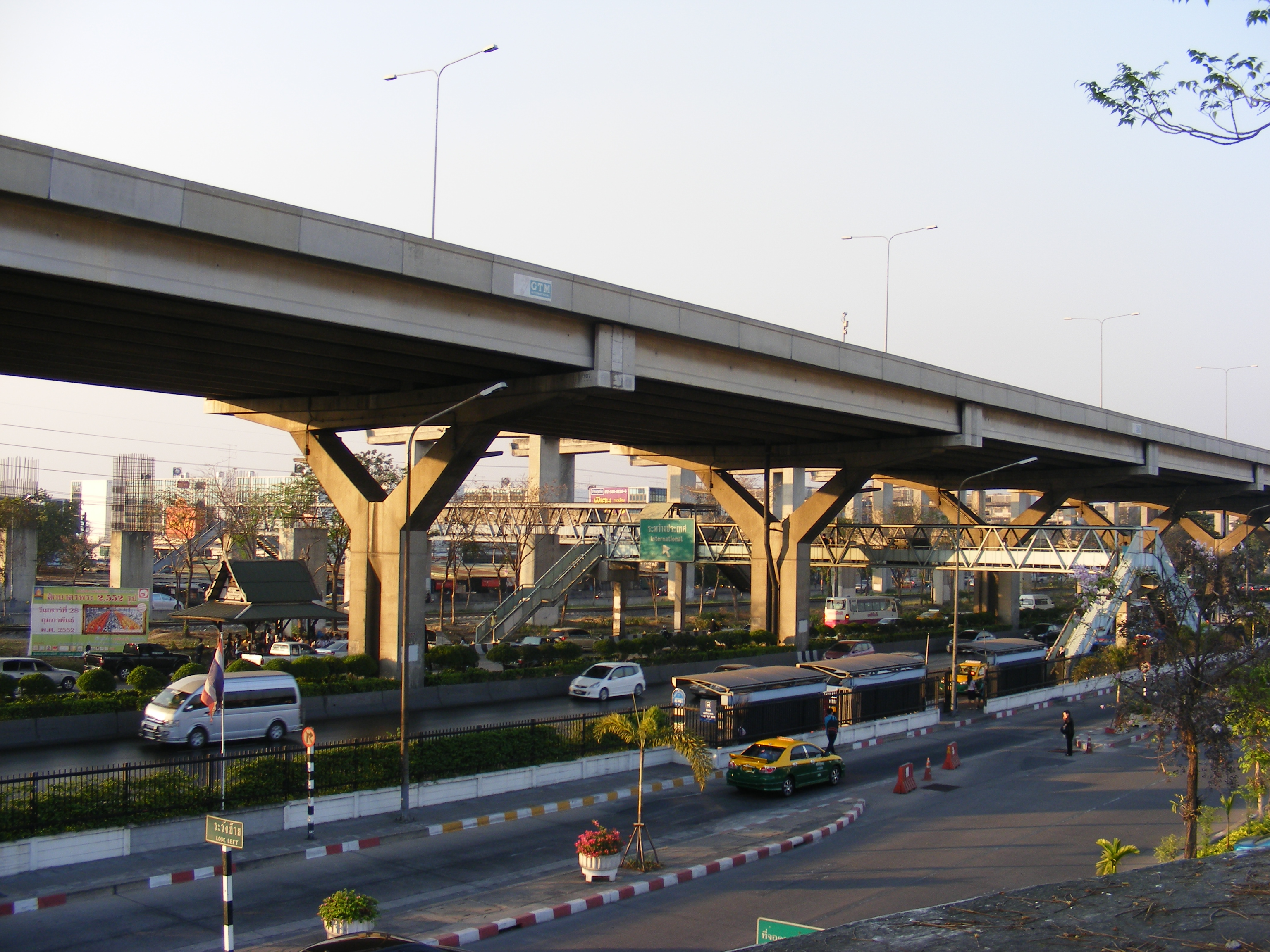
Don Mueang International Airport
There is a golf course between the runways. Royal Thai Air Force personnel play it while jets taxi past, held at the tee by a red light that flashes when aircraft are landing. No barrier separates fairway from tarmac. The arrangement is absurd, distinctly Thai, and somehow perfectly in keeping with an airport that has refused to follow the script written for it. Don Mueang was supposed to close permanently in September 2006. Instead it became, by 2015, the world's largest low-cost carrier airport, handling more budget airline passengers than Kuala Lumpur, Barcelona, or Las Vegas.
Older Than Most Countries' Air Forces
Don Mueang was the second airfield established in Thailand, after Sra Pathum -- now the Royal Bangkok Sports Club horse racing course. The first flights arrived on 8 March 1914, transferring Royal Thai Air Force aircraft from Sra Pathum. Thailand's aviation history had begun just three years earlier, when the kingdom sent three army officers to France for pilot training. They returned with seven aircraft -- three Breguets and four Nieuports -- that formed the nucleus of what would become the Royal Thai Air Force. Don Mueang officially opened as an RTAF base on 27 March 1914, making it one of the oldest continuously operating airports in Asia. Commercial aviation arrived in 1924, when KLM Royal Dutch Airlines operated the inaugural service on a route between Amsterdam and Bangkok. The airfield saw combat during the Boworadet Rebellion of 1933 and was occupied by the Imperial Japanese Army Air Service during World War II, bombed and strafed by Allied aircraft on several occasions.
Gateway to the Kingdom
For most of the twentieth century, Don Mueang was Thailand. It was the country's face to arriving travelers, the hub for Thai Airways International, and one of the busiest airports in Asia. At its peak in 2004, it handled over 38 million passengers, 160,000 flights, and nearly 700,000 tons of cargo, ranking fourteenth in the world by passenger volume. More than 80 airlines operated out of its terminals. The airport's IATA code was the coveted BKK -- three letters that, for decades, meant Don Mueang and Don Mueang alone. Thai Airways introduced nonstop service to New York in May 2005 using Airbus A340-500s, one of the last marquee routes launched from the old airport. The final commercial departure -- Thai Airways TG124 to Chiang Mai at 22:15 on 27 September 2006 -- closed a chapter that had lasted 82 years.
Death and Resurrection
Suvarnabhumi Airport was supposed to replace Don Mueang entirely. The handover happened on the night of 27-28 September 2006, and the BKK code migrated east to the new facility. Don Mueang was redesignated DMK and fell silent. But Suvarnabhumi's higher operating costs and cracked runways drove airlines -- especially low-cost carriers -- to demand Don Mueang's reopening. Airports of Thailand released a report in late 2006 proposing exactly that, and on 25 March 2007 the old airport reopened for domestic flights. The 2011 Thailand floods forced another closure when water swamped the runways, but Don Mueang came back again on 6 March 2012. Four days later, Prime Minister Yingluck Shinawatra ordered all low-cost, chartered, and non-connecting flights to relocate there, officially ending Bangkok's single-airport experiment. The airport that had been declared obsolete was now indispensable.
The Budget Hub That Won
Today Don Mueang operates as the main base for Nok Air, Thai AirAsia, Thai AirAsia X, and Thai Lion Air. Terminal 1 handles international flights; Terminal 2 serves domestic routes. A glass-enclosed elevated walkway connects them and leads to the adjacent Amari hotel. By 2019, the airport was running at full capacity: 52 flights per hour, 700 to 800 flights daily, pushing past 40 million annual passengers through an infrastructure designed for 30 million. A 36.8-billion-baht expansion, with a new Terminal 3 adding 20 million passengers of annual capacity, is scheduled for completion by 2029. The airport holds its share of strange history, too: in February 1996, the Icelandic singer Bjork attacked a television reporter in the arrivals hall after the journalist approached her nine-year-old son. Don Mueang remains second to Suvarnabhumi in total traffic, but for budget travelers across Southeast Asia, DMK is the airport that matters.
From the Air
Don Mueang International Airport (ICAO: VTBD, IATA: DMK) is located at 13.91N, 100.61E, approximately 24 km north of central Bangkok. The airport has two parallel runways (03L/21R and 03R/21L). It is a joint civil-military facility shared with Don Muang Royal Thai Air Force Base. The RTAF golf course between the runways is visible on approach. Suvarnabhumi Airport (VTBS/BKK) is approximately 45 km to the southeast. Pilots should check NOTAMs for military activity and coordinate with Bangkok Approach.