Donaldson Air Force Base
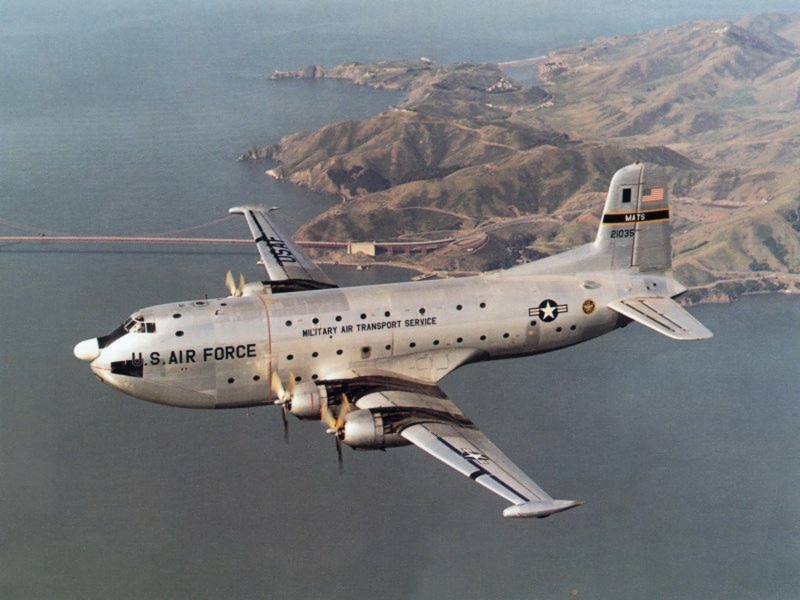
The massive C-124 Globemaster II transports once lined up on these ramps like patient giants, their clamshell nose doors gaping open to swallow tanks, helicopters, and entire fighter squadrons. From this airfield south of Greenville, South Carolina, the United States projected military power to every continent during the tensest years of the Cold War. Donaldson Air Force Base earned the title "Airlift Capital of the World" not through ceremony but through relentless, globe-spanning operations that moved troops and cargo wherever crisis demanded. Today the runways still see traffic, but the Globemasters are long gone, and the hangars shelter civilian industry instead of warplanes.
A World War and a Name
The War Department selected Greenville as the site for a new Army airfield in the early 1940s, and by June 1942 Greenville Army Air Base was training crews on B-25 Mitchell medium bombers. The 310th Bombardment Group passed through that fall, spending a month flying Mitchells before deploying to French Morocco with the Twelfth Air Force. A bombing range was established near Lake Isaqueena in the Clemson University Experimental Forest. The base was named for Captain John Owen Donaldson in March 1951, a Greenville native who had joined the Royal Flying Corps in World War I, scored eight aerial victories, and won the Mackay Gold Medal for winning the Army's transcontinental air race in October 1919. Donaldson was killed in September 1930 when his plane spun out of control after winning the American Legion Air Race in Philadelphia.
Cold War Workhorse
After near-closure in 1945, the base found new purpose as the center of America's troop carrier mission. Air Force Reserve groups stationed at Greenville deployed C-54 Skymasters to Germany during the 1948 Berlin Blockade, replacing the smaller C-47s that had begun the airlift. When the Korean War erupted, reserve units were activated and sent to Japan with C-46 Commandos and C-119 Flying Boxcars. The 63rd Troop Carrier Wing arrived from Altus, Oklahoma in October 1953 with C-124 Globemaster IIs and became the base's host unit for the next decade. These enormous transports, capable of swallowing cargo through their hinged noses, gave Donaldson its global reach and its famous nickname.
Globemasters to the Flashpoints
In 1958 alone, Donaldson's Globemasters answered two simultaneous crises. When Lebanon's government faced attack, 36 C-124s deployed covertly to ferry Army and Marine units to Beirut. Simultaneously, during the Taiwan Strait Crisis, C-124s transported fully assembled F-104 Starfighter aircraft from California to Taiwan, marking the first time a complete operational Air Force squadron was airlifted in a single-package operation. In 1962, the 63rd Troop Carrier Wing flew C-124s to central Africa during the Congo Crisis, airlifting more than 4,000 United Nations troops from five nations along with thousands of tons of food and equipment. That same year, Donaldson's transports deployed to Thailand during the Laotian Civil War, taking off from Don Muang Airport every fifteen minutes to position Marines along the Mekong River.
Closure and Reinvention
In December 1962, budget reductions sealed the base's fate. The 63rd Troop Carrier Wing transferred to Hunter Air Force Base in Georgia, and Donaldson was deactivated in January 1963. The City and County of Greenville accepted the property under a reversionary clause and renamed it Donaldson Center Airport. More than 75 tenants now occupy the former military facility, including Lockheed Martin, which services C-130 and P-3 aircraft there. Stevens Aviation, 3M, and military reserve facilities share the grounds. One unexpected legacy: Julius Capri, a Pennsylvania native stationed at the base in 1944, liked Greenville enough to stay after the war and open the city's first pizza restaurant on nearby Augusta Road.
Echoes on the Tarmac
Flying over Donaldson Center today, the military origins are unmistakable. The long runways, the oversized hangars built to shelter Globemasters, and the expansive ramp areas all speak to a time when this quiet corner of upstate South Carolina was one of the most important airlift hubs on Earth. For twenty-one years, from the B-25 trainers of 1942 to the last C-124 departure in 1963, this airfield connected Greenville to Berlin, Korea, Lebanon, the Congo, Laos, and Taiwan. The pizza parlor on Augusta Road might be the most charming footnote, but the real story is written in the concrete below: the runways that carried the Cold War's heaviest burdens.
From the Air
Located at 34.76°N, 82.38°W, south of Greenville, South Carolina. The former military airfield is now Donaldson Center Airport (KGYH), clearly visible with its long runways and large ramp areas. Greenville-Spartanburg International Airport (KGSP) lies about 10 miles to the north. The oversized hangars originally built for C-124 Globemasters are distinctive from above. Recommended viewing altitude: 3,000-5,000 feet AGL for best appreciation of the military-scale infrastructure.