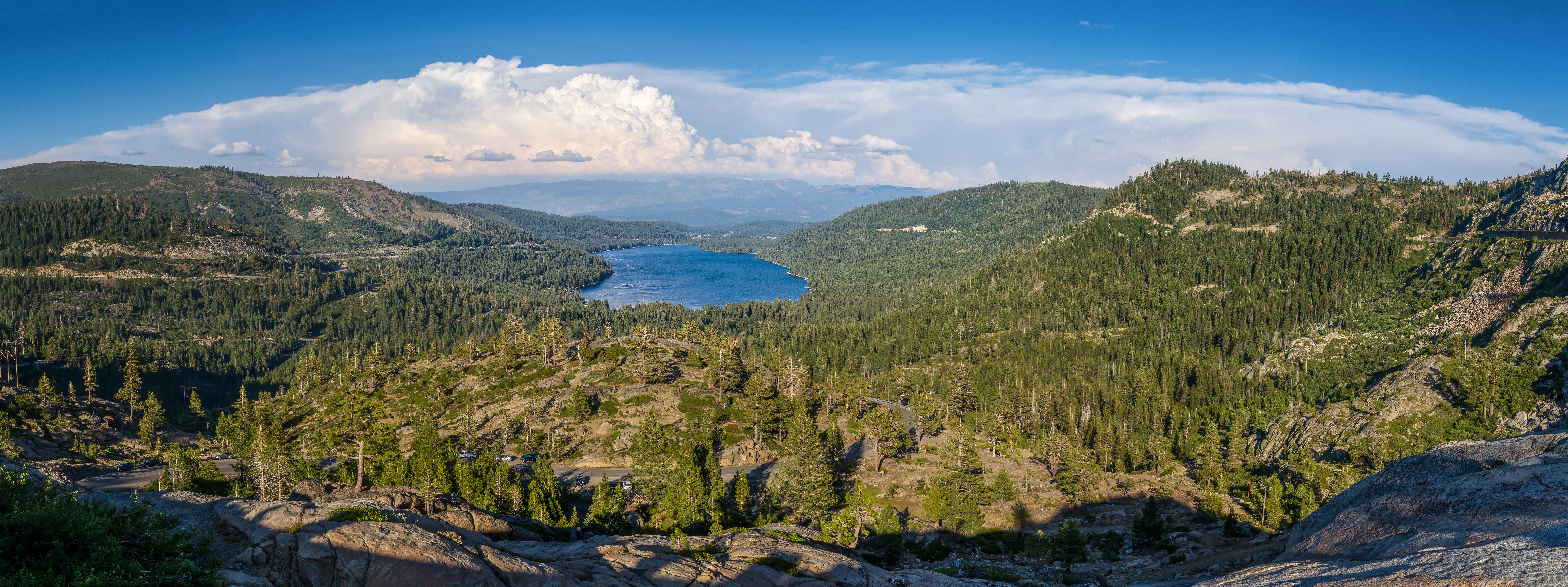
Donner Pass
In the autumn of 1846, a group of eighty-seven emigrants in twenty-three wagons entered the Sierra Nevada, bound for California. They were behind schedule, having taken a supposed 'shortcut' that cost them precious weeks. On October 28, an early snowstorm closed the pass. They were trapped. What followed became the most infamous episode in the history of American westward migration: four months of starvation, death, and eventually cannibalism as survivors consumed the bodies of those who had died. Of the original party, forty-two would perish before rescue parties reached them in February and March 1847. The survivors would carry the trauma for the rest of their lives. The pass where they made their doomed camp now bears their name: Donner Pass, a high point on Interstate 80 that millions of motorists cross annually, most unaware they're passing the site of America's most notorious tale of desperation, death, and the lengths to which humans will go to survive.
The Fateful Shortcut
The Donner Party was not a single group but an assemblage of families and individuals who joined together on the Oregon-California Trail. At Fort Bridger in Wyoming, some members chose to follow the Hastings Cutoff, a new route promoted by Lansford Hastings that supposedly saved 350 miles. It didn't. The 'shortcut' led through the Wasatch Mountains and across the Great Salt Lake Desert, terrain so brutal that the party abandoned wagons and lost cattle. By the time they reached the established trail in Nevada, they had lost weeks - weeks that would prove fatal. The emigrants pushed on, racing the calendar, knowing that early snow could close the Sierra passes. They reached Truckee Lake (now Donner Lake) on October 31, expecting to cross the summit the next morning. That night, snow began falling. By morning, five feet of snow blocked the pass. They tried to push through. They failed.
The Camps
The party split into two camps. The larger group built cabins near the lake, three rough structures packed with families. Six miles back, the Donner family camp struggled separately at Alder Creek, their shelters little more than lean-tos. Supplies ran out quickly. They ate their oxen, then their dogs, then boiled hides and bones. Hunting was nearly impossible in the deep snow. Death came steadily - first the elderly and weak, then the children. By December, fifteen people decided to attempt the pass on foot, a group that became known as the Forlorn Hope. They carried six days' rations for what they hoped would be a six-day journey. It took thirty-three days. Seven survived, having consumed the bodies of those who died on the trail. Back at the camps, the living waited, watched each other die, and eventually did what they had to do to survive.
The Rescues
Word of the stranded emigrants reached California in late December. Rescue parties set out in February, facing enormous difficulties in the heavy snow. The first relief, seven men, reached the lake camp on February 18, 1847. What they found horrified them: survivors so emaciated they could barely stand, living among the dead, bodies mutilated for food. Twenty-three survivors were strong enough to attempt the journey out; two children died on the trail. Three more relief parties followed over the next two months, evacuating survivors in stages. The last rescue party found Louis Keseberg alone among scattered human remains, apparently having survived on the flesh of Tamsen Donner after she died caring for her ailing husband. Keseberg would spend the rest of his life defending himself against accusations that he had murdered for food, a charge never proven but impossible to shake.
Aftermath and Memory
The forty-five survivors scattered across California, most eager to forget. Many refused to speak of the ordeal for the rest of their lives. Others told and retold their stories, shaping the narrative that would become American mythology. The cannibalism overshadowed everything else about the Donner Party - their courage, their endurance, the simple bad luck of an early winter. Archaeological excavations at the camps have confirmed the historical accounts: butchered bones, cooking sites, the material evidence of desperate survival. The story has been told and retold in books, films, documentaries, and folk songs, becoming the ultimate cautionary tale of the westward movement. Take the known route. Don't trust shortcuts. Respect the mountains. Leave early.
Visiting Donner Pass
Donner Memorial State Park occupies the eastern shore of Donner Lake, near the site of the main cabin camp. The Emigrant Trail Museum tells the full story through exhibits, artifacts, and a film. The Pioneer Monument, completed in 1918, stands on a twenty-two-foot pedestal representing the cumulative snowfall that winter; the actual snowpack reached about thirteen feet at its deepest. A short trail leads to a boulder with a plaque marking the location of the Murphy cabin, one of the three shelters. The Donner Party Archaeology Project has excavated the Alder Creek camp six miles east; the site is accessible by trail but has no facilities. Donner Pass itself, 7,056 feet above sea level, carries Interstate 80 and offers pullouts with historical markers. Old Highway 40 provides a more contemplative drive along the original route. Truckee, a former railroad town turned ski resort, offers lodging and dining. Reno-Tahoe International Airport (RNO) is 30 miles east.
From the Air
Located at 39.31°N, 120.32°W in the Sierra Nevada of eastern California. From altitude, Donner Pass appears as a gap in the Sierra crest with Donner Lake visible to the east, a long narrow body of water. Interstate 80 and the Southern Pacific railroad tracks cross the pass. Lake Tahoe lies 10 miles to the south. The surrounding peaks reach over 8,000 feet.