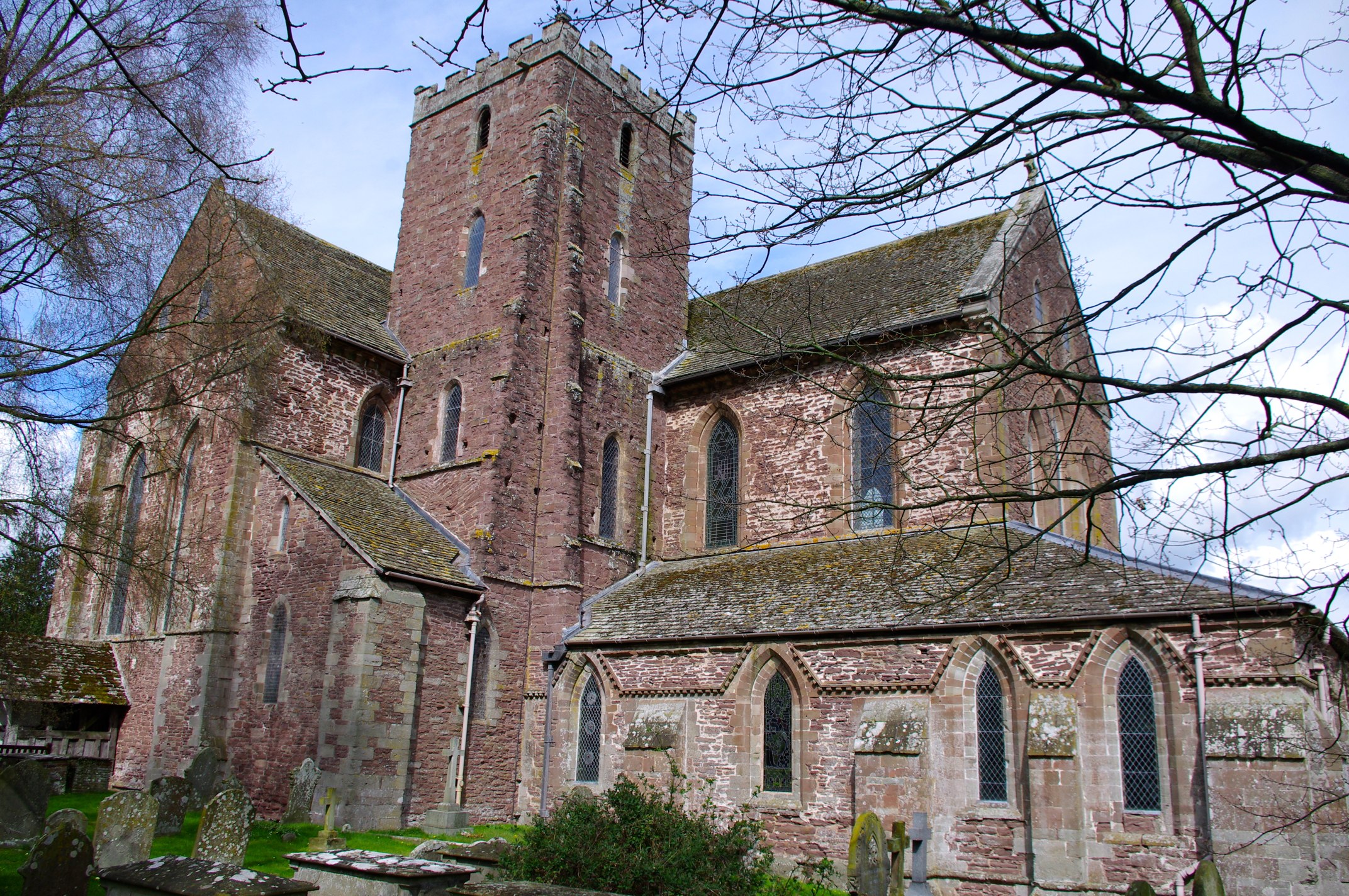
Dore Abbey
When John Scudamore's workers went looking for the abbey's original medieval altar in the 17th century, they found it on a neighbouring farm. Someone had been using it to salt meat and make cheese. The altar was cleaned off and returned to the church, where it remains today -- a quiet monument to the strange afterlives of sacred things. Dore Abbey's story is full of such reversals: founded in piety, enriched by wool, dissolved by royal decree, abandoned, rediscovered, and finally restored by a man trying to ease his conscience.
A Crusader's Daughter House
Robert fitzHarold of Ewyas founded the abbey in 1147, possibly after meeting the Abbot of Morimond during the Second Crusade. The new monastery was established as a daughter house of that French Cistercian abbey, set in the Golden Valley of Herefordshire beside the River Dore. Construction in local sandstone began around 1175 and continued through the tenures of the first three abbots -- Adam, Adam II, and Stephen of Worcester -- spanning nearly a century of patient building. The church was modeled on Morimond itself, with a presbytery, two chapels, two transepts, a crossing, and a nave. Gerald of Wales, never one to withhold an opinion, claimed that the first Abbot Adam was a devious individual intent on acquiring property by any means available.
Wool, Pilgrims, and a Sumptuous Church
Gerald's assessment may have been uncharitable, but the abbey did grow wealthy. During the early 13th century, it expanded its land holdings through grants from King John in 1216, acquiring good farmland that supported a thriving wool trade. The revenue funded a major rebuilding in the Early English Gothic style: an expanded presbytery, additional chapels, a processional ambulatory, and a chapter house. By 1260, the abbey was being described as a "sumptuous church." Thomas de Cantilupe, Bishop of Hereford, consecrated the new building in 1282, dedicating it to the Holy Trinity and Saint Mary. Then in 1321, Abbot Richard Straddell received a relic of the Holy Cross from William de Gradisson, and Dore became a pilgrimage destination -- a remote valley abbey suddenly drawing visitors from far beyond Herefordshire.
Dissolution and the Cheese Altar
The abbey was dissolved in 1536 during Henry VIII's suppression of the monasteries. John Scudamore, a local landowner from a gentry family connected to Owain Glyndwr, bought the building. Most of it fell into disrepair. A century later, his descendant -- also John Scudamore -- was haunted by the early deaths of several of his children and became convinced he should make amends for living off former monastic land. His friend William Laud, Archbishop of Canterbury, influenced the redesign. The medieval altar was retrieved from its agricultural service, a new tower erected over the blocked-off nave, and John Abel of Hereford carved a new oak rood screen bearing the arms of Scudamore, Laud, and King Charles I. New stained glass was installed, and the walls were painted with instructional pictures and texts, many of which remain visible today.
A Living Parish Church
The restored church was re-consecrated on 22 March 1634, and Dore Abbey has served as a parish church ever since -- one of relatively few English abbeys to have made that transition. Further restoration between 1700 and 1710 added new paintings, including a large coat of arms of Queen Anne. The surrounding ruins of the monastic buildings still mark the landscape, but the church itself breathes with active worship. The Early English arches of the ambulatory, the sandstone columns weathered by nearly nine centuries, the rood screen with its three coats of arms -- these are not museum pieces but working elements of a congregation's weekly life. It is a place where the medieval and the modern exist without apparent friction, the cheese-stained altar long since sanctified by centuries of continued use.
From the Air
Located at 51.97N, 2.89W in the Golden Valley, Herefordshire, near the Welsh border. The abbey church is visible among farm buildings in the valley floor. Nearest airports: Hereford (no ICAO, private strips nearby), Gloucester (EGBJ) 30nm east. Best viewed at 2,000ft AGL. The Golden Valley runs north-south between the Black Mountains and the main Herefordshire lowlands.