Doshisha University
In 1864, a 21-year-old named Joseph Hardy Neesima did something that could have gotten him killed. Japan's sakoku policy forbade its citizens from leaving the country on pain of death, but Neesima -- born Shimeta Niijima -- stowed away on an American merchant ship, determined to see the world that his government had sealed off for more than two centuries. He made it to Boston, studied theology at Amherst College, and became the first Japanese person to earn a degree from a Western university. Then he went home. The school he founded in Kyoto in 1875, Doshisha, sits today on the grounds of a former samurai domain, its Victorian-era chapels standing in quiet counterpoint to the wooden walls of Kyoto Imperial Palace just across the street.
The Fugitive's Vision
Niijima's ambition was nothing less than the moral transformation of Japan through Christian education. With support from the American Board of Commissioners for Foreign Missions, he opened the Doshisha English School in Kyoto in 1875, choosing the old imperial capital deliberately -- this was the seat of Japanese culture, and he wanted to plant Western learning at its heart. The school's name means "One Purpose Company," reflecting the communal commitment of its founders. Niijima served as president until his death in 1890 at age 46. His successors included Yamamoto Kakuma, a samurai-turned-educator, and Seito Saibara, who became the first Christian elected to the Japanese Diet. By 1920, Doshisha had grown into a full university in the Anglo-American tradition, one of the first private institutions in Japan to achieve that status.
Brick and Belief in the Imperial Shadow
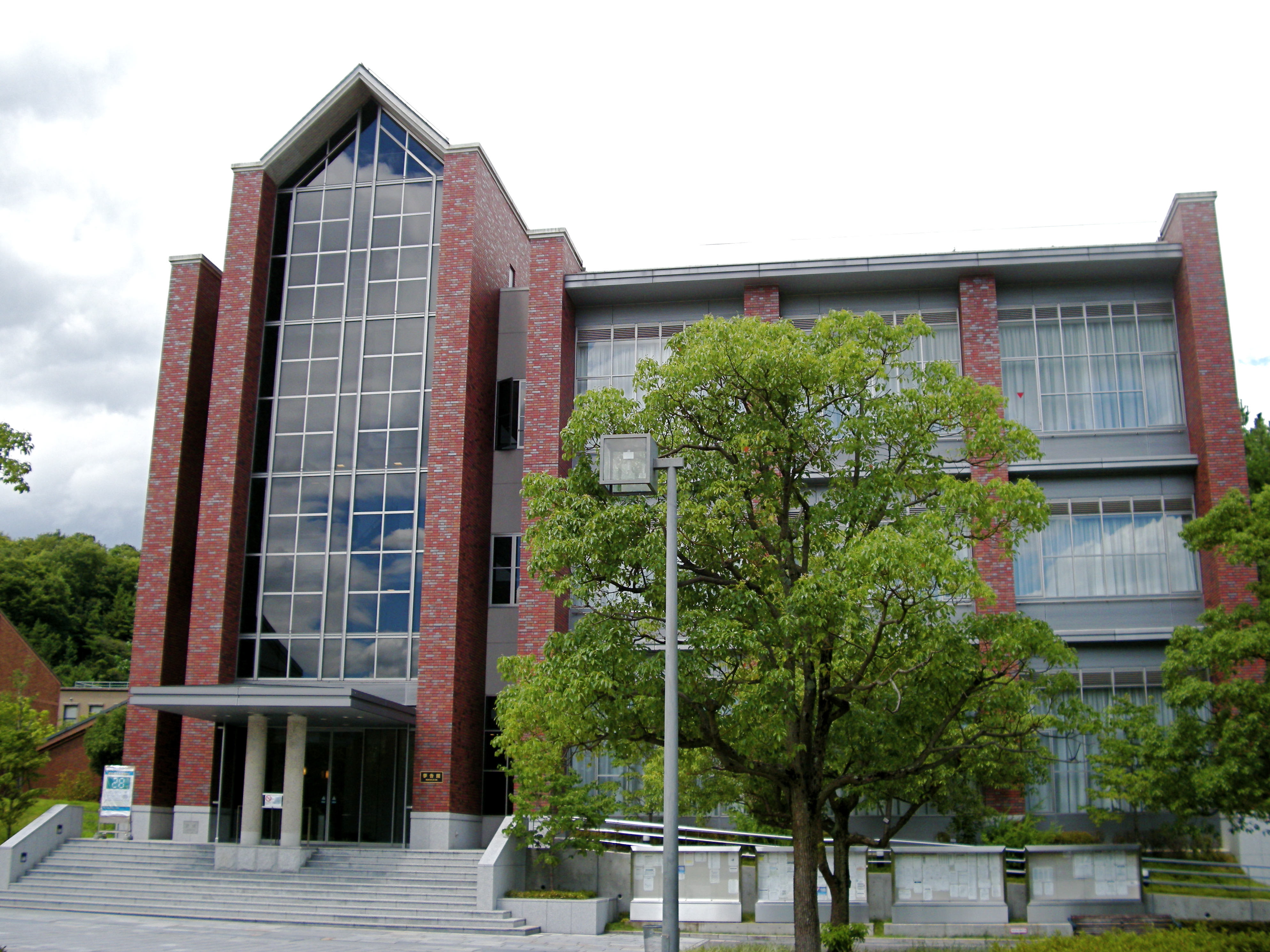
The main Imadegawa campus occupies the former residence of the Satsuma Domain in central Kyoto, positioned next to the Zen temple of Shokoku-ji and directly overlooking the Kyoto Imperial Palace. Five of its buildings have been designated Important Cultural Properties of Japan -- a remarkable distinction for a university campus. Doshisha Chapel, with its red brick facade, and Clark Memorial Hall stand as monuments to Meiji-era Western architecture dropped into one of Japan's most traditional cityscapes. During World War II, the buildings were stripped of their English names and the curriculum was purged of its Western character. Everything was restored after the surrender. Today the campus holds over 2.5 million volumes in its libraries and connects directly to Imadegawa Station on the Kyoto subway, with the 40,000-square-meter Ryoshinkan learning commons opened in 2012.
A Bridge Across the Pacific
The Amherst College connection that began with Niijima's education has never been severed. Since 1972, Doshisha has hosted the Associated Kyoto Program, an eight-month study abroad program run in collaboration with a consortium of American liberal arts colleges. The university also houses the Kyoto Consortium for Japanese Studies, an advanced language training program affiliated with American universities. This transatlantic pipeline runs both ways -- approximately 30,000 students now study on Doshisha's four campuses, and the university is among Japan's "Global 30" institutions selected by the government to internationalize Japanese higher education. Its second major campus at Kyotanabe, opened in 1986 as part of Kansai Science City, spreads across 195 acres devoted primarily to science and engineering.
From Samurai Sons to Game Boy
Doshisha's alumni register reads like a cross-section of modern Japanese history. Takako Doi became the first woman to serve as Speaker of Japan's Lower House -- the highest political position any woman had achieved in the country. Abe Isoo was an early pacifist and feminist in the Japanese Diet. Uchida Kosai twice served as acting prime minister. The Korean poet Yun Dong-ju, who died in a Japanese prison during World War II, studied here. And Gunpei Yokoi, the Nintendo engineer who created the Game Boy, walked these same paths in Kyoto. According to a 2011 survey by Toyo Keizai, 533 Doshisha graduates served as executives in publicly listed companies, making it the top-ranked private university in the Kansai region for corporate leadership. The school's rugby team claimed four national championships between 1980 and 1984, while its baseball squad maintains a fierce rivalry with Ritsumeikan University in the Kansai Big Six league.
From the Air
Located at 35.03N, 135.76E in central Kyoto, Japan. The Imadegawa campus is identifiable from the air by its cluster of red-brick Western-style buildings immediately adjacent to the large green rectangle of Kyoto Imperial Palace grounds and the compound of Shokoku-ji temple. The Kyotanabe campus lies approximately 20km south in Kansai Science City. Nearest major airport: Kansai International (RJBB) approximately 75nm south, Osaka Itami (RJOO) approximately 25nm southwest. Kyoto sits in a basin surrounded by mountains on three sides, which can channel winds and trap low visibility conditions.