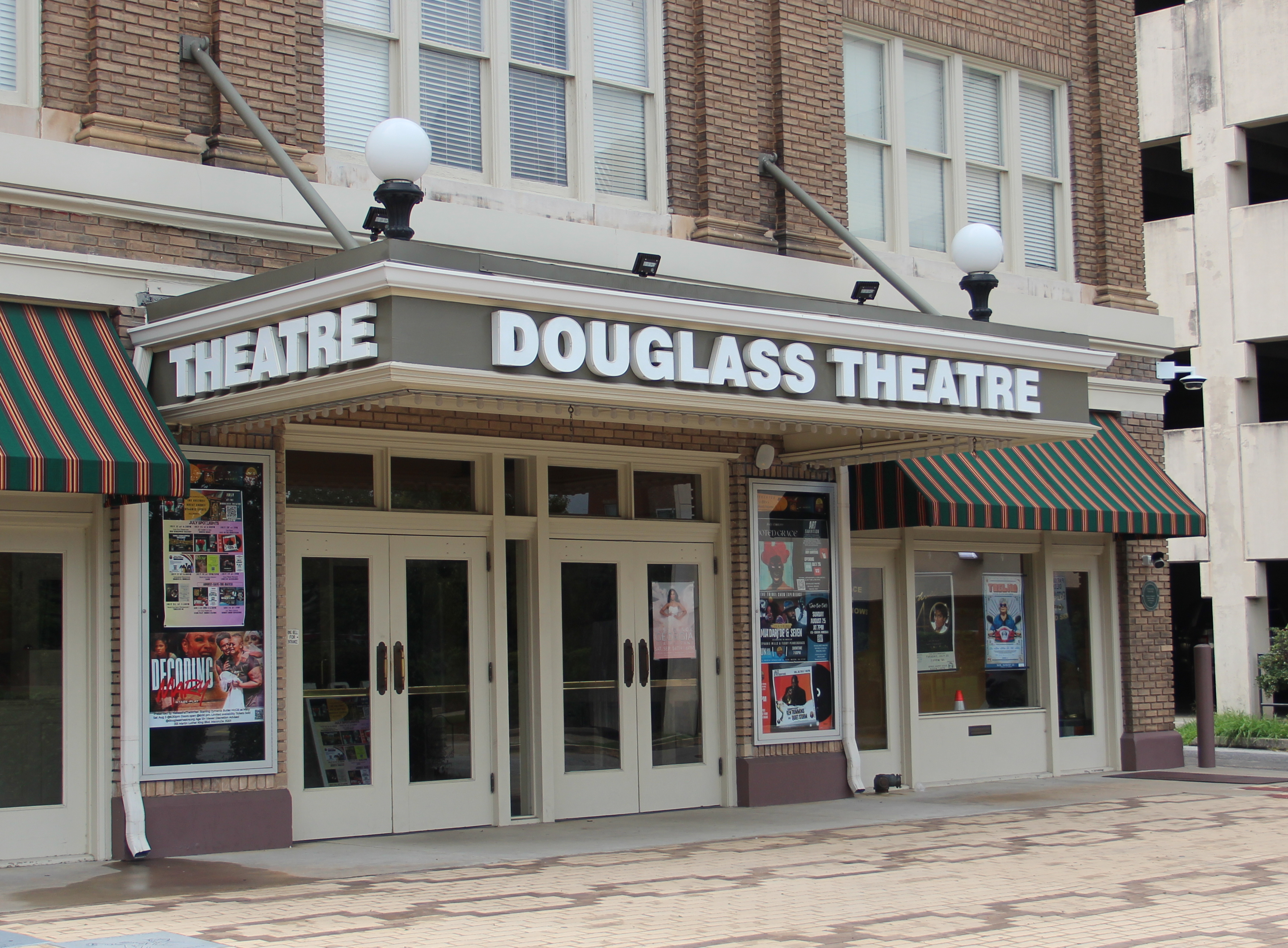
Douglass Theatre
The marquee on Broadway in downtown Macon tells only half the story. The Douglass Theatre, founded in 1921, was never just a place to see a show. It was one of the few spaces in the segregated South where Black audiences could sit in the best seats, where Black performers commanded the spotlight, and where the sound of a new American art form, the blues, reverberated through Georgia red clay country. Charles Henry Douglass, born in 1870 as the son of a former slave, built this theatre as both a business and a declaration.
The Impresario's Vision
Charles Henry Douglass was no newcomer to entertainment when he opened the theatre that bore his name. He was an established theatre developer, well versed in vaudeville booking and the mechanics of running a performance house. His Douglass Theatre joined the Theater Owners Booking Association, known as TOBA, a circuit of roughly 40 theatres across the South and Midwest that served as the primary booking agency for African American artists and performers. Douglass himself sat on TOBA's board. The circuit was so demanding that performers joked TOBA stood for 'Tough on Black Artists,' but it was also the only reliable path to a national audience for Black entertainers in the 1920s.
The Sound of Broadway and Beale Street
The names that crossed the Douglass stage read like a who's who of early jazz, blues, and vaudeville. Bessie Smith, the Empress of the Blues, performed here. So did Ma Rainey, the Mother of the Blues, who had roots in nearby Columbus, Georgia. Ida Cox brought her powerful contralto voice to the Douglass. The comedy duo Butterbeans and Susie kept audiences roaring. As the decades turned, the caliber only grew: Cab Calloway and Duke Ellington both filled the house before eventually outgrowing it for Macon's larger city auditorium in the 1940s. Douglass had designed the interior specifically to accommodate both live performance and motion pictures, and the theatre balanced films with live acts throughout its run.
Fifty-Two Years and a Long Silence
The Douglass Theatre operated for more than half a century before closing its doors in 1972. The civil rights era had dismantled legal segregation, and the TOBA circuit that had sustained Black theatres was long gone. The building fell dormant, its stage dark, its seats empty. By the 1990s, demolition seemed inevitable. But a community group called the Friends of the Douglass Theatre rallied to save it. Their efforts led to a major renovation that added modern stage lighting, digital surround sound, and cinema equipment capable of screening both 35mm and 70mm film. New seating was installed and a ground-floor lobby was carved out of the original layout.
A Stage Reborn
The Douglass reopened on January 11, 1997, a resurrection that took nearly a quarter century. Today it hosts public and private events and serves as the home of the Macon Film Guild, which screens select foreign and independent films. The theatre sits in the heart of Macon's downtown, a city increasingly recognized for its musical heritage, from the Allman Brothers to Little Richard and Otis Redding. The Douglass Theatre is part of that lineage, a reminder that Macon's sound did not emerge from a single tradition but from the convergence of many, including the blues and vaudeville acts that once packed this room when the only stages open to Black performers were the ones Black entrepreneurs built themselves.
From the Air
The Douglass Theatre is located at 32.835°N, 83.626°W in downtown Macon, Georgia, along Broadway. From the air, Macon's compact downtown grid is visible along the west bank of the Ocmulgee River. The nearest airport is Middle Georgia Regional Airport (KMCN), approximately 5 miles south of downtown. Robins Air Force Base (KWRB) lies about 15 miles to the south-southeast.