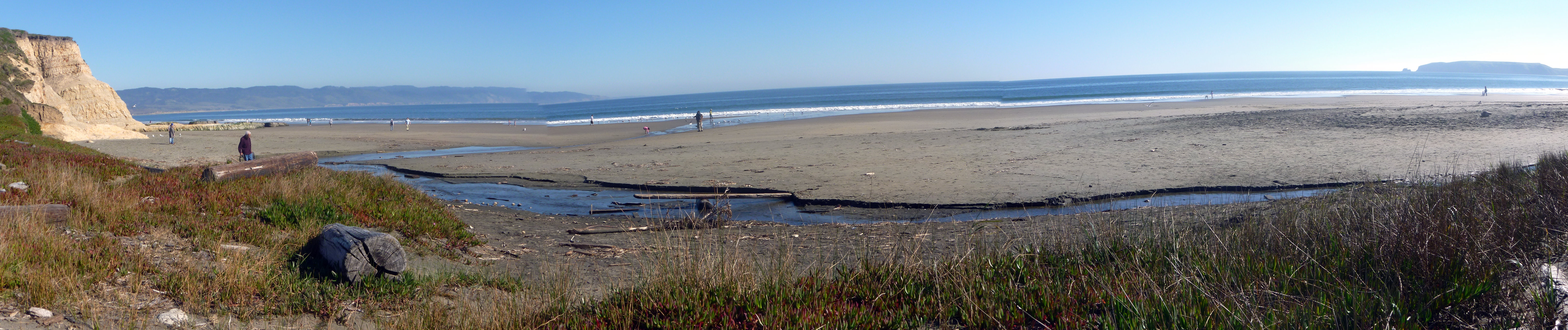
Drake Bay
In the village of Los Planes, five kilometers from Drake Bay's main settlement of Agujitas, a man named Alfredo lives alone in the middle of the jungle. He is known locally as a rainforest hermit, and he possesses, by all accounts, the largest collection of 1970s rock music in the area. This detail says something essential about Drake Bay: it is the kind of place where the most memorable character for miles is a recluse with excellent taste in vinyl, and where the journey to reach him involves a rainforest hike past waterfalls and natural swimming pools. Drake Bay sits on the northern edge of Costa Rica's Osa Peninsula, a small town that exists primarily because Corcovado National Park exists behind it.
The Journey Is the Arrival
Getting to Drake Bay requires commitment. From San Jose, the most common route runs by bus to Palmar Norte, then by collective taxi or bus to the river town of Sierpe, where boats depart twice daily for the water journey down to Agujitas. The boat ride from Sierpe is the final leg, and during October, service may not run at all. Driving is possible only with a four-wheel-drive vehicle, heading south on the Inter-American Highway before turning onto gravel roads that wind through the peninsula. Since 2021, bridges have replaced the river crossings that once made the drive genuinely perilous, but the road remains rough. You can also fly into Drake Bay's small airport from San Jose in about forty minutes. However you arrive, the approach sets expectations: this is not a place designed for convenience. The town has no ATM, no bank, no post office. Almost anyone who owns a car doubles as a taxi driver. The grid ends here.
Gateway to the Wildest Park
Corcovado National Park is the reason most travelers find their way to Drake Bay. The park's San Pedrillo ranger station is accessible by a four-hour hike or a one-hour boat ride from town, making Drake Bay the most practical northern entry point. Near San Pedrillo, a waterfall with a deep swimming hole rewards hikers who ask the rangers for directions. The more remote Sirena station requires a two-and-a-half-hour boat ride or a grueling thirteen-to-sixteen-kilometer hike. Sirena offers camping with showers and covered decks, and the surrounding trails deliver some of the most concentrated wildlife viewing in Central America. Guides are strongly recommended -- the park is home to jaguars, tapirs, crocodiles, and venomous snakes, and the trained guides know where the tapirs walk their regular routes and where the scarlet macaws roost.
The Island of Stone Spheres
Offshore from Drake Bay, the Cano Island Biological Reserve offers a different kind of encounter. The boat ride takes at least an hour across open Pacific water, and the snorkeling around the island is excellent -- clearer and more productive than the scuba diving, which can be cloudy. But the island's most unusual feature sits on land: pre-Columbian stone spheres, carved by indigenous peoples centuries before European contact. These spheres, mostly carved from gabbro -- a hard igneous rock -- some nearly perfectly round, are found at several sites across the Osa Peninsula and the Diquis Delta region, and their purpose remains debated by archaeologists. Cano Island also draws visitors for dolphin and whale watching tours, particularly during humpback whale migration season. The waters between Drake Bay and the island teem with marine life, and the crossing itself often includes dolphin sightings.
Where the Jungle Touches the Shore
Walking along the coast from Agujitas toward San Pedrillo, the beaches grow increasingly secluded as the rainforest pushes right to the waterline. Coatis, anteaters, and monkeys are common sights along this stretch. At the mouth of the Rio Claro, a local known as Clavito rents kayaks for paddling upriver into the forest. The next beach south, San Josecito, offers calm snorkeling in a natural bay protected by rock formations and a coral reef. Back in town, the options are deliberately limited. A handful of sodas in Agujitas serve local food and fresh fish. A bar called La Jungla, known locally as Tureca, has a balcony overlooking the rainforest where you can drink while toucans call from the canopy. Many establishments close during low season. Drake Bay does not pretend to be anything other than what it is: a small, quiet settlement at the edge of one of the last great wildernesses in Central America, where the best thing to do is walk out the door and see what the forest offers.
From the Air
Located at 8.70N, 83.67W on the northern coast of Costa Rica's Osa Peninsula. Drake Bay is visible from altitude as a small coastal settlement where the rainforest meets the Pacific. The Drake Bay Airport serves small charter flights from San Jose. Corcovado National Park's unbroken forest canopy stretches south and east from the town. Cano Island is visible offshore to the northwest. The nearest significant airport is Palmar Sur (MRPM). The Osa Peninsula is one of the most prominent features on Costa Rica's southern Pacific coast.