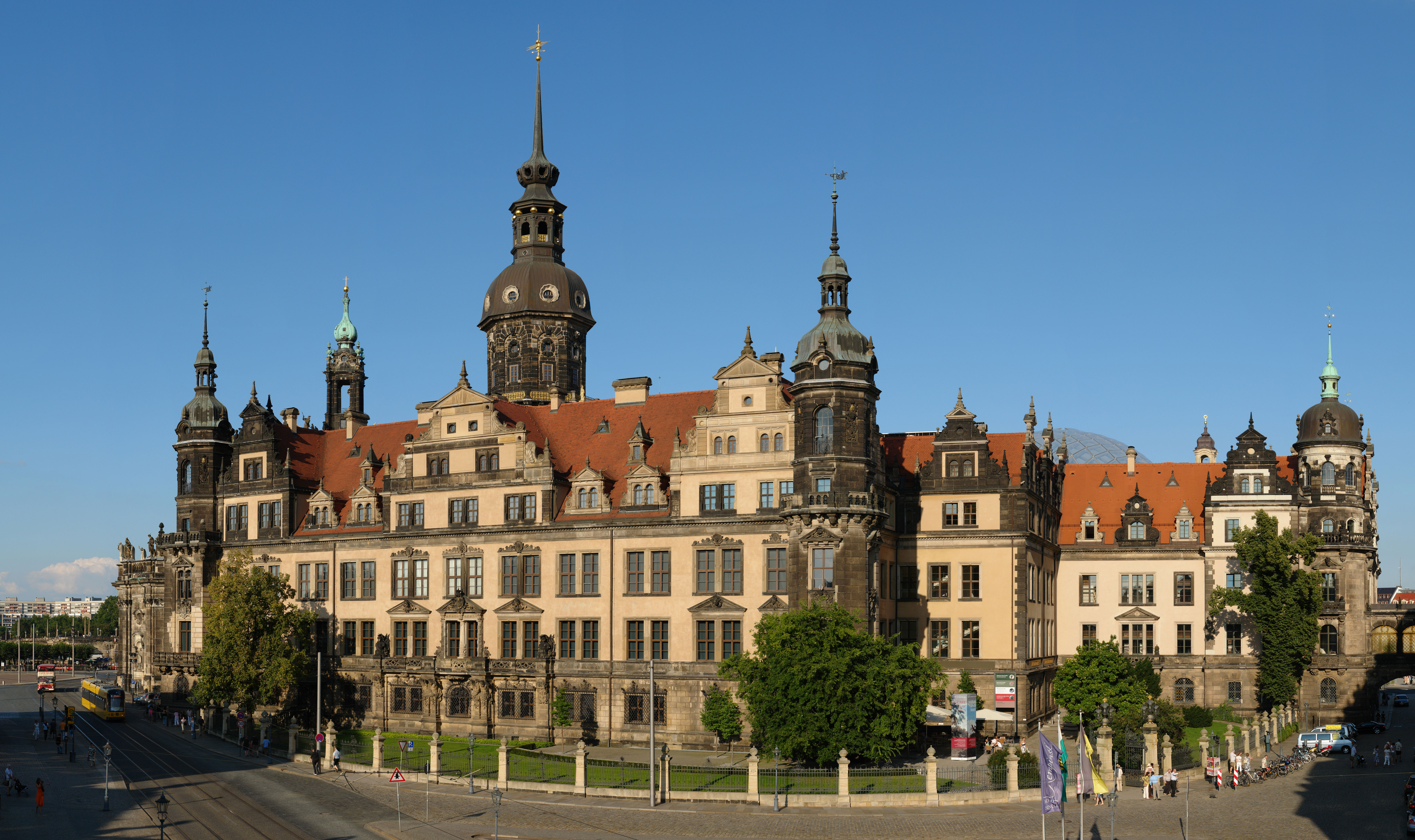
Dresden Castle
Just before five in the morning on November 25, 2019, a small fire erupted in an electrical junction box near the Augustus Bridge, plunging the surrounding streetlamps into darkness. While Dresden's Altstadt slept, two masked figures cut through an iron grille on a window of the Residenzschloss, climbed inside, and walked into the Historic Green Vault. They had less than five minutes. By the time the police arrived, jewels worth more than 100 million euros - some of the most significant baroque treasures in Europe - were gone. It was the largest art theft in modern German history, and it happened inside a building that had survived 800 years of fires, sieges, and firebombs.
The House of Wettin's Long Reign
The Residenzschloss is one of Dresden's oldest buildings, a Romanesque keep raised around 1200 that grew, century by century, into the seat of one of Europe's most enduring dynasties. From 1547 to 1918 it housed the electors and kings of Saxony from the Albertine line of the House of Wettin - a family that ruled this corner of Germany for nearly four centuries and, in a peculiar quirk of European succession, also wore the Polish crown from 1697 to 1763. The architectural styles record each generation's ambitions. The Hausmannsturm watchtower rose in the early 1400s. Master builder Arnold von Westfalen extended the keep into a four-wing fortress between 1468 and 1480. A fire in 1701 gave Augustus II the Strong an excuse to rebuild the western wing in grand baroque style, and the museum rooms still bear his stamp.
The Treasure Chamber
Augustus the Strong was a king who collected like a man trying to outshine the sun. In 1723 he founded the Grunes Gewolbe - the Green Vault - to display the treasures of the Saxon court, and three centuries later it remains the largest collection of treasures in Europe. The Historic Green Vault on the ground floor is itself a baroque artwork: mirrored walls, gilded shelves, and rooms that build from amber to ivory to silver to gold to the dazzling Pretiosensaal of precious stones. Visitors must book ahead and pass through humidity-controlled airlocks. Upstairs, the New Green Vault houses the most spectacular individual pieces - the Dresden Green Diamond, the famous tableau of Aurangzeb's court with its 132 enameled figures, the cherry pit carved with 185 faces. It was from these rooms that the 2019 thieves took their haul.
Armor, Coins, and the World on Paper
The Residenzschloss is really five museums sharing a single ornate envelope. The Numismatic Cabinet, dating back to the early 16th century, holds nearly 300,000 coins and medals - one of the great universal collections of money in Europe, ranging from classical antiquity to the present day. The Kupferstich-Kabinett preserves around 515,000 prints and drawings by more than 20,000 artists across eight centuries: Durer and Rembrandt, Michelangelo and Caspar David Friedrich, woodcuts by Lucas Cranach the Elder and the politically charged graphic art of Kathe Kollwitz. The Rustkammer armory contains some 10,000 weapons and ceremonial costumes. And the Turkish Chamber - one of the oldest and most significant Ottoman collections outside Turkey - displays more than 600 objects gathered by Saxon electors who, like other European princes of their age, cultivated an obsession with what they called turquerie.
The Heist and the Recovery
Most of the buildings on Dresden's Altstadt skyline are reconstructions. The Residenzschloss was burned to a shell in February 1945 and stood ruined for decades; rebuilding only finished in stages, with four state apartments reopening in September 2019 to mark the 300th anniversary of their construction by Augustus the Strong. The new staterooms had been open exactly two months when the burglars came. The investigation eventually traced the theft to the Remmo clan, a Berlin-based crime family. In December 2022 most of the stolen pieces were recovered in a negotiated settlement, though some had been damaged and the most exquisite jewels - including pieces of the diamond garniture that had survived the Thirty Years' War, Napoleon's invasion, and the firebombing of Dresden - were never seen again. The Green Vault is open. The empty cases are still there too, waiting.
From the Air
Dresden Castle sits at 51.05 N, 13.74 E in the heart of the Dresden Altstadt on the south bank of the Elbe, immediately adjacent to Dresden Cathedral and the Zwinger palace complex. The black-and-white sgraffito facade of the Grosser Schlosshof courtyard is one of the most distinctive marks on the Altstadt skyline, with the Hausmannsturm tower rising 100 meters above the river. Best identified from the air by orienting on the dome of the Frauenkirche and the long roofline of the Zwinger. Dresden International (EDDC) lies 9 km north.