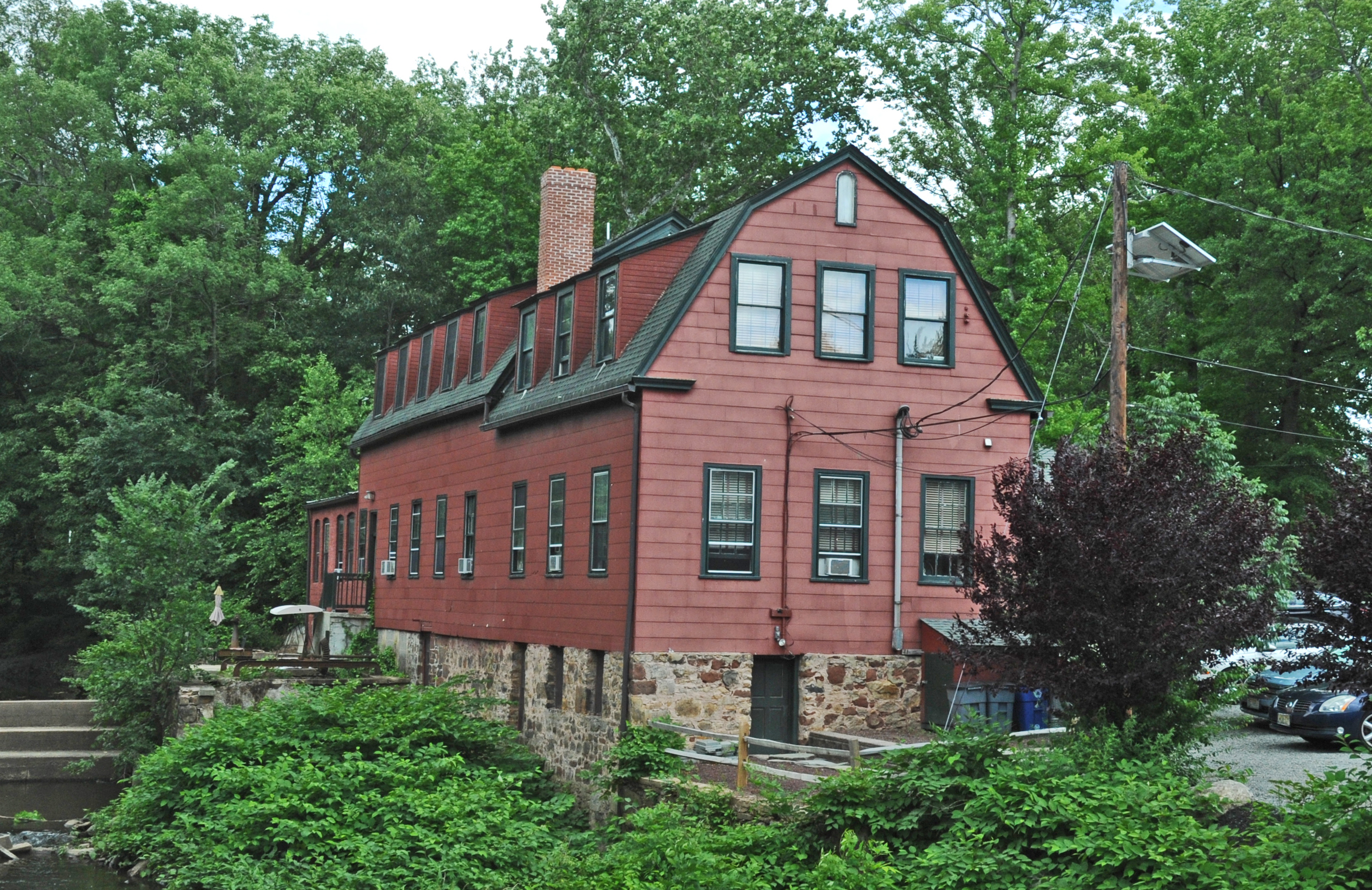
Droescher's Mill
Before Lincoln Avenue had a name, before it was called the Old York Road, before colonists laid their first tracks through central New Jersey, the path that passes 347 Lincoln Avenue East in Cranford was the Naraticong Trail - a Lenape route to the sea. The Unami people walked it to gather marine foods from the shore. The Great Minisink Trail also crossed through here, another ancient thoroughfare in a network that connected the interior to the coast. The mill that stands beside this road today is the oldest continuously operated commercial building in New Jersey, and its story runs as deep as the Rahway River that powers it.
Benjamin Williams and the First Saw
In 1737, Benjamin Williams built a sawmill alongside a dam on the Rahway River. He harnessed the current to turn an undershot water wheel, and the lumber his saws produced went into the construction of the first houses in the surrounding area. For more than four decades, Williams ran his operation on the riverbank. Shortly before his death in 1779, he erected a second building just a few feet from the sawmill for the manufacture of woolens. The mill is the last remaining mill on the Rahway River - a waterway that once drove industry throughout Union County. It earned a place on the National Register of Historic Places on January 8, 1974, recognized for its significance in the history of commerce.
Sharpening Stones and Brand Names
The mill passed through various hands over the next century before Severin R. Droescher purchased it in 1902. Droescher renovated the structure into the building that stands today and established the Cranford Oil Stone Works, manufacturing whetstones and oilstones - the sharpening tools that every craftsman, butcher, and barber depended on in the early twentieth century. His stones were stamped with the initials SRD and sold under the Comfort and Quick & Easy brand names. It was a modest business in a modest building, but it kept the commercial purpose of the mill alive through yet another generation, extending an unbroken chain of enterprise that had begun when the river first turned Williams's wheel.
An Olmsted Ribbon of Green
The mill and its surrounding parkland sit along the Cranford section of the Rahway River Parkway, a greenway designed in the 1920s by the Olmsted Brothers firm - sons of Frederick Law Olmsted, the landscape architect who designed Central Park. The parkway follows the meandering Rahway River south through a chain of parks: Lenape Park, Nomahegan Park, Hampton Park, the Cranford Canoe Club, and on through Sperry Park and Josiah Crane Park before reaching Droescher's Mill Park, also known as Squire Williams Park. The Cranford Riverwalk and Heritage Corridor traces this same path, connecting the Cranford Canoe Club to the mill along the riverbanks. A nonprofit called the Friends of Rahway River Parkway works to preserve and restore the greenway according to the Olmsted design principles that shaped it a century ago.
Where the Trails Converge
Stand at the mill today and you are standing at a crossroads that has been a crossroads for centuries. The Lenape walked the Naraticong Trail here long before Europeans arrived. Colonial travelers knew the road as the Old York Road, a route from Elizabeth to Philadelphia. The Rahway River still flows past the dam, though it no longer turns a wheel. The building has housed a yoga studio in recent years - a use that Benjamin Williams could never have imagined, but one that keeps the structure in active service. The mill endures because people keep finding reasons to use it, each generation adapting the space to its own needs while the river runs on beside it.
From the Air
Located at 40.650N, 74.302W in Cranford, Union County, NJ. The mill sits along the Rahway River, which is visible as a winding waterway through the suburban landscape. The Rahway River Parkway greenway follows the river corridor. Newark Liberty International Airport (KEWR) is approximately 8 nm to the east. Best viewed at 1,500-2,500 ft AGL. The river and adjacent chain of parks provide visual reference.