Drum Castle
Six hundred and fifty years is a long time for any family to occupy the same house. The Irvines of Drum managed it - from 1323, when Robert the Bruce granted the estate to his armour-bearer William de Irwyn, until 1975, when the 24th laird bequeathed the castle to the National Trust for Scotland. In that span, the family weathered the Wars of Scottish Independence, the Reformation, the Civil Wars, and two world wars without ever losing their grip on the square granite tower that anchors one of the oldest continuously inhabited houses in Britain.
The Oldest Tower
The great tower of Drum Castle dates to approximately 1280-1300, making it one of the three oldest tower houses in Scotland, alongside Hallforest Castle and Drum's own disputed rival, Castle of Wardhouse. The tower was likely built by Richard Cementarius, the master mason who also designed the Brig o' Balgownie, the oldest surviving bridge in Aberdeen. The structure is simple and massive: a rectangular tower roughly 12 metres by 9, with walls over two metres thick, rising to a battlemented parapet. There are no decorative flourishes. This is a building designed to survive, and it has. The tower's ground floor, originally accessed only from above by a removable ladder, served as a storage vault. The upper floors provided living quarters. The overall impression is of a building that makes no concessions to comfort - only to endurance.
Bruce's Gift
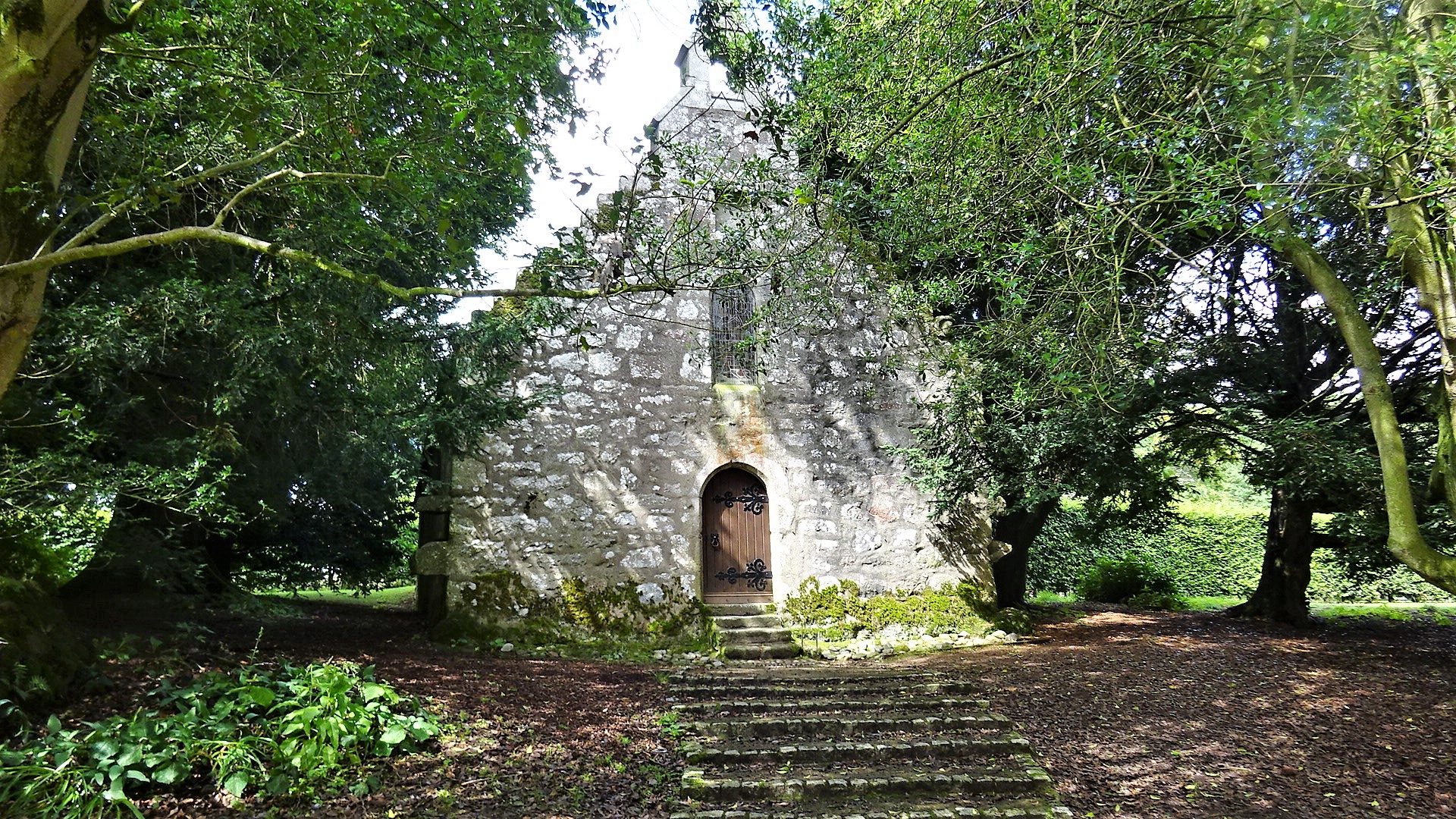
William de Irwyn served Robert the Bruce as armour-bearer and secretary during the wars that secured Scottish independence. In 1323, Bruce rewarded him with the lands and forest of Drum, along with the tower that already stood on the property. The royal charter that conveyed this grant established the Irvine family's claim to Drum for the next six and a half centuries. The forest of Drum was part of the ancient Caledonian forest that once covered much of northeastern Scotland, and remnants of this Old Wood of Drum survive on the estate today - gnarled oak, birch, and Scots pine that represent one of the oldest fragments of natural woodland in the region. The Irvines' stewardship of this forest, however neglectful it may sometimes have been, preserved what would otherwise have been cleared for agriculture centuries ago.
Jacobean Expansion
In 1619, the 9th Laird added a Jacobean mansion house to the medieval tower, creating the architectural contrast that defines Drum today. The mansion is a comfortable domestic building with large windows, decorative plasterwork, and the amenities expected by a seventeenth-century laird - a great hall, private chambers, and a gallery. Where the tower is austere and vertical, the mansion is horizontal and welcoming, and the junction between the two periods is jarring in a way that tells the story of Scotland's transition from feudal warfare to relative peace. Further additions followed in the Victorian period, including the library wing that houses over 4,000 books. The castle grew by accretion, each generation adding what it needed without demolishing what came before.
The Garden of Historic Roses
The walled garden at Drum contains a collection of historic roses arranged chronologically, telling the story of rose cultivation from the seventeenth century to the present. The collection was established by the National Trust for Scotland after it took ownership and includes varieties that were grown in Scottish gardens during each period of the castle's history. In summer, the garden is dense with colour and fragrance, the roses climbing walls and arching over paths in a display that contrasts sharply with the austere granite of the tower visible above the garden wall. The grounds also include the Old Wood of Drum, where a network of paths winds through the ancient trees, and a playground and picnic area that make the estate a destination for families as well as historians.
The Weight of Continuity
What distinguishes Drum from the many other castles of Aberdeenshire is the sheer duration of its single-family occupation. The Irvines held Drum through the Scottish Wars of Independence, the Reformation, the Covenanting wars, the Jacobite risings, and the agricultural and industrial revolutions. They survived because they were pragmatic - supporting whichever side seemed most likely to win, or at least least likely to destroy them. The castle bears the marks of this pragmatism: no grand ideological statements, no ruinous battles, just the steady accumulation of rooms, furniture, and portraits that comes from staying in one place for a very long time. When the last Irvine laird died in 1975, the National Trust inherited not just a building but a family archive spanning the better part of a millennium. The Victorian library, with its 4,000 volumes, is the physical expression of a family that read, recorded, and remembered.
From the Air
Drum Castle is located at approximately 57.095°N, 2.338°W near Drumoak, about 10 miles west of Aberdeen on the north side of the River Dee. The castle and its wooded estate are visible from the air, with the Old Wood of Drum forming a distinctive patch of ancient woodland. The A93 road passes nearby. Nearest airport is Aberdeen Airport (EGPD), approximately 10 miles northeast. The River Dee valley is clearly visible, with farmland on both sides and the castle grounds forming a wooded enclave.