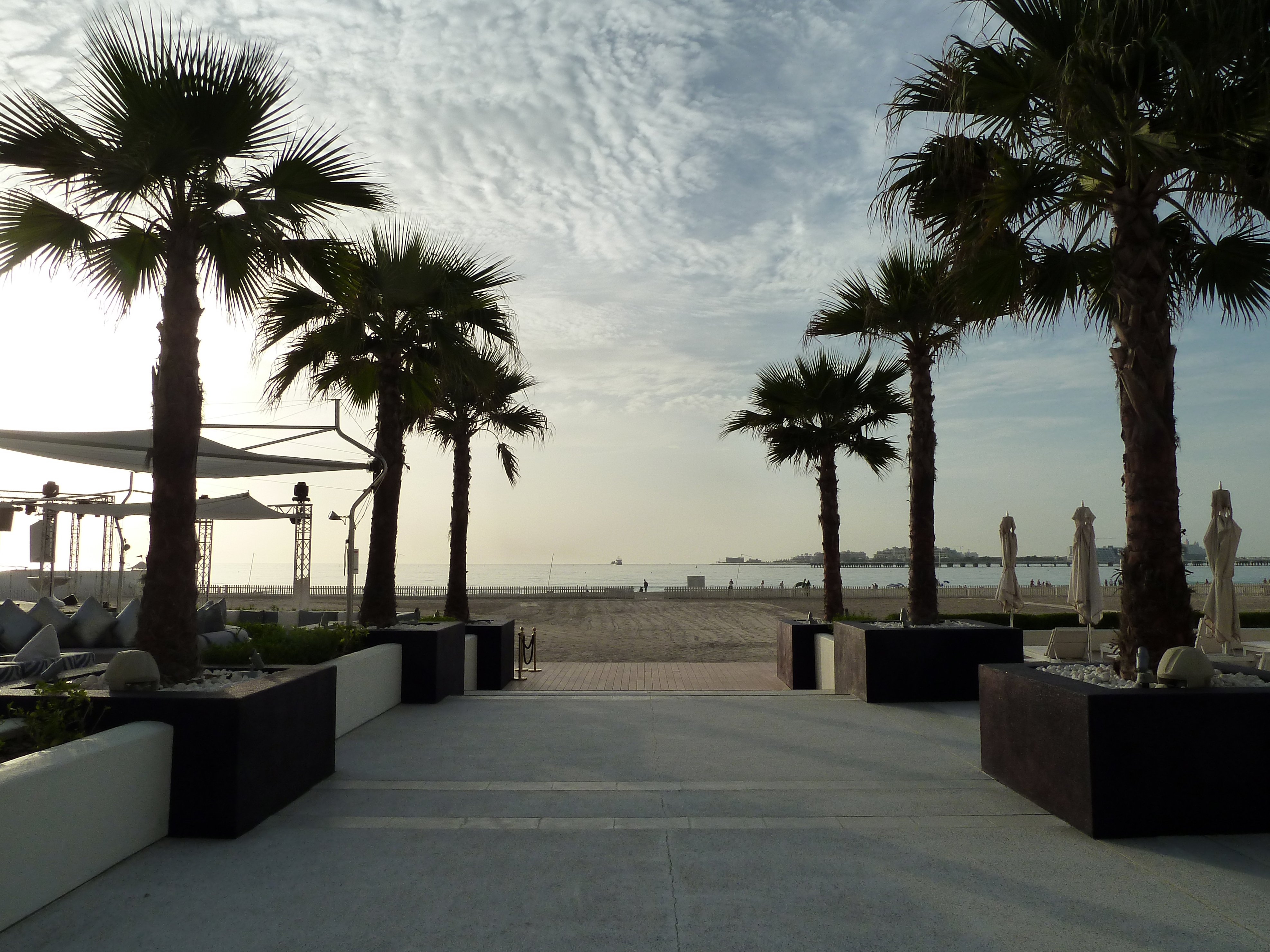
Dubai
In 1966, oil was discovered in Dubai's offshore waters. The emirate was a small trading port then, its economy based on pearling and smuggling and the creek where dhows had docked for centuries. Sheikh Rashid bin Saeed Al Maktoum, the ruler who had already begun modernizing infrastructure, now had revenue to accelerate the transformation. But he also recognized that oil would run out - Dubai's reserves were always smaller than neighboring Abu Dhabi's - and planned accordingly. The ports and airports and free zones he built would generate wealth after the wells dried up. His son Sheikh Mohammed continued the vision, but at a scale that would have seemed inconceivable to anyone in 1966: artificial islands, the world's tallest building, indoor ski slopes in the desert, a city of over three million where sixty years ago perhaps 40,000 lived. Dubai today produces almost no oil; it produces instead the idea of Dubai - a place where anything can be built if you have enough money and enough migrant labor and enough air conditioning to survive 45-degree summers.
The Burj Khalifa
The Burj Khalifa rises 828 meters above the desert - the tallest structure ever built, nearly twice the height of the Empire State Building, a needle of steel and glass that appears in every photograph of Dubai's skyline. Construction took six years, from 2004 to 2010, involving 12,000 workers at peak and techniques developed specifically for this building. The tower was designed to be unmatched, to define Dubai as a place where records are broken.
The Burj was originally named Burj Dubai, but the 2008 financial crisis threatened to halt construction. Abu Dhabi's government provided a $10 billion bailout; the tower was renamed for Abu Dhabi's ruler, Sheikh Khalifa, in gratitude. The rescue was a reminder that Dubai's ambitions depend on neighbors' resources. The observation deck on the 148th floor offers views that extend to Iran on clear days. At night, the tower's LED facade displays patterns visible across the city. The Burj Khalifa is functional - it contains offices, residences, an Armani hotel - but its primary function is symbolic: proof that Dubai can build anything.
The Palm and The World
The Palm Jumeirah is a artificial island in the shape of a palm tree, visible from space, created by dredging billions of cubic meters of sand from the sea floor. Construction began in 2001; the first residents moved in 2006. The palm's trunk and fronds hold villas and apartments; the crescent that surrounds it holds the Atlantis resort. It was the first of three planned palm islands; the second is partially complete, the third abandoned.
The World - a collection of 300 artificial islands arranged to form a map of the world - was more ambitious and less successful. Construction halted during the financial crisis; most islands remain empty sand. The projects represented Dubai's approach: scale that seems impossible, timelines that seem impossible, costs absorbed until they cannot be. The Palm Jumeirah works, after a fashion - the beaches eroded, the water quality suffered, but people live there. The World remains a monument to ambition that exceeded execution, a map of the world slowly sinking back into the sea.
The Creek and the Old City
Before the skyline, there was the Creek - a natural inlet where dhows have traded for centuries, where pearling boats departed and returned, where the city's commercial life began. The creek divides Deira on the northern bank from Bur Dubai on the southern, crossed by abras (water taxis) that still ferry passengers for a single dirham. The old souks - gold, spices, textiles - cluster near the water, their narrow lanes a remnant of the Dubai that existed before oil.
The contrast with the modern city is deliberate. Dubai preserves its heritage in designated areas while demolishing it everywhere else. The Al Fahidi Historical District presents restored wind towers and courtyard houses as museum pieces; the actual old neighborhoods were cleared for development. The creek itself has been extended inland, a canal cutting through the desert to connect to the sea on the other side of the city. The old Dubai survives as tourism product, heritage commodified for visitors who want something other than malls and towers. The dhows still dock at the creek, now carrying electronics to Iran and Africa instead of pearls to India.
The Mall of Everything
The Dubai Mall covers 502,000 square meters of retail space - not quite the world's largest by area but certainly the most visited, with over 100 million visitors annually. The mall contains an aquarium, an ice rink, a virtual reality park, a waterfall three stories high, 1,200 shops, and a view of the Burj Khalifa from its terrace where the fountain show draws nightly crowds. The mall is not just retail; it is entertainment, spectacle, climate-controlled refuge from temperatures that make outdoor life impossible half the year.
Dubai's malls are not alternatives to public space; they are public space. The street life that defines other cities cannot exist in summer heat that exceeds human tolerance. The malls provide what sidewalks provide elsewhere: places to walk, to see and be seen, to spend hours with family and friends. The Mall of the Emirates has Ski Dubai, an indoor slope where snow falls year-round in a city that has never experienced natural winter. The malls are absurd and necessary, the infrastructure of a city that had to build indoor environments because the outdoor one is unsurvivable.
The Workers' City
Dubai's population is roughly 85% expatriate - the highest percentage of any city in the world. The workers who built the towers and clean the hotels and drive the taxis come from India, Pakistan, Bangladesh, the Philippines, Nepal, Ethiopia. They live in labor camps on the city's outskirts, transported by bus to construction sites and shopping malls, working under contracts that tie visas to employers who can end both job and legal presence with a single decision.
The conditions have been criticized by human rights organizations: wages withheld, passports confiscated, housing that would be condemned in the workers' home countries. Dubai has made reforms - some genuine, some cosmetic - but the fundamental structure remains. The skyline was built by people who cannot afford to live anywhere near it, who work years to send money home, who have no path to citizenship regardless of how long they stay. Dubai's miracle is inseparable from the labor conditions that made it possible. The city that appears in tourism brochures exists because of a city that does not appear: dormitories and buses and workers whose presence is temporary by design.
From the Air
Dubai (25.20°N, 55.27°E) lies on the southern coast of the Persian Gulf, built on flat desert terrain. Two major airports serve the city: Dubai International (OMDB/DXB) 4km east of downtown is one of the world's busiest by international passengers, with two parallel runways (12L/30R and 12R/30L, both ~4,000m); Al Maktoum International (OMDW/DWC) 37km south at Dubai World Central is the newer expanding facility. The Burj Khalifa (828m) is visible from all approaches - the world's tallest structure. The Palm Jumeirah artificial island is distinctive on coastal approaches. Dubai Creek cuts through the older part of the city. The World Islands archipelago lies offshore. Weather is desert climate - extremely hot and humid in summer (June-September temperatures regularly exceed 40°C), mild winters. Dust and haze frequently reduce visibility. Morning fog is common in winter. The Persian Gulf creates maritime effects with humid air masses.