Dubrovnik
Dubrovnik's walls have witnessed everything: the rise and fall of the Republic of Ragusa, devastating earthquakes, siege warfare within living memory. Yet the city endures, its honey-colored stone and terracotta roofs rising from the Adriatic like something from a Renaissance painting. The old town - a UNESCO World Heritage Site since 1979 - packs churches, palaces, monasteries, and museums into a compact peninsula enclosed by 1,940 meters of fortifications that rank among the finest surviving medieval walls in Europe. The Stradun, the polished limestone main street, runs arrow-straight from the Pile Gate to the Old Harbour, flanked by baroque buildings that replaced structures destroyed in the catastrophic 1667 earthquake. Today's visitors walk where diplomats once negotiated treaties that kept the tiny republic independent for five centuries, balancing between Ottoman and Venetian spheres while growing wealthy from Adriatic trade.
The Republic of Ragusa
For over four centuries, Dubrovnik functioned as an independent city-state rivaling Venice in maritime prowess and diplomatic sophistication. The Republic of Ragusa, as it was known, never fielded armies or conquered territory - instead, it survived through shrewd diplomacy, paying tribute to the Ottoman Empire while maintaining trade privileges throughout the Mediterranean. The republic's motto, 'Libertas' (freedom), still appears on the city's flag. Ragusa's merchant ships carried cargo from Constantinople to London, its bankers financed ventures across Europe, and its diplomats were welcomed in courts from Madrid to Istanbul. The republic abolished slavery in 1416, centuries before most European states. This golden age ended with Napoleon's arrival in 1808, when French troops dissolved the republic and later ceded the territory to Austria. The walls that once protected a sovereign state now protect one of Europe's most visited historic centers.
Walking the Walls
Dubrovnik's city walls offer the essential experience of the old town - a two-kilometer circuit that takes roughly ninety minutes and provides views over terracotta rooftops, the harbor, the shimmering Adriatic, and the forested island of Lokrum offshore. The walls reach up to 25 meters high and six meters thick in places, punctuated by towers that once mounted cannons against Ottoman and Venetian threats. The Minčeta Tower at the northern corner offers the highest vantage point; Fort Bokar guards the western approach; Fort Revelin protects the eastern harbor. Walking in the morning or late afternoon avoids both the midday heat and the cruise ship crowds that can overwhelm the circuit during peak hours. The walls survived the 1667 earthquake that destroyed most of the city within them, and they survived the 1991-92 siege when Yugoslav forces shelled the old town.
Inside the Walls
The Stradun - officially Placa - serves as the old town's spine, a 300-meter promenade paved with limestone polished smooth by centuries of footsteps. At its western end, Onofrio's Fountain has provided fresh water since 1438, fed by an aqueduct from a spring twelve kilometers away. The Franciscan Monastery houses Europe's third-oldest functioning pharmacy, operating continuously since 1317. The Rector's Palace, where the republic's elected leaders served one-month terms to prevent any accumulation of power, now contains a museum of Ragusan history. The Cathedral Treasury displays relics including what is claimed to be a piece of the True Cross. Narrow side streets climb steep stairs to residential quarters where laundry still hangs between stone buildings and cats doze on warm steps. Despite the crowds on the Stradun, these alleyways retain the texture of a living city rather than an open-air museum.
Beyond Game of Thrones
Dubrovnik's appearance as King's Landing in HBO's Game of Thrones transformed its tourism economy, bringing both opportunity and challenge. Guided tours trace filming locations: the Jesuit Staircase where Cersei began her walk of shame, Fort Lovrijenac doubling as the Red Keep, the Rector's Palace atrium appearing in multiple scenes. Yet the association risks reducing a complex historical city to a television set. Dubrovnik struggles with overtourism - on peak summer days, up to 10,000 cruise passengers might disembark into a walled town built for 1,500 residents. The city has implemented visitor caps, raised prices, and encouraged off-season travel. Those who come outside July and August, or who venture beyond the walls to nearby Lokrum Island, the Elafiti archipelago, or the Pelješac wine region, find a destination whose real history proves as compelling as any fantasy.
Visiting Dubrovnik
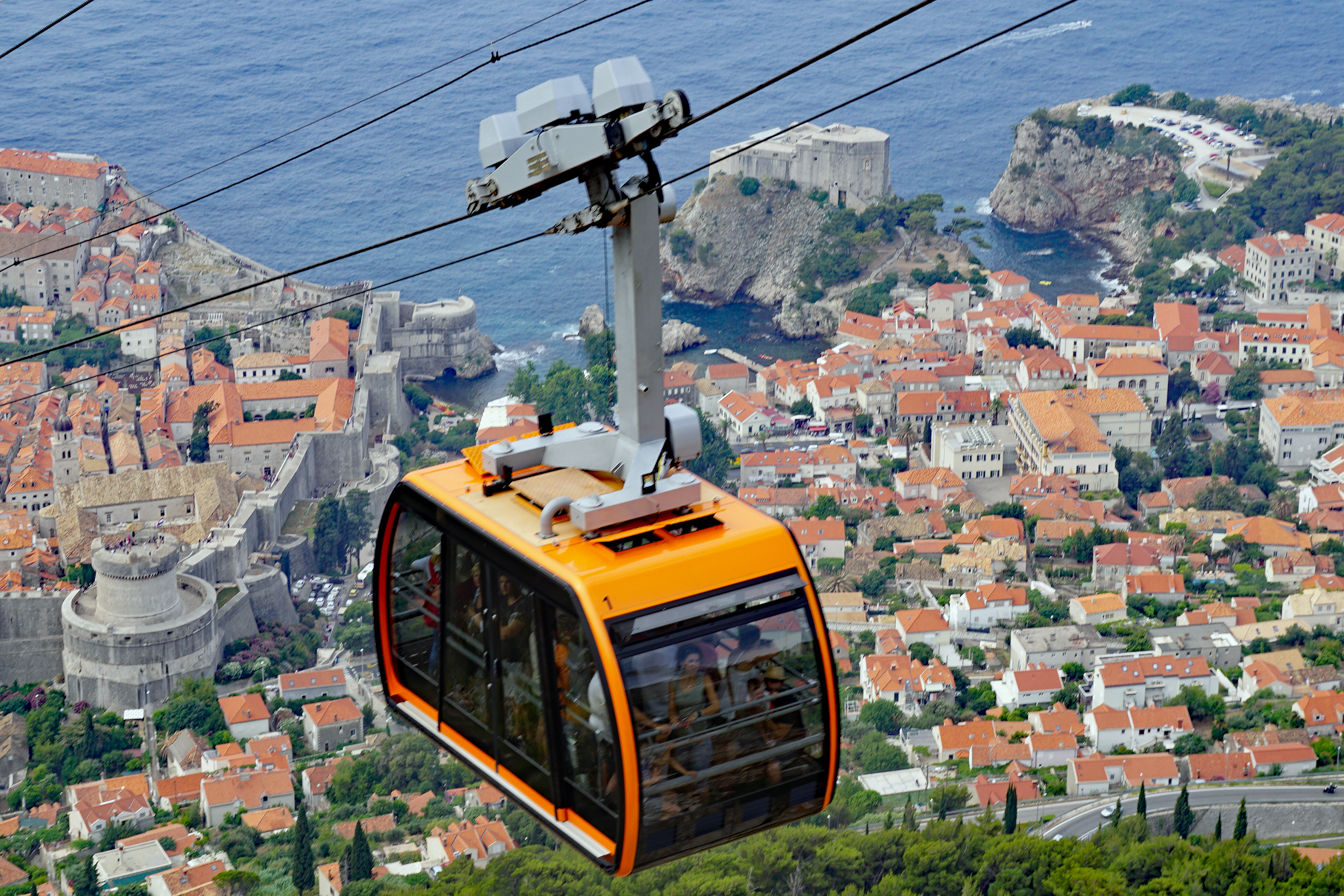
Dubrovnik's compact old town makes orientation simple: enter through the Pile Gate, walk the Stradun, explore the side streets, climb the walls. The city functions as a base for day trips to Montenegro's Bay of Kotor, the islands of Korčula and Mljet, and the vineyards of Pelješac. The beach at Banje lies just east of the old port; better swimming awaits on Lokrum, a ten-minute ferry ride to a forested island with a botanical garden and a ruined Benedictine monastery. Accommodation within the walls carries premium prices; staying in Lapad or Gruž offers better value and easier parking. The cable car to Mount Srđ provides panoramic views over the walled city and the coastline stretching toward Albania. Come in May or October to enjoy warm weather, swimmable seas, and manageable crowds - before or after the summer siege of tourists that has become Dubrovnik's annual challenge.
From the Air
Located at 42.65°N, 18.09°E on Croatia's southern Adriatic coast. The walled old town occupies a small peninsula jutting into the sea, its terracotta rooftops and distinctive walls clearly visible from altitude. The city lies near the tip of a narrow Croatian corridor separating Bosnia-Herzegovina from the coast. Dubrovnik Airport (DBV) is 20km southeast near Čilipi. The forested island of Lokrum lies just offshore. The coastline stretches northwest toward Split and southeast toward Montenegro's Bay of Kotor.