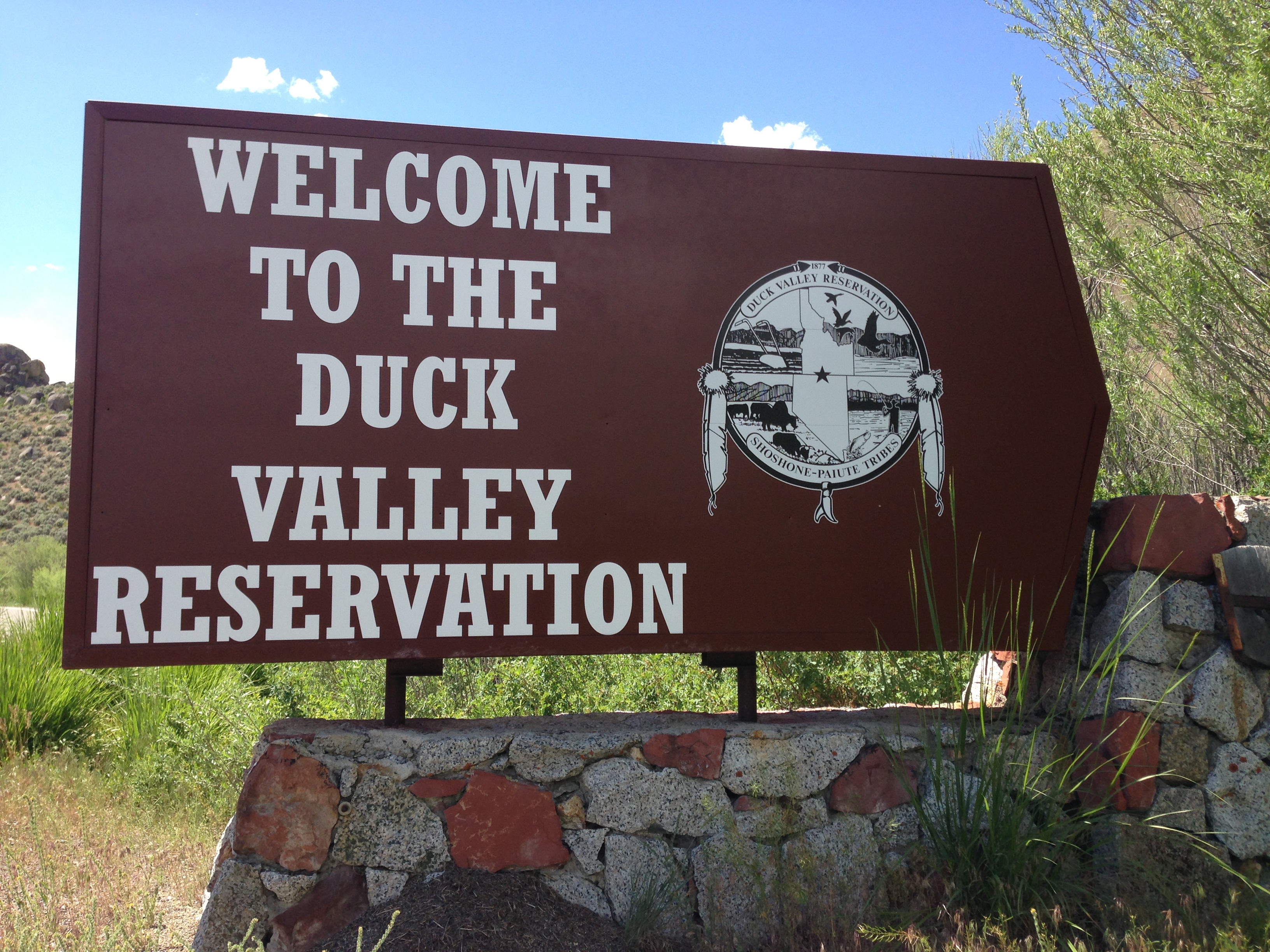
Duck Valley Indian Reservation
The boundary line runs straight as a surveyor's chain: 50.2 percent Idaho, 49.8 percent Nevada, split precisely along the 42nd parallel. Duck Valley Indian Reservation forms an almost perfect square in the high desert, a geometric anomaly in a landscape of mountains and sagebrush. But the precision of its borders belies the messy, contested history of how the Shoshone-Paiute people held onto this land when so many others lost theirs.
The Valley They Refused to Leave
President Rutherford B. Hayes established the Duck Valley Western Shoshone Reservation by executive order on April 16, 1877. Almost immediately, local settlers wanted them gone. In 1884, politicians and ranchers pressured the federal government to relocate the tribal members to Fort Hall, Idaho, arguing that Duck Valley was too valuable for indigenous people to occupy. The bands' chiefs refused. They had seen what happened to peoples who gave up their lands, and they held firm. Their resistance worked - Duck Valley remained Shoshone and Paiute territory.
Prisoners Return Home
The Bannock War of 1878 swept through the region like wildfire. Northern Paiute bands from Duck Valley joined with Shoshone warriors in the uprising, and when the conflict ended in defeat, survivors faced a grim fate: imprisonment at the Yakama Indian Reservation in Washington Territory, hundreds of miles from their homeland. They waited in captivity until federal authorities finally released them. Then they walked home - back across the mountains, back across the desert, back to Duck Valley. President Grover Cleveland expanded the reservation in 1886 specifically to accommodate these returning Paiute, acknowledging through official action what everyone already knew: this was their land.
A Reservation That Grew
Most American Indian reservations share a common story: steady reduction through allotment, broken treaties, and legal maneuvering. Duck Valley tells the opposite tale. President William Howard Taft expanded it to its current size on July 1, 1910, marking the second federal action to enlarge the reservation since its creation. This almost never happens. Federal policy has historically worked to shrink indigenous landholdings, not grow them. That Duck Valley expanded twice makes it an extraordinary exception in the brutal history of American Indian land policy.
Life on the Border
Owyhee, Nevada - the reservation's only significant community - sits at over 5,000 feet in the Owyhee Desert, roughly equidistant from Elko to the south and Mountain Home, Idaho, to the north. More than 80 percent of the reservation's roughly 1,265 residents live on the Nevada side, though the tribe's identity transcends state lines. In 2016, the Nevada Native Nations Land Act added Forest Service land to the reservation, continuing the rare pattern of expansion. The Shoshone-Paiute Tribe of Duck Valley maintains sister relationships with reservations across the Great Basin, from Pyramid Lake to Fort Hall, united by kinship and shared history across the high desert.
From the Air
Duck Valley Indian Reservation is centered at 42.00N, 116.14W, elevation approximately 5,400 feet. The reservation forms a distinctive square shape visible from altitude, straddling the Idaho-Nevada border along the 42nd parallel. The community of Owyhee, Nevada is the main settlement. Idaho State Highway 51 runs north from the reservation toward Mountain Home; Nevada State Route 225 heads south to Elko. Nearest major airports: Elko Regional (KEKO) approximately 100nm south; Mountain Home AFB (KMUO) roughly 100nm north. The high desert terrain and isolated location make this a remote area - plan accordingly.