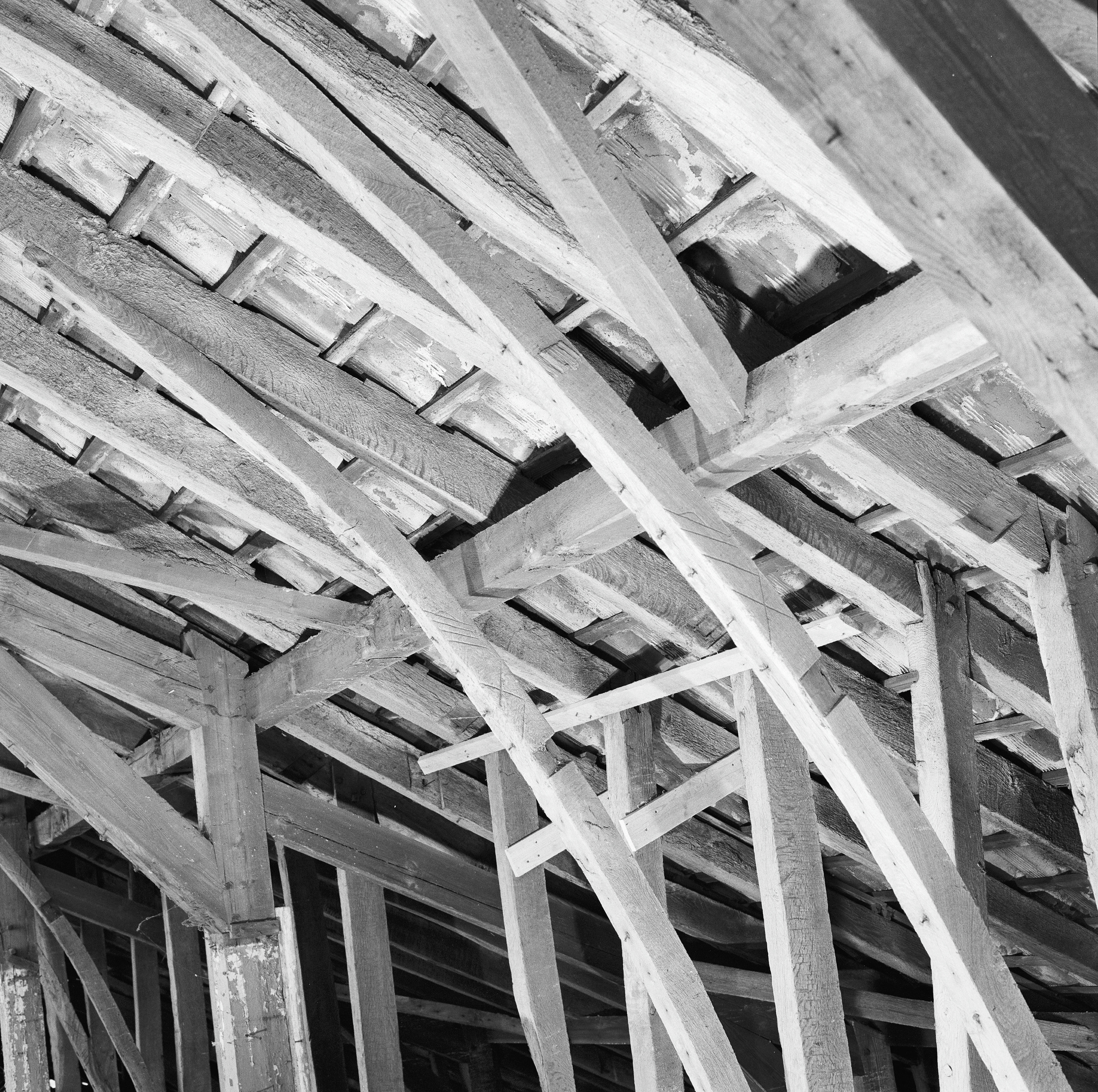
Duitse Huis
In January 1546, Charles V, Holy Roman Emperor, came to Utrecht for a chapter of the Order of the Golden Fleece. He presided in person, his sister Mary of Hungary, governor of the Netherlands, beside him. Henry VIII of England and Francis I of France were both enrolled knights of the order, their names on the rolls of this chapter even as they remained in their own kingdoms. The dinners and meetings of that gathering took place at the Duitse Huis, the headquarters of the Bailiwick of Utrecht of the Teutonic Knights, a complex of buildings that had stood between the city wall and Springweg since 1348. Seven centuries after the order built it, parts of the Duitse Huis still belong to the Teutonic Knights' Bailiwick of Utrecht - although the knights are now a charity, and the chapter room where Charles V was entertained is now a hotel dining room.
Knights in the Netherlands
The Teutonic Order ranks alongside the Templars and the Hospitallers as one of the three great Christian military orders, born of the Crusades and active in places where Christendom thought it had something to defend. Their main theaters were the Holy Land and the Baltic, where the order eventually carved out its own state in Prussia. But far from the front lines, the Teutonic Knights also maintained a network of commanderies - agricultural estates whose income paid for the campaigns elsewhere. The Bailiwick of Utrecht, founded in 1231 as the order's Dutch branch, was such a network. Its knights and priests took the standard medieval vows of poverty, chastity, and obedience, and in 1348 they built the Duitse Huis as their monastery and regional headquarters. The building they raised was a working monastery with a church large enough that most of the bailiwick's land commanders, plus a number of prominent Utrechters, were buried inside it.
An Emperor's Winter
Charles V was at the height of his powers when he came to Utrecht in the winter of 1545-46. He ruled the German Empire, Spain, and the seventeen provinces of the Netherlands - a domain so large that contemporaries said the sun never set on it. He stayed in the city from 30 December until 3 February. On 2 January the chapter of the Order of the Golden Fleece opened its meetings inside the Duitse Huis. The Golden Fleece, founded by his great-great-grandfather Philip the Good of Burgundy in 1430, was the exclusive chivalric order of the Burgundian-Habsburg court, and its rolls included the kings of England and France. Mary of Hungary sat by her brother. The feasts that punctuated the meetings took place in the refectory the knights called the Queen's Room. A fireplace in that room was carved with the double-headed eagle, Charles's personal emblem - a detail rediscovered, in fragments of stone, during the renovations of the late twentieth century.
Surviving the Reformation
The Reformation should have ended the Bailiwick of Utrecht. By 1580 the States of Utrecht were demanding that Catholic institutions be dissolved and their property turned over to charitable purposes. The land commander of the day, Jacob Taets van Amerongen, refused. The order's goods, he argued, belonged to our Lord the German Master, and the bailiwick remained a knightly institution sworn to defend the Empire against the common arch enemy - by which he meant the Ottoman Turks. The argument worked long enough to matter. In 1637 the knights formally accepted the protection of the United Provinces and converted to Calvinism. They remained Teutonic Knights; they were simply no longer Catholic. That conversion saved them. Across the rest of the Catholic Netherlands, similar institutions lost their property and their records. The Bailiwick of Utrecht kept its archive intact back to the start of the thirteenth century, which is why so much of this story can still be told.
Storm, Hospital, Squat
The complex took its share of damage. A windstorm in 1674 destroyed the church, which was demolished rather than rebuilt; the order moved its services into the knights' room of the commander's house. In 1700 the fourteenth-century facade was truncated. In 1807 Napoleon's brother Louis Bonaparte, briefly king of Holland, bought the property; the French government planned to turn it into a military hospital. On 27 February 1811 Napoleon abolished the Teutonic Order in the Kingdom of Holland and confiscated its estates. After Napoleon fell, William I of the Netherlands revived the bailiwick by royal decree in 1815, but the property was already in state hands. A new and modern hospital was completed on the site in 1823. The military kept it until 1990. In between, the buildings deteriorated, and for a few years in the late 1980s squatters moved in.
Knights, Hotel, Tranquility
The Bailiwick of Utrecht repurchased the property when the military hospital moved out, on the strength of a side agreement that dated back to 1808. A major renovation began in 1992. The fourteenth-century facade was restored, and in 1995 the order returned to the fifteenth-century Commander's House on the corner of Springweg and Walsteeg, where the meeting room is hung with portraits of every Land Commander since the foundation - nearly all in armor, with mantles over their shoulders. The order itself has become a charity supporting people with disabilities, the homeless, and those struggling with addiction. The rest of the complex was converted into the Grand Hotel Karel V, which opened in 1999. Roman graves were found in the soil during the work, fragments of the Roman fort of Traiectum, the same fort that gave Utrecht its name. The old buildings, surrounded by tall trees inside a fenced enclosure, are now an oasis of quiet at the center of a busy city - a monastery that has outlasted the world it was built for.
From the Air
Located at 52.09 degrees N, 5.12 degrees E, in central Utrecht just inside the line of the medieval city wall, near Springweg. From altitude, look for the dense red-roofed historic center of Utrecht, dominated by the tower of the Dom church a few hundred meters to the northeast. The Duitse Huis complex itself sits behind a wall of mature trees, an unusual green pocket in the city core. Best viewing altitude 2,000 to 3,000 feet. Nearest airports: Schiphol (EHAM) about 35 km northwest, Rotterdam The Hague (EHRD) about 50 km southwest, Hilversum (EHHV) about 20 km north.