Duluth Depot
Seven railroads once converged on a single building in Duluth, Minnesota. That number tells a story about an era when iron ore and timber poured out of the northern wilderness, when the city at the western tip of Lake Superior was the funnel through which the raw materials of the Industrial Revolution passed on their way to the world. The Duluth Union Depot, completed in 1892, was built to handle all of it -- passengers, freight schedules, and the sheer logistical complexity of routing seven competing rail lines through one station. Designed by the prestigious Boston firm Peabody and Stearns in the French Norman style, with walls of local granite, sandstone, and yellow brick, the building cost $615,000, a staggering sum that reflected both civic ambition and the very real wealth flowing through this port city.
Before the Palace Came a Shack
The current depot is the second to stand on this site. The first was a small wooden building erected in 1869, the same year a large group of Swedish immigrants arrived in Duluth seeking work on the Lake Superior and Mississippi Railroad, the first line to serve the city. That wooden depot served its purpose in the way frontier structures do -- adequately, temporarily. By the 1880s, Duluth's railroad traffic had grown far beyond what any modest station could manage. The city needed a union depot, a single grand terminal where multiple railroads could share platforms and passengers could transfer between lines without leaving the building. Peabody and Stearns, the firm that had designed Boston's Custom House Tower among other landmarks, won the commission. Construction took two years, and when the new depot opened in 1892, the old wooden building was demolished without ceremony.
The Great Hall and Seven Iron Threads
Entering through the main doors on Michigan Street, passengers stepped into the general waiting room -- today known as the Great Hall -- a space designed to impress even travelers accustomed to the grand terminals of Chicago and St. Paul. A newsstand and lunch counter served those waiting for connections. A barber shop offered quick shaves. A Western Union telegraph office kept the building wired to the wider world. Separate ladies' and men's waiting rooms reflected the social customs of the era. Below the main floor, one side platform and three island platforms gave access to seven tracks, each claimed by a different railroad: the Duluth and Iron Range, the Duluth Missabe and Iron Range, the Duluth South Shore and Atlantic, the Duluth Missabe and Northern, the Great Northern, the Northern Pacific, and the Saint Paul and Duluth. A large train shed originally covered these platforms, though it was removed in 1924 and replaced by simpler canopies.
The Last Whistle and Near Demolition
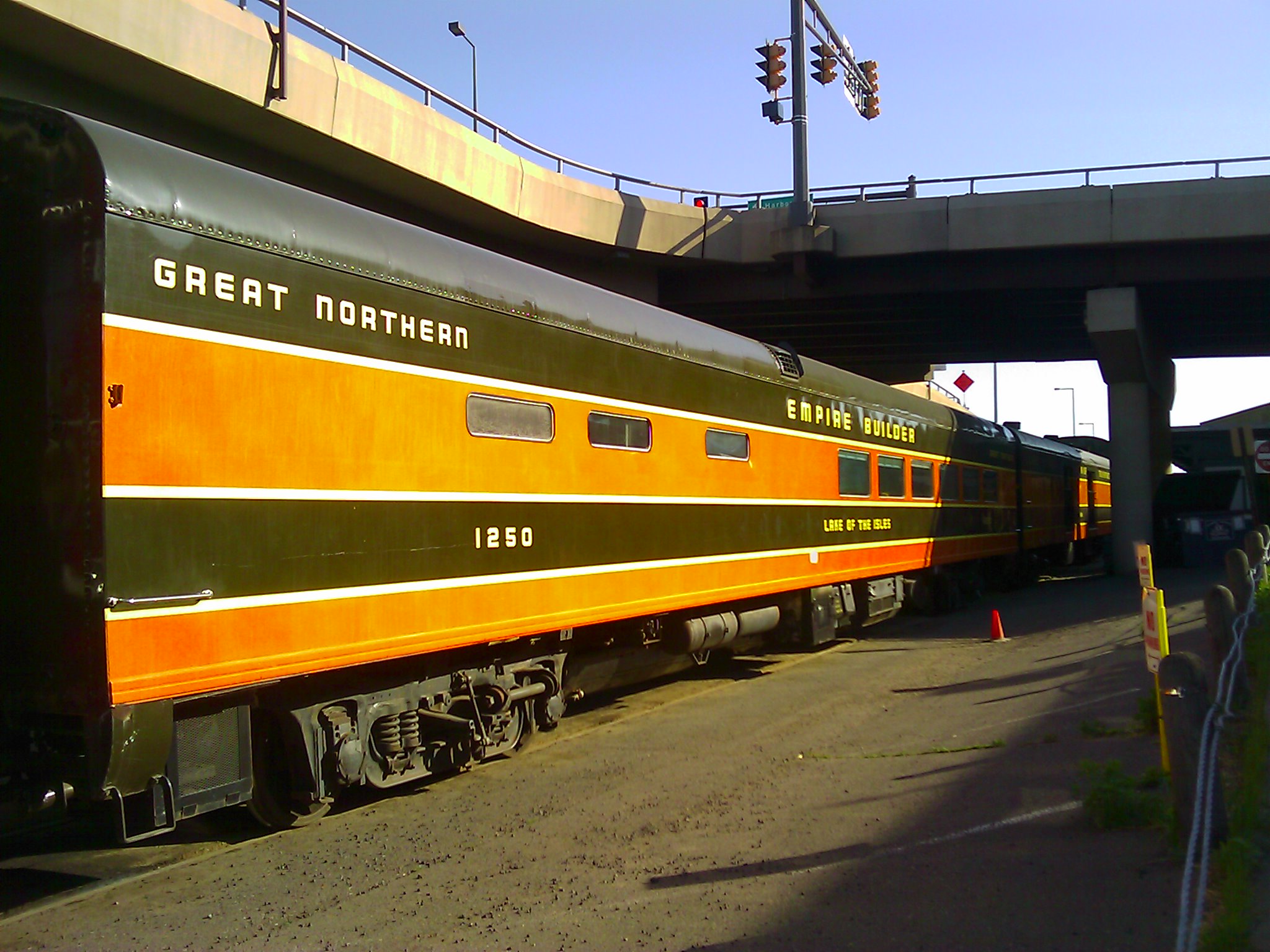
By the mid-twentieth century, passenger rail was dying across America, and Duluth was no exception. The last regular trains to use the depot were the Great Northern's Badger and Gopher, both running south to Minneapolis and St. Paul, along with unnamed Northern Pacific local services. The station closed in 1969. For several years, the building's fate hung in the balance -- demolition seemed likely. But in 1973, the depot reopened as the St. Louis County Heritage and Arts Center, commonly known simply as The Depot. Amtrak briefly returned passenger rail service from 1977 to 1985, first with the Arrowhead and then with the North Star, which at its peak connected Duluth through Minneapolis-St. Paul all the way to Chicago. When that service ended, the building's identity as a cultural institution became permanent.
Iron Horses Still Run Here
The North Shore Scenic Railroad, operated by the Lake Superior Railroad Museum, now uses the depot's southeastern track for heritage excursions along Lake Superior's northern shore. Trips range from one to six hours, running northeast to the Lester River, the area of Palmers, and the harbor town of Two Harbors. The remaining tracks display historic locomotives and rolling stock. Above the platforms, the building hosts a constellation of cultural tenants: the St. Louis County Historical Society with its Veterans Memorial Hall, the Minnesota Ballet with three rehearsal spaces, the Duluth Superior Symphony Orchestra, and the Depot Foundation, which manages the building's endowment. The Great Hall, once filled with the murmur of travelers checking pocket watches, now hosts public events beneath the same vaulted spaces that greeted passengers more than a century ago.
Waiting for the Next Train
Proposals to restore passenger rail to the depot have surfaced repeatedly. The most significant is the Northern Lights Express, a higher-speed rail project that would connect Minneapolis to Duluth roughly along the route of Amtrak's former North Star. Planned stops include Coon Rapids, Cambridge, Hinckley, and Superior. Whether that service materializes or not, the depot endures as a monument to the era when railroads were the arteries of American commerce and Duluth was a vital junction. The building's French Norman towers still rise above Michigan Avenue, just off Interstate 35, visible to anyone driving into town -- a reminder that this city at the edge of the world's largest freshwater lake was once connected by iron threads to everywhere.
From the Air
Located at 46.7814°N, 92.1039°W in downtown Duluth, Minnesota, on the western tip of Lake Superior. The depot sits just off Interstate 35, which runs immediately southeast. Duluth Sky Harbor Airport (KDYT) is approximately 3 miles southeast on Park Point/Minnesota Point. Duluth International Airport (KDLH) lies about 7 miles northwest. The depot's French Norman roofline is distinctive from low altitude. The Aerial Lift Bridge and ship canal are visible roughly half a mile to the southeast. Best viewed from approaches at 2,000-4,000 feet, where the entire Canal Park waterfront area and the long sandbar of Minnesota Point are clearly visible against Lake Superior.