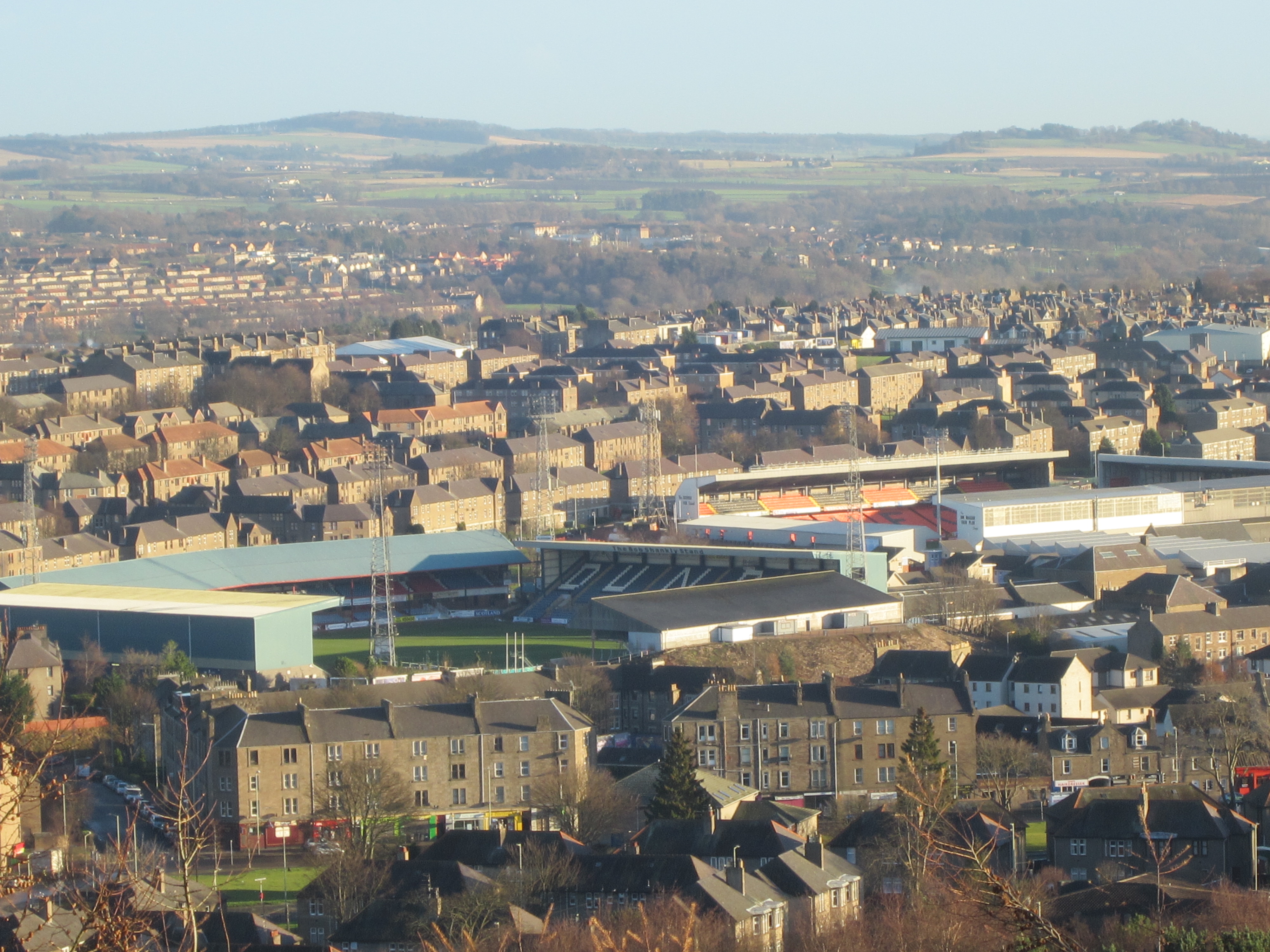
Dundee
Dundee used to be famous for three things, all beginning with J: jute, jam, and journalism. The jute mills have closed, though many of their Victorian hulks still stand, converted into offices and apartments. The jam was made from fruit grown in the surrounding countryside, particularly the Keiller's marmalade that became a breakfast staple across the British Empire. The journalism was D.C. Thomson's stable of comics -- the Beano, the Dandy, the Sunday Post -- whose cartoon characters became as much a part of Scottish childhood as porridge. But the city that visitors find today is not the rough industrial port those stereotypes suggest. Something has shifted. The waterfront has been transformed, a striking design museum has risen on the banks of the Tay, and Dundee has begun to wear its natural setting -- compact city, wide river, dramatic hills -- with a confidence that the old jute town never quite managed.
Three Bridges and a Volcano
Dundee's geography is defined by the Tay, which broadens here into a two-mile-wide estuary before reaching the North Sea. Three bridges cross it -- or two and a scrap, as locals put it. The Tay Road Bridge, opened in 1966, climbs a hundred feet from Dundee to Newport-on-Tay. The current Tay Rail Bridge, opened in 1887, stretches almost three miles to Wormit, its iron lattice carrying the Edinburgh line across the water. And alongside it, just visible at low tide, stand the stumps of the first Tay Rail Bridge, which collapsed in a storm on 28 December 1879, taking a train and all 75 of its passengers into the river. The disaster inspired what is generally considered the worst poem in the English language, by Dundee's own William McGonagall. Behind the city, the Law rises as an extinct volcanic plug, its summit carrying a war memorial and providing three-hundred-and-sixty-degree views -- on a clear day, you can see from the Highlands to the coast of Fife.
Discovery and Design
The waterfront transformation that has reshaped Dundee centres on two landmarks. RRS Discovery, Captain Scott's polar exploration ship, was built in Dundee in 1901 and now sits permanently docked at Discovery Point, her bow pointing toward the river she was launched into. A few hundred yards away, the V&A Dundee -- the first outpost of the Victoria and Albert Museum outside London -- opened in 2018, its angular, cliff-like form designed by Japanese architect Kengo Kuma to evoke the Scottish coastline. The museum has become the city's most recognizable building and the anchor of a broader cultural corridor that includes the McManus Galleries, housed in a Gothic Revival building on Albert Square, and the Dundee Contemporary Arts centre on the Nethergate. The Verdant Works, a restored jute mill on West Henderson's Wynd, tells the story of the industry that once defined the city, from the raw fibre shipped from Bengal to the finished cloth that went everywhere.
Student City, Living City
With two universities -- the University of Dundee and Abertay University -- the city has a young, energetic feel that belies its relatively modest population of 148,000. Abertay's reputation in computer game design has helped establish Dundee as a hub for the gaming industry, an improbable legacy for a city built on textile manufacturing. The dialect is distinctive: the 't' drops into a glottal stop, and the signature sound is a short 'eh' that can replace virtually any vowel and serve as a pronoun, an affirmation, a question, or a meditation, sometimes all at once. The food scene has grown quietly -- fish suppers from traditional chippies, proper Dundee cake studded with sultanas and almonds, and a growing number of restaurants that reflect the city's increasing diversity. The Farmers Market fills City Square on the third Saturday of most months. Broughty Ferry, the small seaside suburb four miles east, provides a beach, a fifteenth-century castle, and a change of pace from the city centre.
Gateway East
Dundee functions as a gateway to the eastern Highlands in a way that Perth, its neighbour to the west, cannot quite match. The road north on the A93 leads to Blairgowrie and then up through Glenshee to the Cairngorms -- ski country in winter, hiking country in summer. St Andrews, home of golf, is a short drive south across the bridge into Fife. The coast road north passes through Arbroath, famous for its smokies, and continues toward Aberdeen. Trains connect to all major Scottish cities within ninety minutes. For a city that spent much of the twentieth century associated with industrial decline, the reinvention is remarkable. The jute is gone, the marmalade factory is gone, but the river and the hills remain, and the city that sits between them has found, at last, a way to make them matter.
From the Air
Dundee sits at approximately 56.46N, 2.97W on the north bank of the Firth of Tay. Dundee Airport (EGPN) is 2 miles west of the city centre. The V&A museum and RRS Discovery are visible on the waterfront. The Law (174m) is a prominent volcanic plug within the city. The Tay Road Bridge and Tay Rail Bridge are unmistakable landmarks. Best viewed at 2,000-3,000 ft AGL. The Sidlaw Hills to the north and Fife coast to the south provide navigational context.