Dunster Castle
Only two families have ever owned Dunster Castle. The de Mohuns held it from 1066 until 1376, when Joan de Mohun -- childless, widowed, and deep in debt -- sold it to Lady Elizabeth Luttrell for 5,000 marks. The Luttrells then occupied the property for the next six centuries, through civil wars, bankruptcies, Victorian renovations, and crippling death duties, until Colonel Sir Walter Luttrell finally handed it to the National Trust in 1976. That continuity of ownership gives Dunster something unusual among English castles: the feeling of a home that kept adapting rather than a ruin that stopped.
The Tor Above the Sea
Dunster sits on a steep, 200-foot hill called the Tor in the Somerset village from which it takes its name. In the early medieval period, the sea reached the base of the hill, making the village an inland port and the castle a guard post against seaborne raiders. An Anglo-Saxon burgh occupied the summit before 1066; after the Norman Conquest, William de Mohun landed by sea along the Somerset coast as part of a three-pronged invasion of the southwest. He established a motte-and-bailey castle on the Tor, built upon the old English fortification, and used it as the caput -- the principal castle -- for his 68 newly granted manors. A stone shell keep followed in the early twelfth century. When civil war erupted during the Anarchy of the 1130s, William de Mohun's son held Dunster for Empress Matilda against King Stephen's forces, surviving a siege and earning himself the title Earl of Somerset.
The Sale That Changed Everything
A 1266 survey of the castle describes the Upper Ward as containing a hall, buttery, pantry, kitchen, bakehouse, the chapel of Saint Stephen, and a knight's hall, guarded by three towers. The Lower Ward held a granary, two towers, and a gatehouse; one tower, the Fleming Tower, served as a prison. It was a substantial property, but the de Mohun fortunes declined. When Sir John de Mohun died childless in 1376, his wife Joan agreed to sell Dunster to Lady Elizabeth Luttrell for 5,000 marks, with the castle to transfer upon Joan's death. The Luttrells had arrived. They would prove more durable than the walls themselves -- outlasting the medieval defences that Cromwell's Parliament ordered demolished after the Civil War, the debts that nearly bankrupted them repeatedly, and the changing fashions that required them to keep reinventing the building.
Civil War and the 300 Workmen
When the English Civil War broke out in 1642, Thomas Luttrell supported Parliament. His wife Jane repulsed a Royalist assault on the castle, but when the war turned in the King's favour in 1643, Thomas switched sides. By 1645, the Royalist cause had collapsed, and Colonel Robert Blake besieged Dunster for Parliament. After the war ended, Parliament ordered the castle's defences slighted. George Luttrell -- Thomas's son -- successfully argued that only the medieval walls should be destroyed, not the entire castle. A team of 300 workmen demolished the walls over twelve days in August 1650. Only the Great Gatehouse and the bases of the Lower Ward towers survived. The Luttrells then rebuilt within the shell, constructing a manor house in 1617 and later redecorating in Rococo style, complete with the fashionable new luxury of wallpaper.
A Polar Bear in the Parlour
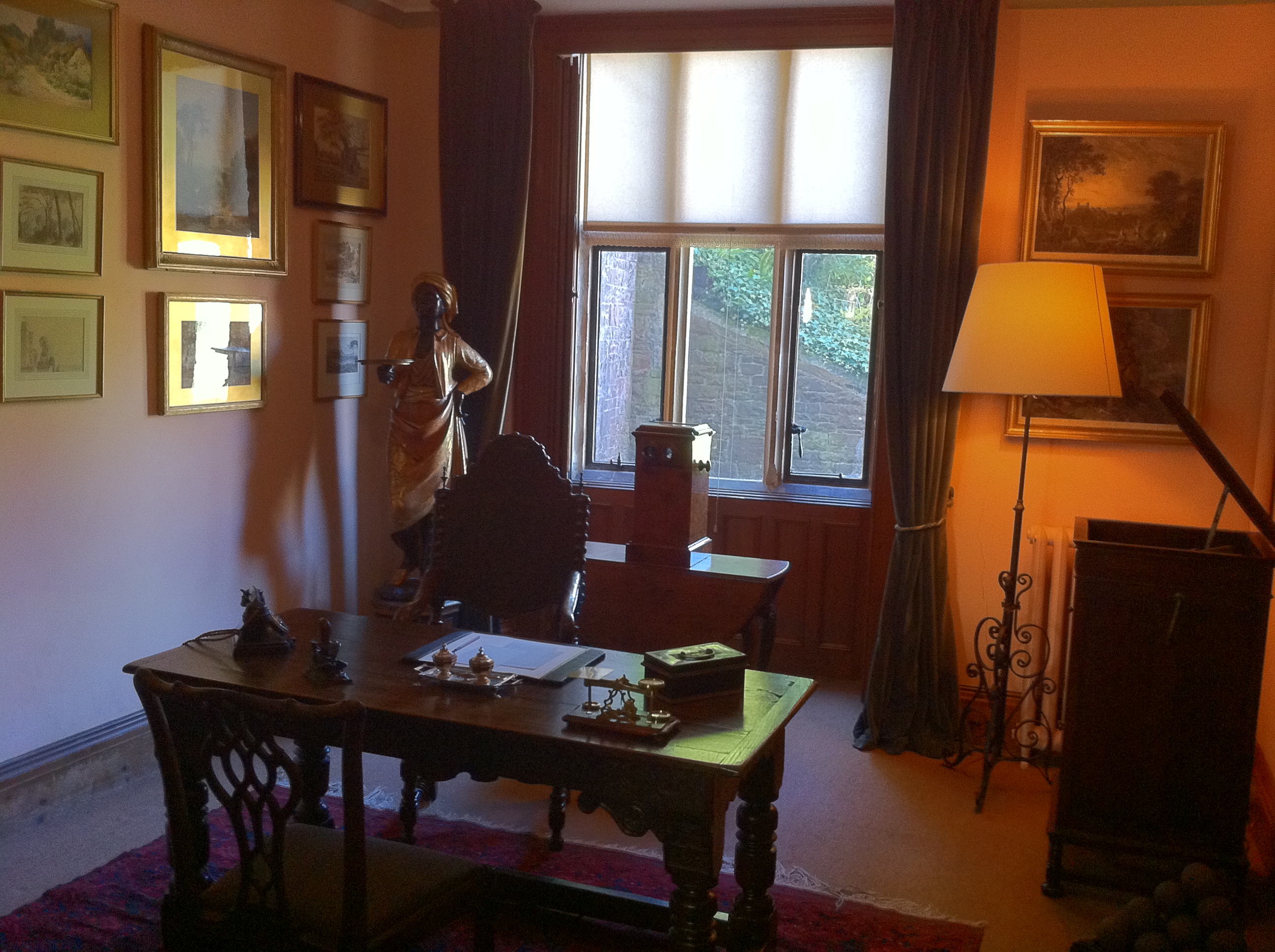
The most dramatic transformation came in the 1860s, when architect Anthony Salvin -- fresh from his work at Alnwick Castle -- remodelled Dunster to suit Victorian tastes. Salvin built new towers, inserted windows in multiple historical styles to create an appearance of organic growth, and installed gas lighting, central heating, and a billiard room. The house was furnished with sixteenth- and seventeenth-century artwork, two brass Italian cannons, and a stuffed polar bear. An underground reservoir holding 40,000 gallons provided running water for both castle and village. By 1881, fifteen live-in servants were required to maintain the establishment. When death duties finally overwhelmed the family after Alexander Luttrell's death in 1944, his son Geoffrey sold the estate, though the Luttrells continued living in the castle as tenants. They bought it back in 1954, and in 1976 gave it to the National Trust along with 277 hectares of parkland. Today, the castle receives over 200,000 visitors annually, and the National Trust has hidden solar panels behind the battlements -- making Dunster perhaps the only medieval castle in England generating its own electricity.
From the Air
Located at 51.181N, 3.444W atop the Tor hill in the village of Dunster, west Somerset. The castle's Victorian silhouette is visible from the Bristol Channel coast. Exeter Airport (EGTE) is approximately 25 nm south. Minehead is 2 nm to the northwest. The castle and its parkland are best viewed from the north or northwest at 1,500-2,000 ft.