Durban
Order a bunny chow in Durban and you will receive a quarter loaf of bread, hollowed out and filled with curry so fragrant it could wake the dead. This is not a dish you will find anywhere else in the world, because it was invented here - born from the intersection of Indian cooking and South African pragmatism, a portable meal for workers who had no plates. Durban is a city built on such intersections. Portuguese navigators named the bay Port Natal when Vasco da Gama sighted it on Christmas Day, 1497. British settlers founded a town in the 1820s. Indian workers arrived to cut sugar cane in the 1860s. Zulu culture predated them all. The result, centuries later, is South Africa's third-largest city: a subtropical, multilingual, curry-scented port where 3.4 million people share a strip of warm Indian Ocean coastline and argue about who makes the best bunny chow.
A Port That Built a City
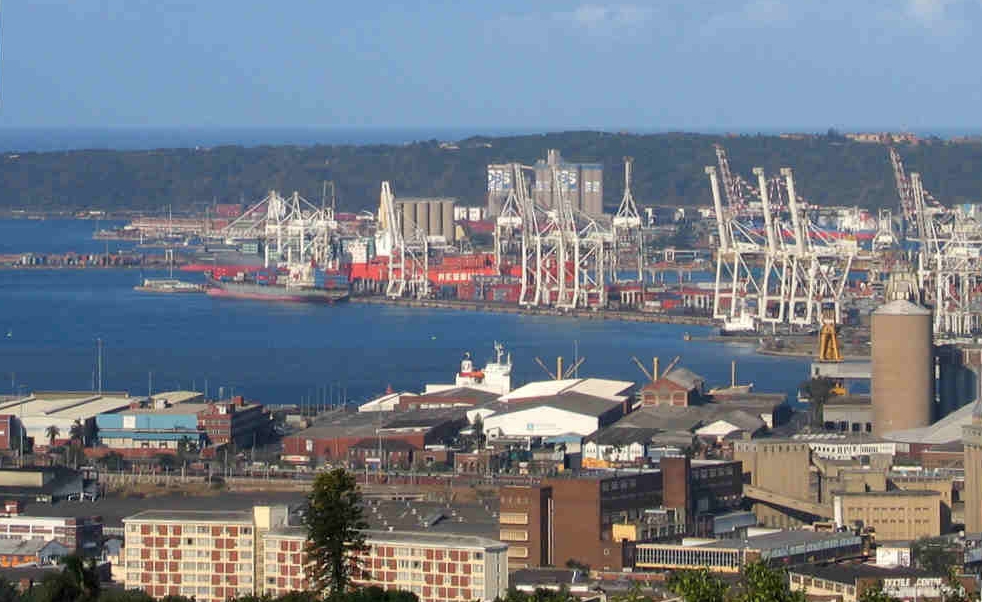
Everything flows through the harbor. Durban's bay - protected from the Indian Ocean by a land spit called The Point - formed a natural harbor so sheltered that it became the busiest port on the African continent. When the first railway was built in 1860, sugar became the principal export, and with sugar came the labor that would reshape the city's demographics forever. Indian workers arrived on contract to work the cane plantations. When their contracts ended, they were offered return passage to India or land of equivalent value. Many chose to stay, and their descendants made Durban one of the largest centers of Indian population outside India. After coal was discovered in northern Natal and gold in the Witwatersrand, the port expanded rapidly, drawing trade and people from across southern Africa and beyond.
Spice, Surf, and Sidewalk Tables
Durban's food scene is inseparable from its Indian heritage. The Victoria Street Market overflows with spices - turmeric, cardamom, dried chilies sold by the scoop - and the restaurants of the Indian Quarter near the market serve curries that range from mild to weaponized. Florida Road in Morningside is the city's trendiest dining strip, where sidewalk cafes jostle for space and Bean Bag Bohemia turns meals into events. Wilson's Wharf, built into the harbor, offers international restaurants with views of container ships sliding past. But the city's soul food remains the bunny chow: lamb, chicken, or bean curry packed into bread, eaten with your hands, dripping with gravy. The Workshop shopping center and the restaurants near Victoria Market are the acknowledged temples of this art. For something less fiery, try biltong - South African dried meat - available in flavors from classic beef to kudu and springbok.
The Golden Mile and Beyond
Durban's beachfront stretches along the Indian Ocean in a long arc of sand, warm water, and relentless subtropical humidity. In 2020, the Husqvarna Urban Green Space Index named Durban the greenest city in the world, a title earned by its profusion of parks and botanical gardens rather than any absence of concrete. The warm Agulhas Current keeps ocean temperatures swimmable year-round, and surfers work the breaks along the Golden Mile while Zulu rickshaw pullers - in elaborate beaded headdresses that can weigh over twenty kilograms - offer rides along the promenade more for spectacle than transportation. At uShaka Marine World, one of the largest marine theme parks in the world, the aquarium is built into the hull of a mock shipwreck. Joe Kool's rooftop bar serves sundowners as the sun drops into a haze of salt air and warm light.
Layers of Conquest
Before the Europeans came, the Zulu kingdom dominated this coast. Shaka kaSenzangakhona, the warrior king who forged the Zulu nation into a regional power in the early nineteenth century, controlled the lands around the bay before British settlers established their foothold in the 1820s. Britain formally took control in 1842, renaming the settlement Durban after Sir Benjamin D'Urban, Governor of the Cape Colony. Fort Napier, built to garrison British troops, was named for Sir George Thomas Napier, another Cape governor. The Zulu name for the city, eThekwini - from itheku, meaning simply "the city" - persists as the name of the metropolitan municipality, a quiet assertion that this place had a name and an identity long before any European governor lent his. Today, Zulu and English are the most commonly spoken languages, though the streets carry the sounds of many more.
A City in Motion
Getting around Durban is an exercise in choosing your level of adventure. Metered taxis are reliable but must be called - they do not cruise for fares. The brightly decorated minibus taxis, music pumping and a tout leaning from the window announcing the route, are the city's true circulatory system: cheap, fast, and not for the faint-hearted. The People Mover bus loops between the CBD, the beachfront, and uShaka Marine World every fifteen minutes. King Shaka International Airport, opened in 2010 at La Mercy forty kilometers north of the city, replaced the old Durban International and connects to Johannesburg, Cape Town, and international destinations including Dubai, Doha, and Istanbul. For the truly committed tourist, Zulu rickshaws offer the most memorable transportation along the beachfront - though riders are warned that the tipping motion of the carriage has a way of emptying pockets into the coffers of the drivers.
From the Air
Located at 29.86S, 31.03E on the Indian Ocean coast of KwaZulu-Natal, South Africa. Durban is the third-largest city in South Africa with a population of approximately 3.4 million. King Shaka International Airport (FALE) is the primary airport, located at La Mercy 40 km north of the city center. Virginia Airport (FAVG) is a small private field in Durban North. The harbor and bay are the dominant visual features from the air - look for the distinctive land spit of The Point protecting the harbor entrance, container ships at anchor, and the long arc of beachfront along the Golden Mile. The city spreads inland along river valleys and up the Berea ridge. Subtropical climate with warm, humid conditions year-round. Recommended viewing altitude: 3,000-5,000 ft AGL for the harbor and coastline. Expect sea breezes and potential coastal haze.