EAS Airlines Flight 4226
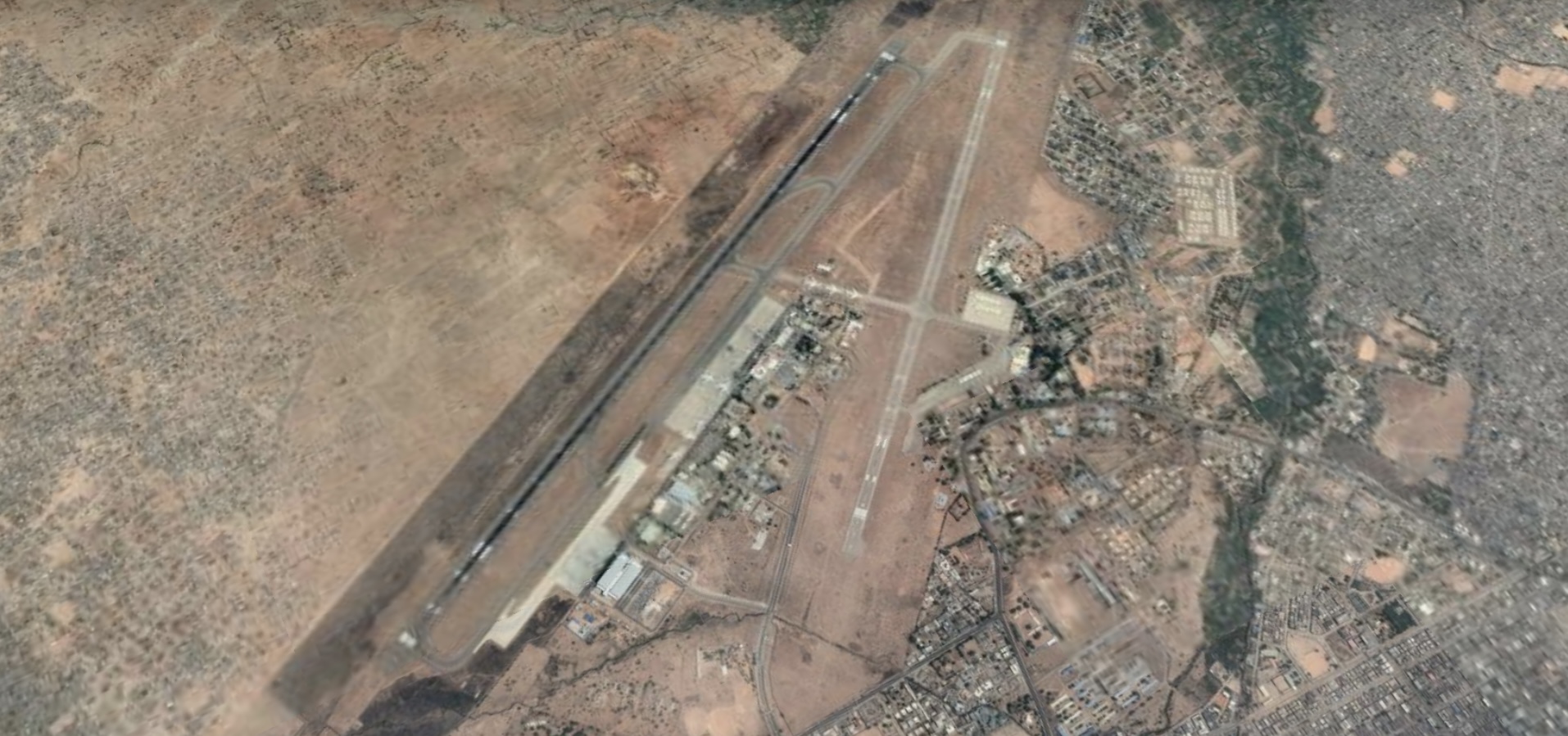
"Ready for space travel," Captain Peter Inneh joked over the radio as his aircraft lined up on Runway 23 at Kano's Mallam Aminu Kano International Airport. It was May 4, 2002, early afternoon, and Flight 4226 was bound for Lagos with 69 passengers and 8 crew aboard a BAC One-Eleven. Neither Inneh nor his first officer, Chris Adegboye, had ever flown out of Kano before. The runway they were using -- the shorter of the airport's two -- was standing in while the longer one underwent renovation. Within minutes of beginning their takeoff roll, the aircraft would overrun the pavement, strike a transformer pit, and crash into Gwammaja Quarters, a densely populated neighborhood three kilometers from the airport. One hundred and three people died, making it the deadliest accident in the BAC One-Eleven's history.
An Aircraft with Many Lives
The BAC One-Eleven that became 5N-ESF had already lived several lives before it reached Nigeria. Manufactured in 1980, it was first delivered to Romania's TAROM, then leased to Inex-Adria Aviopromet and later to Ryanair before returning to TAROM in 1989. EAS Airlines acquired it in July 2001, and by the day of the crash it had logged 24,644 flight hours. Captain Inneh, 49, brought more than 14,000 hours of experience to the cockpit, with 7,000 on the type. First Officer Adegboye, 47, had accumulated over 8,000 hours, including 3,350 on the One-Eleven. On paper, this was a well-crewed, airworthy aircraft. But the flight data recorder told a different story -- or rather, it told no story at all. EAS Airlines had never maintained it, and the only recordings on the device were from flights operated by previous European carriers years earlier.
The Wrong Runway, the Wrong Habits
Kano airport had two runways: 06/24, the longer one, and 05/23, shorter but still adequate for a BAC One-Eleven departure. With the primary runway closed for renovation, all traffic used the secondary strip. Investigators later concluded that neither pilot had accounted for the difference in available distance. Both had been conditioned by previous departures from airports with longer runways, and their takeoff roll was sluggish -- a fact confirmed by the air traffic controller on duty. By the time the crew recognized they were running out of pavement, the aircraft's speed sat between V1 and rotation speed: too fast to stop safely, not fast enough to climb away cleanly. The aircraft overran the runway end and traveled approximately 148 meters over unprepared ground before lurching into the air.
Dust, Impact, and Descent
Before the aircraft could gain altitude, its landing gear smashed into a ground depression used as a transformer pit for the approach lighting system. The impact, estimated at three to four G-forces, degraded the aircraft's ability to accelerate. Worse, the collision threw massive clouds of dust into the air, and the BAC One-Eleven's rear-mounted engines inhaled it. When investigators later disassembled the turbines, they found compacted dust caked between the compressor casings -- evidence that the engines had suffered a significant loss of thrust at the worst possible moment. The crew never retracted the landing gear, an omission that further reduced climb performance by up to 150 feet per minute. Instead of climbing, the instruments recorded a descent rate of 193 feet per minute. The aircraft plowed into Gwammaja Quarters at rooftop height, striking a school, a mosque, and residential buildings before erupting in flames.
A Neighborhood in Ashes
At least 100 students were in the school complex when the aircraft hit. Firefighters arrived within ten minutes but were overwhelmed -- crowds of onlookers blocked access, water sources at the crash site were nonexistent, and hostile reactions from grief-stricken residents made operations dangerous. Fire trucks ran dry and had to return to the airport to refill. Sixty-six passengers, seven crew members, and more than thirty people on the ground perished. More than ten of the dead were children. Four people survived the crash; a fifth initially pulled alive succumbed to injuries. The Nigerian Red Cross reported that hundreds of residents were left homeless. President Olusegun Obasanjo declared two days of national mourning and ordered flags to half-mast. The Emir of Kano, Ado Bayero, visited the site. Fifty-six bodies were too badly burned to identify, and the Kano government eventually held a mass burial after a prayer service at Gidan Rumfa, the Palace of the Emir.
The Reckoning That Followed
Aviation Minister Kema Chikwe grounded every BAC One-Eleven in the country and announced that Nigeria would no longer register aircraft older than twenty-two years. The investigation, hampered by the useless flight data recorder and a cockpit voice recorder that had gone missing entirely from the crash site, could not definitively determine why the crew overran the runway. The final report attributed the crash to the crew's failure to execute the takeoff within the available distance and a breakdown in cockpit coordination. But the deeper findings were damning: EAS Airlines maintained its fleet by cannibalizing parts from grounded aircraft, certifying engineers worked without adequate rest, and the Nigerian Civil Aviation Authority's oversight was so thin its ramp inspection protocols lacked basic detail. The AIPB issued eight recommendations, including mandatory digital flight recorders for Nigerian-registered aircraft. Flight 4226 had exposed not just pilot error, but a system-wide failure in the way Nigeria's aviation industry was regulated.
From the Air
The crash site is in Gwammaja Quarters, Kano, near Mallam Aminu Kano International Airport (DNKN), approximately 3 km from the airport at roughly 12.05N, 8.52E. The article's catalog coordinates place it at 6.45N, 3.40E in the Lagos region, but the accident itself occurred in Kano. From the air near DNKN, the Gwammaja residential area is visible south of the airport. Recommended viewing altitude: 3,000-5,000 feet AGL.