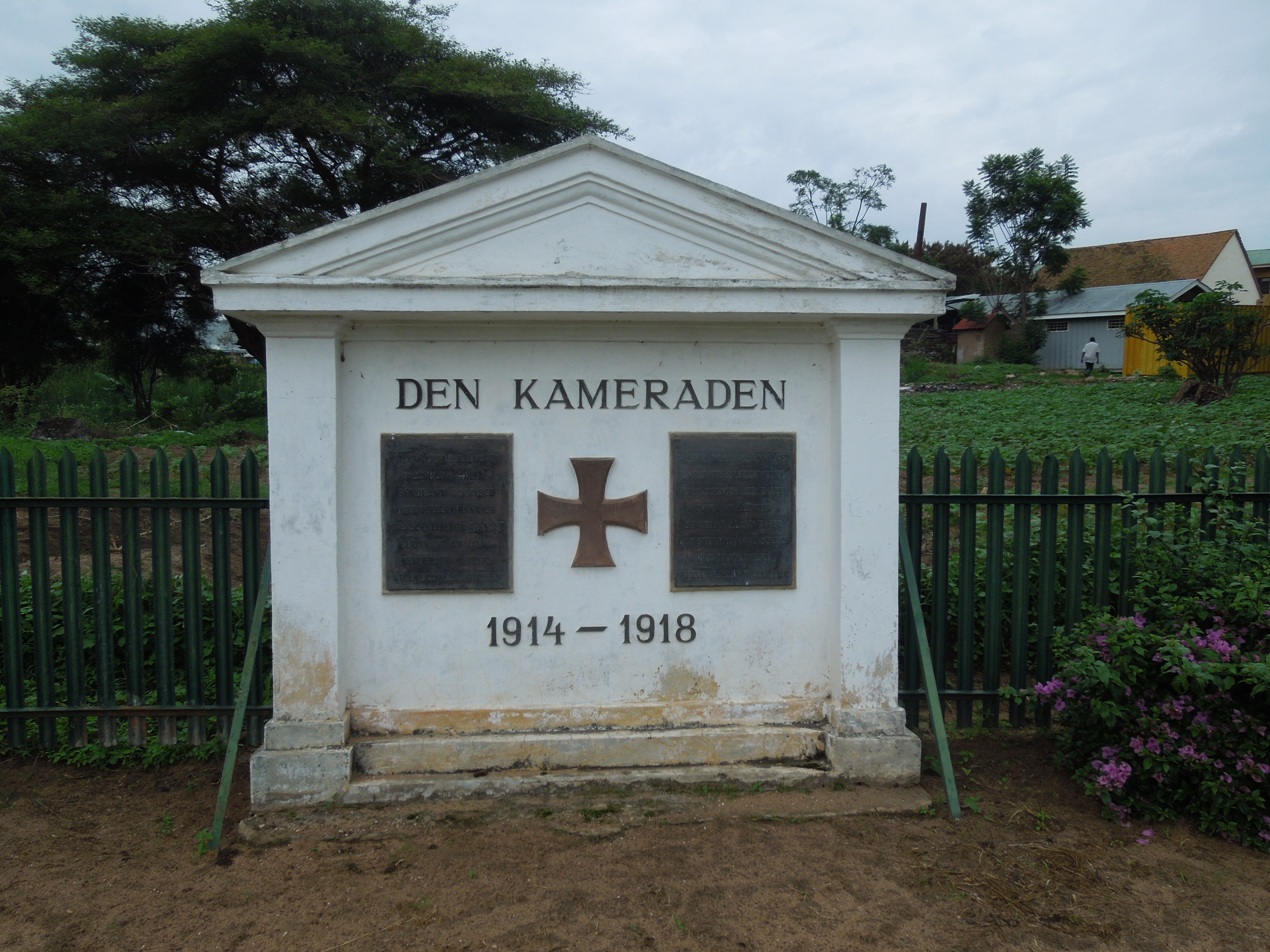
East African Campaign (World War I)
On 25 November 1918 -- two weeks after the guns fell silent in Europe -- a German officer named Paul von Lettow-Vorbeck offered his sword in surrender at Abercorn, in what is now Zambia. The British brigadier declined the sword. It was a gentlemanly gesture that obscured an ungentlemanly truth: the four-year East African campaign had consumed nearly a million Allied personnel, devastated civilian populations across half a dozen territories, and killed at least 350,000 African civilians through famine and disease. Lettow-Vorbeck's guerrilla war across German East Africa, Mozambique, and Northern Rhodesia is sometimes told as a romantic adventure story. The reality was far grimmer, and its costs were borne overwhelmingly by people whose names were never recorded.
A Colony Becomes a Battlefield
German East Africa -- Deutsch-Ostafrika -- stretched across modern Tanzania, Rwanda, and Burundi, home to seven and a half million people governed by 5,300 Europeans. When war broke out in August 1914, the colonial governors on both sides of the border actually wanted to stay out of it, proposing neutrality under the Congo Act of 1885. Their military commanders had other ideas. Lettow-Vorbeck, appointed to command the German Schutztruppe just months before the war, seized the town of Taveta on the British side of Mount Kilimanjaro within days. His force was small -- about 260 European officers and 2,470 African Askari soldiers -- but his strategy was elegant in its ruthlessness: tie down as many Allied troops as possible in Africa, diverting men and materiel from the Western Front. The British responded by sending an Indian Expeditionary Force to capture Tanga in November 1914. The assault was, in the words of the British official history, one of 'the most notable failures in British military history.'
The Pursuit That Consumed an Army
By 1916, General Jan Smuts had assembled a multinational force of South Africans, Rhodesians, Indians, Belgians, and African troops from the King's African Rifles to crush Lettow-Vorbeck. Smuts attacked from multiple directions -- south from Kenya, west from the Belgian Congo, north from Lake Malawi. Every column suffered the same fate: disease shredded them faster than combat. The 9th South African Infantry started with 1,135 men in February; by October, only 116 remained fit for duty, and they had barely fought. Lettow-Vorbeck simply retreated, drawing his pursuers deeper into terrain that killed them with malaria and dysentery. The Germans lost the Central Railway by September 1916, and Smuts declared a kind of victory before leaving for London. But Lettow-Vorbeck was not finished. He crossed into Portuguese Mozambique in late 1917, marching his caravan of soldiers, carriers, wives, and children through territory where he could plunder Portuguese garrisons for supplies.
The People Who Carried the War
The campaign's true burden fell on the hundreds of thousands of African porters conscripted to carry supplies through roadless bush. In a theatre without railways or navigable rivers, everything moved on human backs -- ammunition, food, medical supplies, artillery pieces. The British Carrier Corps alone suffered staggering losses; one Colonial Office official admitted the campaign had avoided becoming a scandal only 'because the people who suffered most were the carriers -- and after all, who cares about native carriers?' On the German side, no records of conscripted carriers or their casualties were even kept. Carriers were rarely paid. Food and cattle were requisitioned from civilian populations, and the resulting shortages, compounded by poor rains in 1917, triggered famine across the region. When the 1918 influenza pandemic reached sub-Saharan Africa, it struck populations already weakened by years of deprivation. The German conduct of war directly led to the death of at least 350,000 East African civilians. Most German colonial officers, including Lettow-Vorbeck, never expressed remorse.
The Myth and What It Cost
Lettow-Vorbeck's war ended at a rubber factory on the Chambezi River. When a captured British dispatch rider told the Germans of the armistice, Lettow-Vorbeck found it difficult to believe Germany had lost -- and impossible to accept that the Kaiser had fled. He surrendered under protest at Abercorn on 25 November. Back in Germany, he was treated as a hero. In March 1919, Schutztruppe veterans paraded through the Brandenburg Gate in their tropical uniforms to cheering crowds. The narrative of the 'undefeated' commander -- Im Feld unbesiegt! -- fed directly into the stab-in-the-back myth that would poison German politics for decades. Modern historians have challenged this romanticized version. German East Africa became the League of Nations mandates of Tanganyika and Ruanda-Urundi. The campaign cost the British 70 million pounds. But the truest cost was counted in the depopulated districts, the unmarked graves of porters, and the famine that swept through communities stripped of their young men and their food. That cost was never repaid.
From the Air
The East African campaign ranged across modern Tanzania, Mozambique, Zambia, Rwanda, Burundi, Kenya, and Uganda. The coordinate 6.31S, 34.85E marks central Tanzania, near Tabora, which was a key administrative base captured by Belgian and British forces in September 1916. From altitude, the terrain below is the central Tanzanian plateau -- dry woodland and scattered settlements. Dar es Salaam (HTDA) on the coast was the colonial capital and main Allied objective. The Uluguru Mountains to the east and Kilimanjaro far to the north were key geographic features of the campaign. The nearest significant airfield is Tabora (HTTB).