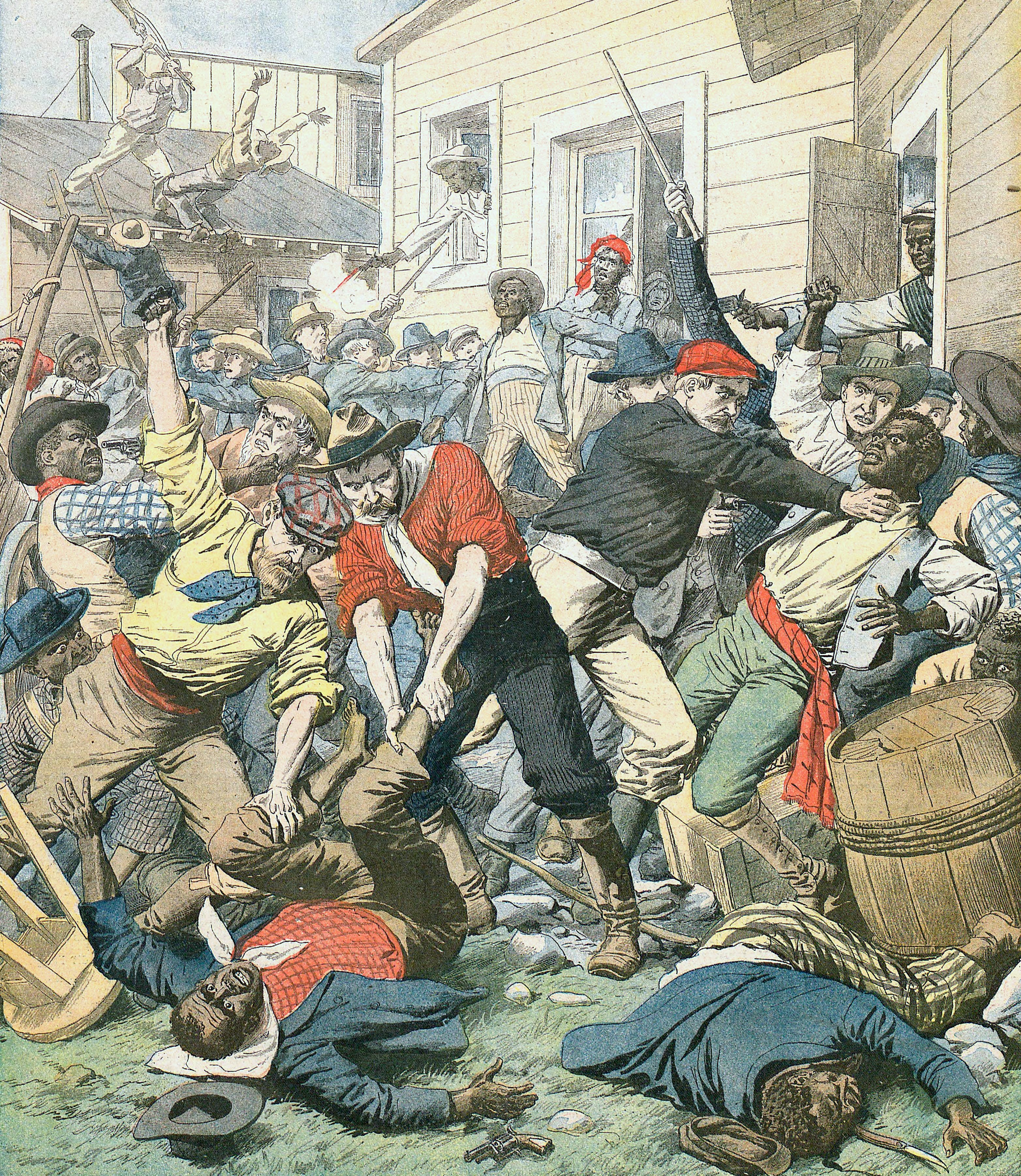
East St. Louis Massacre
On July 28, 1917, roughly ten thousand African Americans marched in silence down Fifth Avenue in New York City. They carried no signs demanding anything. They carried banners asking questions: 'Mr. President, why not make America safe for democracy?' The march was organized by the NAACP in direct response to what had happened three weeks earlier in East St. Louis, Illinois, where white mobs had attacked Black neighborhoods with a ferocity that shocked even a nation already accustomed to racial violence. The Silent Parade became the first major mass demonstration against racial injustice in American history, and it was born from the ashes of a small industrial city on the Mississippi.
A City on the Edge
East St. Louis in 1917 was an industrial city experiencing rapid change. The Great Migration was bringing thousands of African Americans from the rural South to Northern and Midwestern cities where factory jobs promised better wages and an escape from Jim Crow. White workers, already uneasy about job competition, grew hostile as aluminum and meatpacking plants employed Black laborers -- sometimes as strikebreakers. Labor tensions, political corruption, and racial resentment created a volatile mix. In late May 1917, white mobs attacked Black people and their property after a city council meeting where white residents demanded that further migration of African Americans into the city be halted. The May violence was a rehearsal. The real catastrophe came in July.
Three Days in July
On July 1, a car filled with white men drove through a Black neighborhood firing shots into homes. When a second car appeared later that night, Black residents fired on it, killing two plainclothes police officers. The next morning, news of the officers' deaths spread through the white community and triggered coordinated attacks on Black neighborhoods. Mobs burned homes, pulled people from streetcars, and shot those who tried to flee. The Illinois National Guard was called in but proved largely ineffective; some guardsmen were later accused of participating in the violence. By the time order was restored, at least 39 African Americans and 9 white people were dead, though many historians believe the Black death toll was significantly higher. Approximately $400,000 in property was destroyed, and an estimated 6,000 African Americans were left homeless.
Aftermath and Accountability
Congressional hearings followed, but accountability was limited. A special committee investigated the violence and heard testimony from survivors, but political protection shielded many of the perpetrators. Some white rioters received prison sentences, but the punishments were widely seen as inadequate given the scale of the carnage. Black residents who had fired on the car carrying the plainclothes officers were also prosecuted, despite acting in self-defense against what they reasonably believed was another drive-by shooting. The massacre exposed deep failures in law enforcement, local governance, and the willingness of state and federal authorities to protect Black citizens during the Great Migration.
The Sound of Silence
The Silent Parade of July 28, 1917, organized by the NAACP and led by W.E.B. Du Bois and James Weldon Johnson, was a calculated act of moral witness. Ten thousand marchers walked without speaking, without chanting, without music -- only the sound of muffled drums. Children dressed in white led the procession. Adults followed in black. The silence was the message: words had failed, and only the spectacle of disciplined, dignified grief could convey the horror. It was the first major civil rights march in American history, a precursor to the movements that would reshape the nation decades later. East St. Louis itself never fully recovered. The massacre accelerated white flight, deepened segregation, and left scars on a city that is still among the poorest in Illinois.
From the Air
Located at 38.622°N, 90.158°W, East St. Louis sits on the Illinois side of the Mississippi River directly across from downtown St. Louis and the Gateway Arch. From altitude, the city's grid pattern and industrial areas are visible east of the river. The contrast between the two cities is striking from the air. Nearest airports: KCPS (St. Louis Downtown Airport, 2 nm SE), KSTL (St. Louis Lambert International, 14 nm NW). The Mississippi River bridges connecting the two sides are prominent visual landmarks.