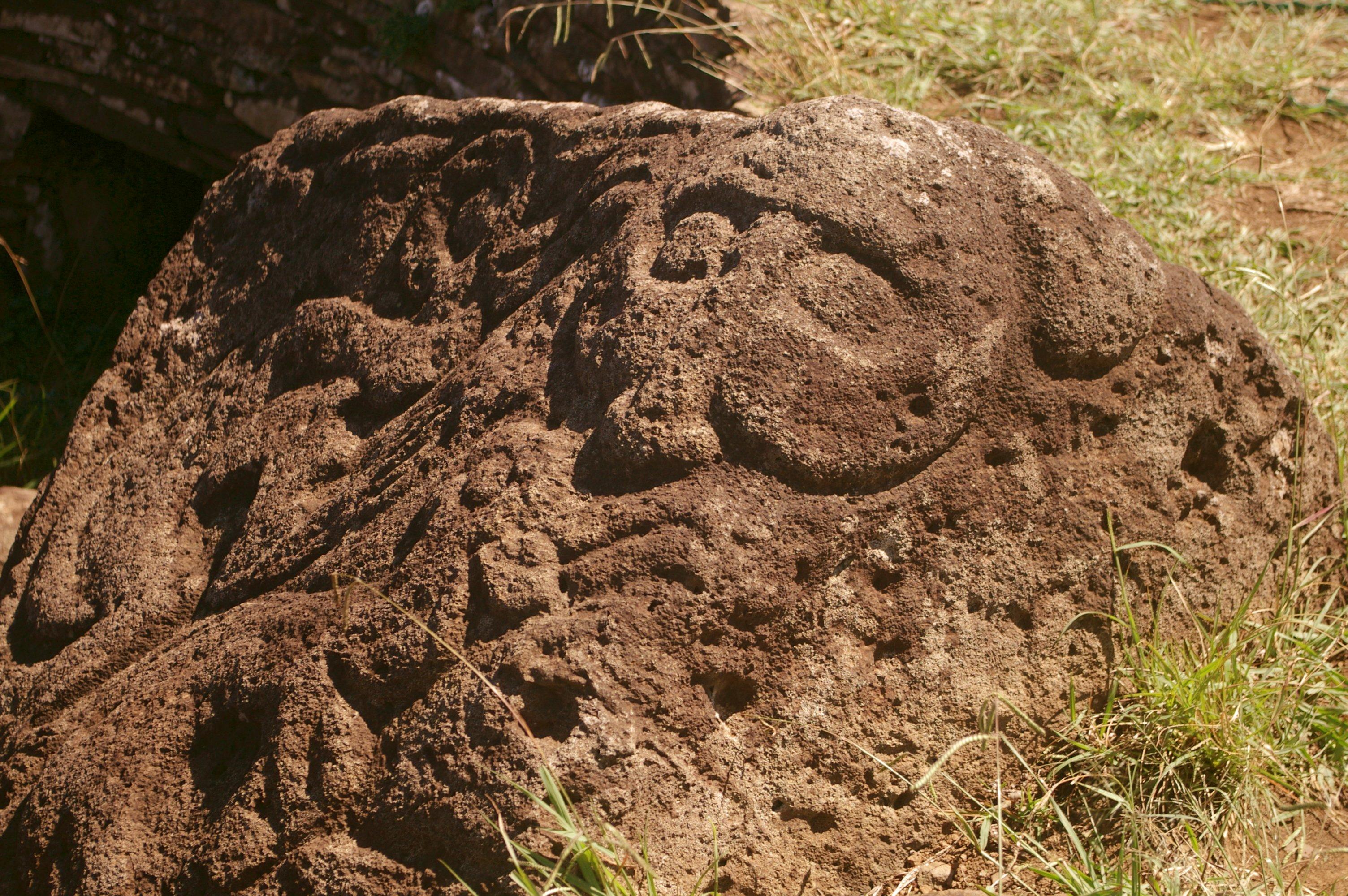
Easter Island
The moai are bigger than you expect. Photos don't capture the scale—these are multi-ton stone figures, some over 10 meters tall, carved from volcanic rock and somehow transported across an island with no trees, no wheels, and no draft animals. Nearly 900 of them dot Easter Island, and standing at Rano Raraku quarry where most were made, you're surrounded by statues in every stage of completion. Some finished, some half-emerged from the bedrock. The early settlers called this place Te Pito O Te Henua—The Navel of the World. At 3,600 kilometers from Chile and 4,000 from Tahiti, that's not far off.
Stone Giants
The moai line the coast on ceremonial platforms called ahu, backs to the sea, facing inland to watch over villages that disappeared centuries ago. At Ahu Tongariki, fifteen of them stand in a row, restored after a 1960 tsunami knocked them flat. The quarry at Rano Raraku is stranger—unfinished statues emerging from the hillside, some with only their heads above ground after centuries of soil accumulation. The biggest moai ever attempted lies there still, 21 meters long, abandoned mid-carve. How did they move the finished ones? The Rapa Nui say the statues walked. Recent experiments suggest they might be right—teams rocking the figures side to side could 'walk' them across the island using ropes.
Rise and Fall
The story is a grim one. Polynesian voyagers arrived between 800 and 1000 CE, finding an island covered in palm forest. For centuries, the civilization flourished—elaborate ceremonies, larger and larger moai, sophisticated agriculture. But they cut down the trees. All of them. For construction, for canoes, for the ropes and rollers needed to move their statues. When the last tree fell, they couldn't build boats to fish. Food ran short. Clan warfare erupted. The moai were deliberately toppled, their power broken. By the time Dutch explorers arrived Easter Sunday 1722, the great civilization had collapsed. Later slave raids reduced the Rapa Nui to under a hundred people.
The Island Today
The triangular island is defined by three extinct volcanoes at its corners. Rano Kau in the southwest holds a crater lake where the sacred village of Orongo perches on the rim—site of the birdman cult, where competitors swam to offshore islets to retrieve the first sooty tern egg of the season. (This was apparently considered a reasonable thing to do.) The capital Hanga Roa holds about 8,000 people. The Rapa Nui language survives alongside Spanish. During the February Tapati festival, locals race downhill on banana tree trunks, which tells you something about the culture's relationship with risk.
Getting There
Easter Island requires commitment. LATAM flies daily from Santiago—five hours each way, no competition, prices to match. Visitors need special permits, can stay only 30 days, and must show return tickets and lodging confirmation before boarding. There's one town, one pharmacy, one main road, and limited ATMs that may or may not work with your card. Bring cash. Rent a jeep. The $80 park pass gets you into the major sites, but Rano Raraku and Orongo are one-entry-only—plan accordingly. A week is enough to see everything. The isolation is the point.
Why It Matters
Easter Island is often cited as a cautionary tale about environmental collapse—a preview of what happens when a society exhausts its resources. That interpretation has its critics, but standing at Ahu Akivi watching the only moai that face the sea, the Pacific stretching empty to every horizon, the weight of isolation is real. The nearest inhabited land is Pitcairn, 2,000 kilometers away. The moai gaze westward, toward the ancestral homeland their makers could never return to. Whatever lessons you take from this place, you won't forget it.
From the Air
Located at 27.12°S, 109.37°W—one of the most remote inhabited islands on Earth. Mataveri International Airport (IPC) has a 3,318m runway, extended as a Space Shuttle emergency site. Approach from the east after the long crossing from Santiago. The triangular island is unmistakable; crater lakes at Rano Kau (southwest) and Rano Raraku (east) are good landmarks. Terrain to 507m. No diversion options for thousands of kilometers—plan fuel accordingly.