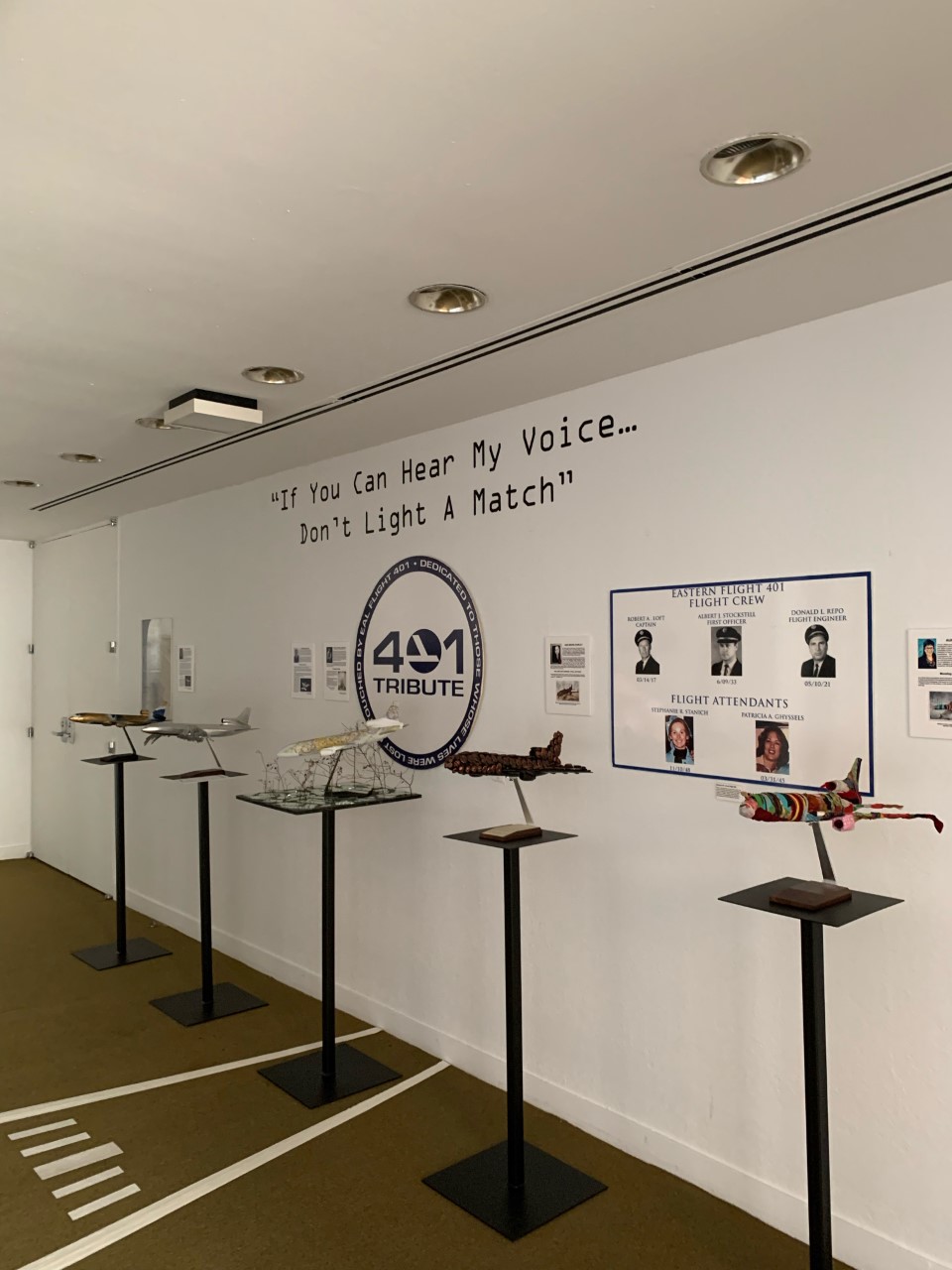
Eastern Air Lines Flight 401
A single light bulb -- a $12 incandescent indicator for the nose landing gear -- cost 101 people their lives. Shortly before midnight on December 29, 1972, Eastern Air Lines Flight 401, a brand-new Lockheed L-1011 TriStar carrying 176 people from New York's JFK Airport to Miami, descended unnoticed into the pitch-black Everglades at 227 miles per hour. The entire flight crew had become fixated on that one unlit indicator, never realizing they had accidentally disconnected the autopilot's altitude hold. The crash became the first fatal accident involving the wide-body TriStar -- and one of the most consequential disasters in the history of commercial aviation.
The Light That Wouldn't Glow
The flight was routine until the approach into Miami International Airport. As the crew lowered the landing gear, the green indicator light for the nose gear failed to illuminate. Captain Robert Albin Loft, a 32-year veteran of Eastern Air Lines, informed the Miami tower he was abandoning the approach and requested a holding pattern over the Everglades. The crew confirmed the gear was actually down and locked -- the problem was just a burned-out bulb. But as all three cockpit crew members focused on extracting and inspecting the tiny lamp, Captain Loft inadvertently bumped the control yoke. That slight pressure was enough to disengage the autopilot's altitude hold mode, switching it to Control Wheel Steering mode. The aircraft began a gradual, almost imperceptible descent. For four minutes, no one in the cockpit monitored the flight instruments.
Four Minutes into Darkness
At 11:42 PM Eastern Standard Time, the TriStar struck the surface of the Everglades swamp 18.7 miles west-northwest of Runway 9L, impacting in a slight left bank. The aircraft disintegrated across the sawgrass and shallow water. All three cockpit crew members -- Captain Loft, First Officer Albert John Stockstill, and Flight Engineer Donald Repo -- were killed. Two of the ten flight attendants and 96 of the 163 passengers also perished. Seventy-five people survived, though 58 suffered serious injuries. The TriStar was fleet number 310, only the tenth of its type delivered to the airline. It had been in service for barely four months.
Airboats and Christmas Carols
Local airboat operator Robert "Bud" Marquis witnessed the impact as a bright flash in the darkness and reached the wreckage within 15 minutes. Two minutes after Flight 401 vanished from radar at Miami International, the alarm was sounded at the Opa-Locka operations center, and a Coast Guard Sikorsky helicopter was airborne by 11:45 PM. Survivors were scattered across the swamp amid jet fuel, jagged metal, and alligator habitat. The surviving flight attendants proved critical: they warned passengers not to strike matches because of fuel in the water and organized groups to stay calm. To keep spirits up and help rescue helicopters locate them in the vast, dark wetland, they led survivors in singing Christmas carols -- the holiday was just four days past.
A Lesson Written in Wreckage
The NTSB investigation determined the probable cause as "the failure of the flight crew to monitor the flight instruments during the final four minutes of flight, and to detect an unexpected descent soon enough to prevent impact with the ground." The disaster exposed a critical flaw in cockpit culture: an authoritarian captain whose focus drew the entire crew's attention to a single problem while the aircraft flew itself into the ground. Flight 401 became a foundational case study for Crew Resource Management, the now-standard training philosophy that emphasizes shared situational awareness, open communication among crew members regardless of rank, and the principle that flying the aircraft always takes priority over troubleshooting secondary systems. The FAA also mandated improved altitude alert systems in the aftermath.
Ghosts and Remembrance
In the years following the crash, salvageable parts from the wreckage of N310EA were installed in other Eastern Air Lines L-1011s. Crew members on those aircraft began reporting sightings of Captain Loft and Flight Engineer Repo aboard their planes -- stories that became the subject of John Fuller's 1976 book The Ghost of Flight 401 and multiple television adaptations. Whether folklore or something more, the ghost stories kept the memory of Flight 401 alive in aviation culture for decades. On December 29, 2022, exactly 50 years after the crash, survivors and families gathered to dedicate a memorial at the crash site in the Everglades. The swamp that swallowed the aircraft has long since reclaimed the debris field, but the lessons extracted from that dark night continue to protect every passenger who boards a commercial flight today.
From the Air
The crash site is located at approximately 25.87N, 80.60W, in the Everglades about 18.7 miles west-northwest of Runway 9L at Miami International Airport. The area is flat, featureless sawgrass swamp with no visual landmarks -- which contributed to the crew's inability to detect the descent visually. The site is roughly along the extended centerline of the MIA approach corridor. Nearest airports: Miami International (KMIA), Miami-Opa Locka Executive (KOPF), and Dade-Collier Training and Transition Airport (KTNT). A memorial now marks the crash site location. From the air, the Everglades west of Miami appear as an endless expanse of marsh intersected by canals and levees.