Eastern State Penitentiary
When Eastern State Penitentiary opened in 1829, it was the most expensive building in America and the most ambitious experiment in criminal justice ever attempted. The theory was radical: isolate prisoners completely - in individual cells with private outdoor exercise yards - force them to contemplate their crimes in silence, and they would become genuinely penitent. Hence 'penitentiary.' No one spoke to them. When they left their cells, they wore hoods so they couldn't see other prisoners. They ate alone, worked alone, existed alone. The building was designed to enforce this isolation - long cell blocks radiating from a central hub, Gothic architecture meant to inspire awe and fear. What it produced instead was madness. Prisoners suffered severe psychological deterioration from the silence. Charles Dickens visited in 1842 and was horrified. Yet the 'Pennsylvania System' became the model for prisons worldwide. The ruins still stand in Philadelphia, a monument to good intentions gone terribly wrong.
The Design
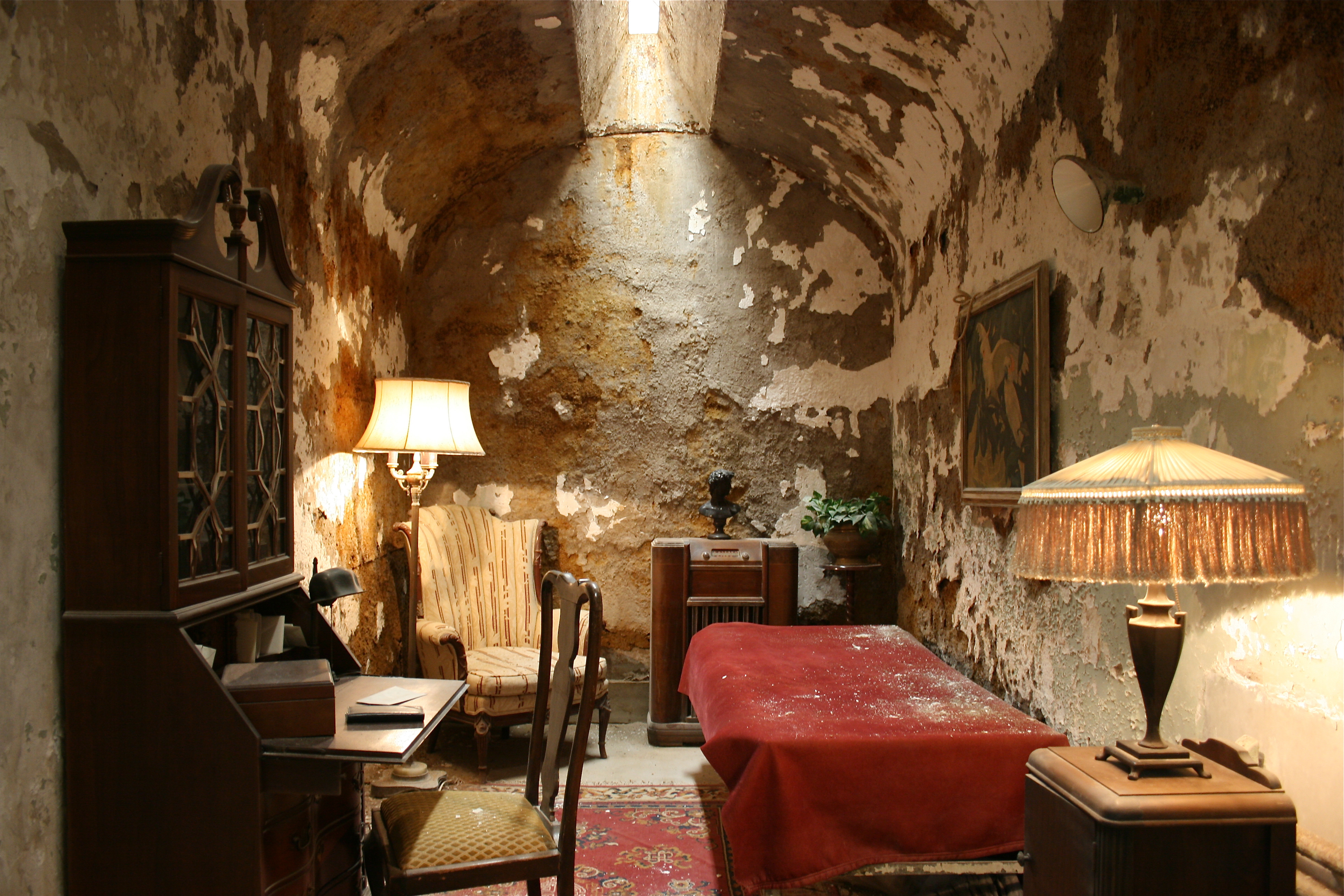
Architect John Haviland designed Eastern State as a perfect machine for isolation. Seven cell blocks radiated from a central rotunda like spokes of a wheel, allowing guards to surveil all corridors from one point. Each cell measured 8 by 12 feet with 10-foot arched ceilings and a private exercise yard of similar size. A small skylight - 'the Eye of God' - was the only source of natural light. Thick walls prevented communication between cells. Prisoners entered through hoods so they couldn't learn the building's layout. Even the guard's footsteps were muffled. The silence was absolute. At construction, it cost $780,000 - more than any building previously built in America.
The System
Under the Pennsylvania System, prisoners spent their entire sentences in near-total isolation. They ate alone in their cells. They worked alone - shoe-making, weaving - in their cells. Their exercise occurred alone in their private yards. When moved through the prison for any reason, they wore hoods. Human contact was limited to occasional visits from clergy and prison staff, conducted through small openings in doors. The theory held that this forced contemplation would lead to genuine moral reform. The practice produced psychological breakdowns. Guards began secretly violating the rules - speaking to prisoners, allowing small contacts - because complete isolation was unbearable to inflict.
The Visitors
Eastern State attracted visitors from around the world, eager to see this revolutionary approach to punishment. Over 300 official delegations came in its first decades. Charles Dickens toured in 1842 and wrote: 'I hold this slow and daily tampering with the mysteries of the brain to be immeasurably worse than any torture of the body.' He described prisoners who had gone mad, who saw ghosts, who begged for any human contact. Alexis de Tocqueville visited and praised the system despite witnessing its effects. The debate between Pennsylvania's solitary system and New York's congregate system (prisoners together but silent) shaped penology for generations. Pennsylvania's approach spread to Europe but was eventually abandoned even there.
The Decline
By the 1860s, the Pennsylvania System was collapsing under its own weight. The prison was overcrowded; the cost of individual cells was prohibitive; the psychological damage was undeniable. Eastern State quietly abandoned strict isolation and became a conventional prison. Al Capone served time here in 1929-30, in a cell famously decorated with rugs and furniture. Willie Sutton escaped (briefly) through a tunnel in 1945. The prison continued operating until 1971, when it was closed as obsolete and too expensive to maintain. It sat abandoned for two decades, its Gothic walls crumbling, before being stabilized as a historic site.
Visiting Eastern State
Eastern State Penitentiary operates as a museum at 2027 Fairmount Avenue in Philadelphia. Guided tours and self-guided audio tours (narrated by Steve Buscemi) explore the cell blocks, Al Capone's cell, and the stories of prisoners and the system itself. The building is maintained in a state of 'preserved ruin' - crumbling but stabilized. Special events include 'Terror Behind the Walls,' one of America's largest haunted house attractions, operating in autumn. The prison is walking distance from the Philadelphia Museum of Art and the surrounding Fairmount neighborhood. Philadelphia International Airport is 8 miles south. The 30th Street Station serves Amtrak.
From the Air
Located at 39.97°N, 75.17°W in Philadelphia's Fairmount neighborhood. From altitude, Eastern State's distinctive wagon-wheel layout is clearly visible - seven long cell blocks radiating from a central hub, surrounded by the Gothic stone walls. The building occupies an entire city block, its fortress-like presence contrasting with the rowhouse neighborhood around it. The Philadelphia Museum of Art is visible to the southeast. Center City rises to the south. Philadelphia International Airport is 8 miles south.