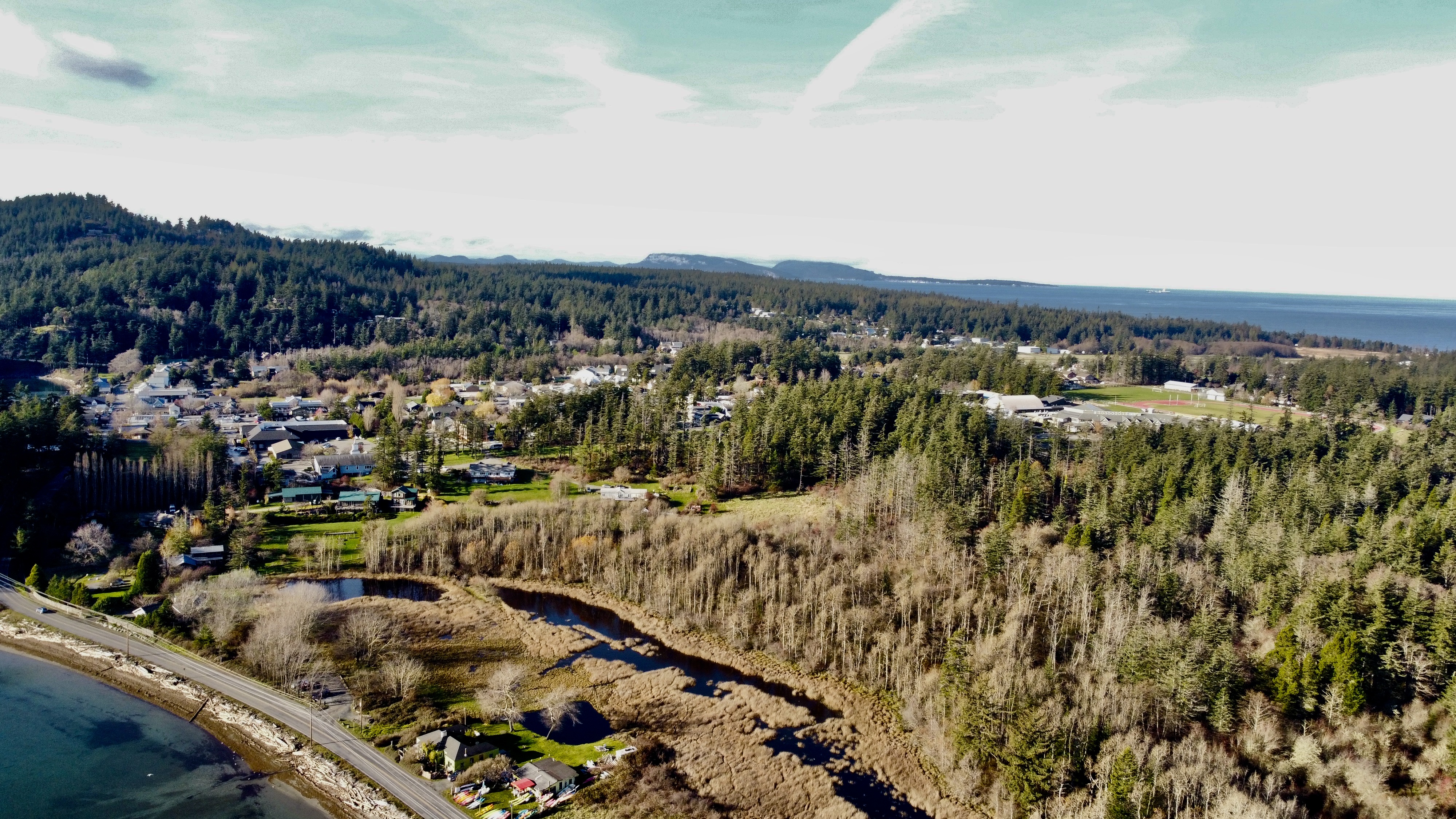
Eastsound
Where the long inlet reaches its end at the top of horseshoe-shaped Orcas Island, the village of Eastsound clusters around a waterfront that has served travelers for over a century. The Mosquito Fleet steamships once docked here, connecting islanders to Bellingham and the mainland. Today the connection comes by ferry from Anacortes, and the travelers are often seeking the quiet island life that Eastsound embodies - a few blocks of galleries and restaurants, a main street scaled to walking, and access to one of the San Juan Islands' most dramatic landscapes. This is the commercial heart of Orcas Island, which means perhaps a thousand year-round residents and a concentration of the artists, craftspeople, and chefs who have made the island their home.
The Mosquito Fleet Legacy
Before highways and car ferries, Puget Sound communities connected by steamship - dozens of small vessels that served every inlet and island, collectively nicknamed the Mosquito Fleet for the way they swarmed the waterways. The Sioux was one such vessel, a steel steamship built in 1910 that ran from Bellingham under the Black Ball Line, stopping at East Sound to exchange passengers and cargo.
Those steamship days shaped Eastsound's waterfront character. The community grew where ships could dock, and the businesses that served travelers established the village center that persists today. When the economy shifted from agriculture to tourism in the mid-twentieth century, Eastsound's central location made it the natural services hub for the entire island. The steamships are gone, but their legacy remains in the village's orientation toward the water, its compact walkability, and its role as the island's gathering place.
Artists' Colony
The San Juan Islands have long attracted artists and craftspeople, drawn by the natural beauty, the slower pace, and the communities of like-minded creatives who established themselves here. Eastsound concentrates this artistic energy in a few walkable blocks. Galleries line North Beach Road and Main Street, showing work that ranges from traditional island landscapes to contemporary sculpture. Studio tours let visitors meet artists in their workspaces, seeing the process behind the finished pieces.
The artistic community extends beyond visual arts. The island supports musicians, writers, and chefs who approach their work with the same creative intensity. Restaurants feature locally sourced ingredients prepared with care - the food scene rivals communities many times Eastsound's size. Farmers markets bring producers from across the island, the stalls showcasing the agricultural traditions that predate tourism. It's a creative economy that sustains itself through summer visitors and a core of dedicated residents who stay through the quiet winters.
Moran State Park
Seattle mayor and shipbuilder Robert Moran came to Orcas Island in 1905, told by doctors that he had months to live. The island's peace disagreed with that prognosis - Moran lived another 38 years, building the grand Rosario mansion and eventually donating his extensive land holdings to Washington State. Moran State Park now encompasses over 5,000 acres, holding the largest old-growth forest remaining in the San Juan Islands.
Mount Constitution rises 2,409 feet from the heart of the park, its summit offering views that span from Mount Baker to Mount Rainier on clear days. A stone observation tower, built by the Civilian Conservation Corps in the 1930s, crowns the peak. Over thirty miles of trails wind through the park, passing five freshwater lakes where swimming, paddling, and fishing draw summer visitors. The drive to the summit is a destination in itself, winding through forest with overlooks that reveal the island's distinctive shape and the waters of the Salish Sea spreading in every direction.
Island Time
Eastsound operates on island time, a pace dictated by ferry schedules and the rhythms of a small community. The main street empties early; restaurants close when the dinner crowd leaves. Cell service works but not everywhere. WiFi exists but not in every lodging. The infrastructure serves visitors without pretending to be something it's not - this is a small village on a remote island, and the limitations are part of the appeal.
Bicycles offer perhaps the most pleasant way to explore, the island's roads winding through forest and along shorelines without the urgency of mainland traffic. The ferry from Orcas Village brings foot passengers who never sit behind a wheel during their visit, walking or cycling to Eastsound and beyond. It's a different way of traveling, one that requires adjusting expectations and embracing the slower rhythm. The reward is access to a landscape and community that has resisted the homogenization affecting so much of the Pacific Northwest coast.
From the Air
Located at 48.70N, 122.90W on Orcas Island in Washington's San Juan Islands. Eastsound sits at the head of East Sound, the long inlet that gives Orcas Island its distinctive horseshoe shape. The village is visible as a small cluster of buildings at the water's end. Moran State Park covers much of the eastern portion of the island; Mount Constitution's observation tower is visible at the summit. The Orcas Island Airport (KORS) is north of Eastsound. Ferry service connects Orcas Village (southwest tip) to Anacortes on the mainland. Bellingham is 20 miles northeast; the Canadian border 10 miles north.