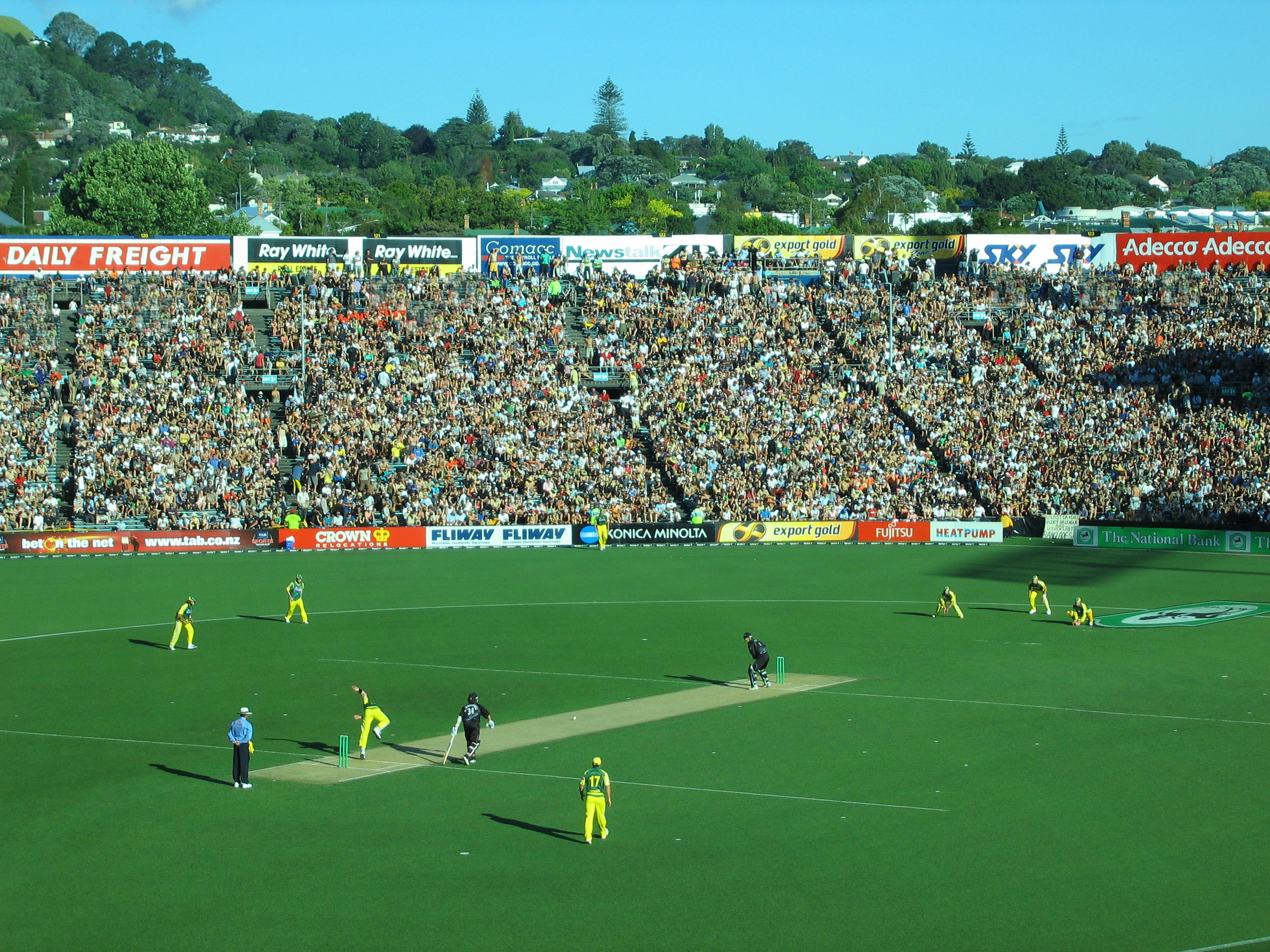
Eden Park
On a September night in 1981, a Cessna 172 buzzed Eden Park at rooftop height, and the pilot began dropping flour bombs onto the pitch below. Marx Jones and Grant Cole were protesting the final test of the Springbok Tour, and their low-altitude disruption captured something essential about this ground: Eden Park has never been just a stadium. Sitting three kilometres southwest of the Auckland CBD on the boundary between Mount Eden and Kingsland, it is the arena where New Zealand's deepest sporting passions, political convictions, and cultural identities have collided for more than a century.
From Cornish Stone Walls to World Cup Finals
The land was purchased in 1845 by Cornish farmer John Walters, and the work of turning paddock into playing field was slow and unglamorous: stone walls cleared, drainage problems wrestled into submission season after season. Auckland first played rugby on the ground in 1913, and the first international fixture, against South Africa, followed in 1921. Cricket arrived earlier and stayed longer, with Eden Park hosting its first test match in 1930. It was here that New Zealand recorded its first-ever test cricket victory, against the West Indies in the 1955-56 season. It was also here, on 28 March 1955, that New Zealand collapsed to its lowest test score of all time: 26 all out against England. Glory and humiliation have shared the same turf from the beginning.
The Fortress the All Blacks Built
Eden Park is considered the most difficult ground in world rugby for visiting teams. The All Blacks have been unbeaten here in 52 consecutive test matches stretching back to 1994. The ground hosted the inaugural Rugby World Cup final in 1987, when New Zealand defeated France 29-9 before a crowd of 48,035, and it hosted the final again in 2011, making it the first stadium in the world to stage two Rugby World Cup finals. But the ground's singular distinction goes further still. In 1988, just sixteen months after that first Rugby World Cup final, Eden Park hosted the Rugby League World Cup final, Australia defeating New Zealand 25-12 in front of a record league crowd of 47,363. No other venue on Earth has held the World Cup final in both codes of rugby. That the two events came in consecutive years only deepens the record.
A Fish-and-Chip Shop on the Scoreboard
The $256 million redevelopment completed in October 2010 gave Eden Park a permanent capacity of 50,000, with an additional 10,000 temporary seats installed for the 2011 Rugby World Cup. A three-tier South Stand replaced the old South and West stands, and the new East Stand replaced the terraces. Covered seating increased from 23,000 to 38,000, and the removal of the perimeter fence turned the stadium into a genuine public space with a community centre and green areas. The politics of the redevelopment were fierce: the government briefly favoured an entirely new waterfront stadium before Auckland's councils disagreed on funding and the plan swung back to Eden Park. In 2020, after 117 years without commercial naming rights, the stadium sold a week-long deal to banking partner ASB. In a move that distilled New Zealand's character, ASB gifted the naming rights to Coopers Catch, a small fish-and-chip shop from Kaikōura. For one week, New Zealand's national stadium was officially Coopers Catch Park.
The Night New Zealand Won Its First World Cup Match
Cricket and rugby may have written Eden Park's founding chapters, but recent years have broadened the narrative. In 2021, the stadium hosted its first concert since 1975 when Six60 played to a sold-out crowd of 50,000 during a period when COVID-19 restrictions made large gatherings nearly impossible anywhere else on the planet. Billy Joel, Guns N' Roses, Ed Sheeran, and Coldplay have since performed here. But the stadium's most emotionally charged recent moment came on 20 July 2023 during the FIFA Women's World Cup. New Zealand beat Norway 1-0 in front of 42,137, the highest-attended football match in the country's history for men or women, and New Zealand's first-ever victory at any FIFA World Cup. That attendance record fell twice more during the tournament, reaching 43,217 when Spain defeated Switzerland in the Round of 16. Eden Park, built for rugby and cricket on a Cornish farmer's old paddock, had become something larger: the place where New Zealand meets the world.
From the Air
Located at 36.88°S, 174.75°E, three kilometres southwest of Auckland CBD, between Mount Eden and Kingsland. The stadium's distinctive oval and surrounding residential streets are clearly visible from 3,000-5,000 ft. Mount Eden (Maungawhau) volcanic cone is the prominent landmark immediately to the east. Nearest airports: Auckland International (NZAA) approximately 13 nm south, Ardmore (NZAR) approximately 17 nm southeast, Whenuapai (NZWP) approximately 10 nm northwest.