Edendale
Hollywood gets the credit, but Edendale came first. In the years between roughly 1909 and 1920, the district of steep hills and gulches that is now known as Echo Park, Silver Lake, and Los Feliz was the center of West Coast filmmaking—home to studios that shaped the vocabulary of cinema before the industry moved north and west to the flatter ground of Hollywood.
Why Edendale
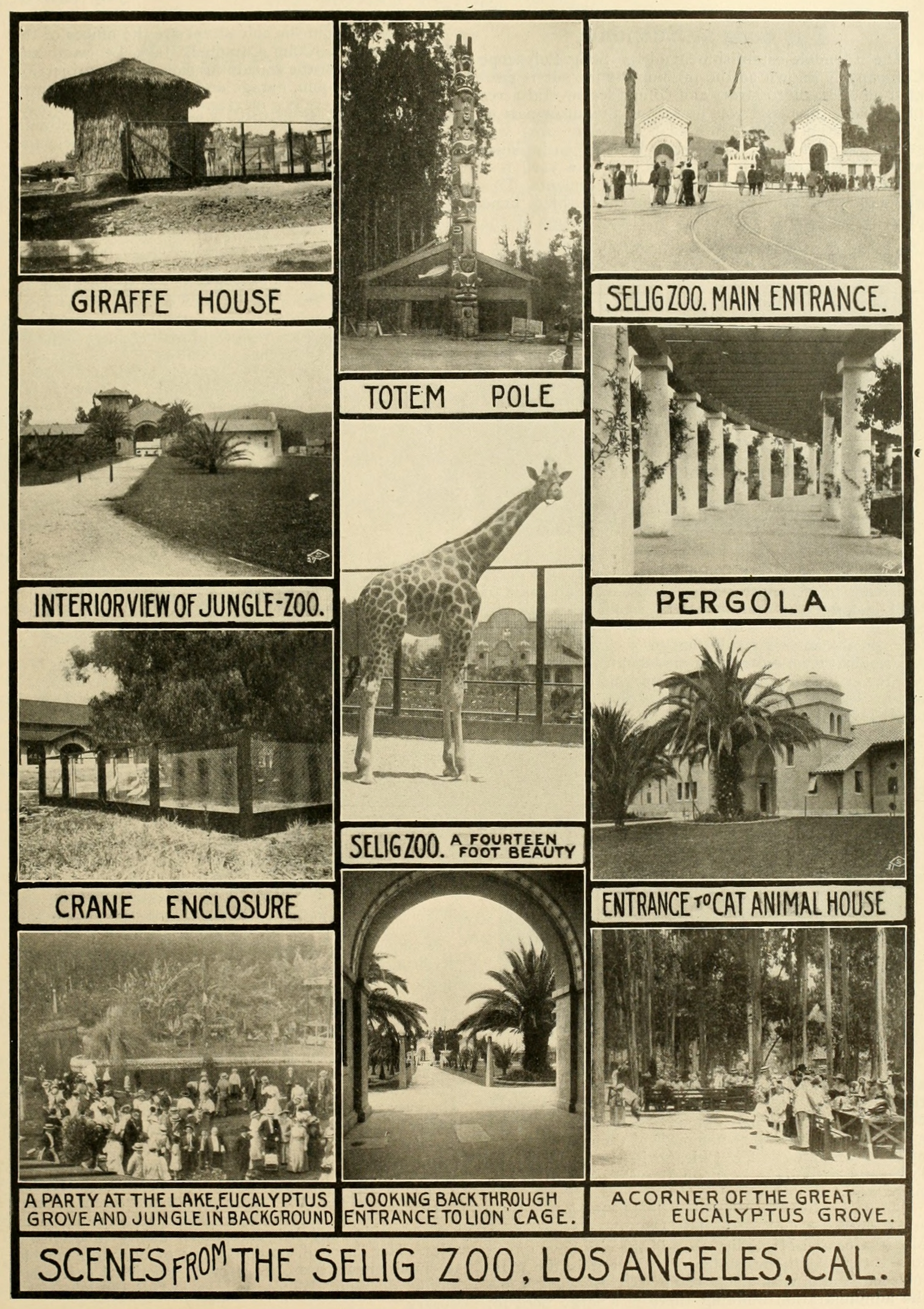
The Selig Polyscope Company established the first permanent film studio in Los Angeles here in 1909, at the corner of Allesandro Street and Glendale Boulevard. The choice was partly practical: the canyon terrain provided varied natural backdrops, the light was reliable, and the land was cheap. The distance from downtown meant the studio could conduct noisy, space-consuming productions without irritating established neighbors.
By 1912, Mack Sennett had established Keystone Studios a few blocks away. The Keystone operation would become one of the most influential in silent comedy—the studio that developed the Keystone Cops, that gave early opportunities to Fatty Arbuckle, and that launched Charlie Chaplin into stardom. Chaplin's first films as a professional actor were made in Edendale.
The Studios of the Canyon
Edendale's production landscape in the 1910s was remarkably dense. Tom Mix, the Western star, maintained 'Mixville'—a four-acre set built to look like a frontier town—in the neighborhood. Gloria Swanson developed her screen persona at Keystone. The Vitagraph Company had facilities nearby.
The terrain that made the district appealing also shaped what got made there. Chase comedies worked particularly well in the canyon streets, where the narrow roads and sudden elevation changes provided natural obstacles. The Keystone Cops relied on exactly this kind of geography. What looks like mayhem in those films was partly a function of where the cameras happened to be.
The Anarchist Commune
Among the film studios, in 1914, a different kind of experiment took shape: Regeneración, the newspaper and organizing center of Ricardo Flores Magón's Partido Liberal Mexicano, was operating in the neighborhood. The PLM was an anarcho-communist organization that had been central to the radical opposition to Mexican President Porfirio Díaz. Flores Magón ran the newspaper from Edendale until his arrest in 1916.
The coexistence of slapstick comedians and revolutionary anarchists in the same canyon district is the kind of historical coincidence that Los Angeles specializes in. The neighborhood was cheap, distant from authority, and populated by people who had come from elsewhere to attempt something new.
The Move to Hollywood
By the early 1920s, the major studios had relocated to Hollywood—flatter land, better infrastructure, easier access to the growing city. Edendale's brief decade as the center of the industry ended not with a dramatic conclusion but with a gradual migration. The studios closed or moved; the canyon filled in with housing.
The neighborhoods that occupy the old Edendale territory—Echo Park, Silver Lake, Los Feliz—are now among the most sought-after in Los Angeles. The Victorian and Craftsman houses that survive from the early period sell for prices that would be incomprehensible to the filmmakers and anarchists who lived among them. A plaque on Glendale Boulevard marks the site of the Selig studio. The Keystone lot is gone. What persists is the neighborhood's identity as a place where people who arrived from elsewhere came to make something new.
From the Air
Edendale's territory corresponds roughly to the neighborhoods now called Echo Park, Silver Lake, and Los Feliz, northwest of downtown Los Angeles. The area is identifiable from altitude by its hilly terrain—a contrast to the flat basin of South LA—and the reservoir of Silver Lake (actually a city reservoir, not a natural lake) that appears as a rectangular body of water just east of the 2 freeway. The hillside streets descend toward Glendale Boulevard and Sunset Boulevard. The 101 freeway marks the southern boundary. Nearest airports: KBUR (Burbank) to the north, KLAX to the southwest.