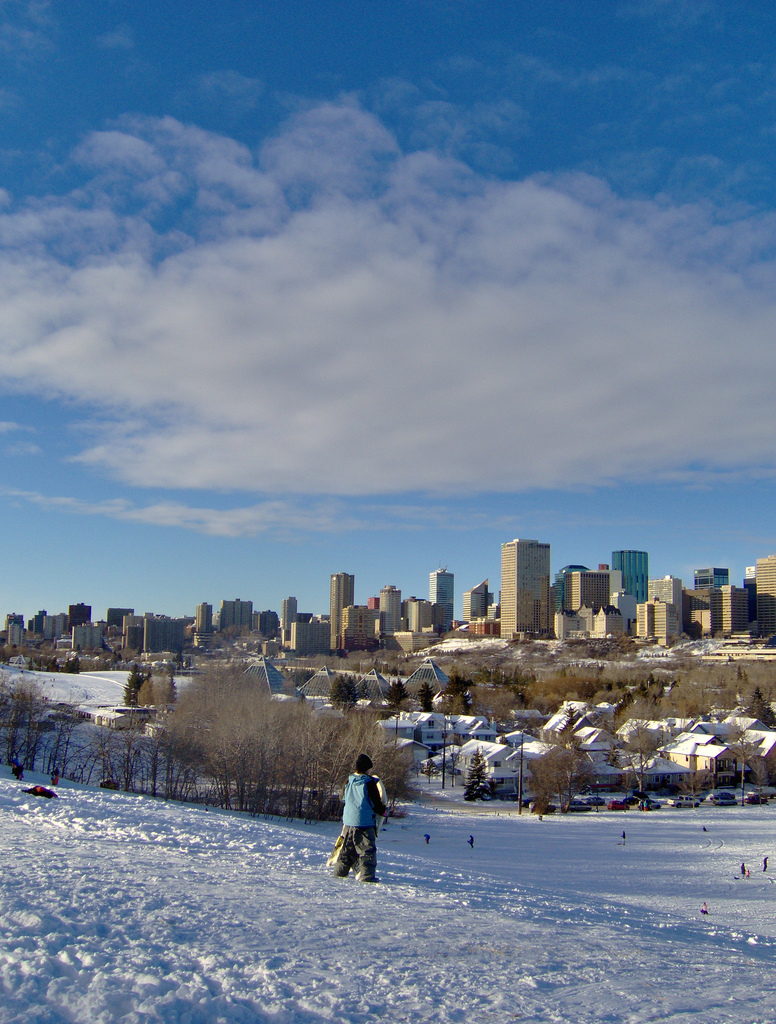
Edmonton: The Gateway to the North Where Winter Is a Way of Life
Edmonton exists because of location - the last major city before the northern wilderness, the natural outfitting point for anyone heading into the Arctic or the oil sands. The city of 1 million sits on the North Saskatchewan River, enduring winters where -40 (Celsius and Fahrenheit meet at that point) is routine, where the river valley provides the largest urban park system in North America, where the oil industry's boom-and-bust cycles shape everything. Edmonton is perpetually in Calgary's shadow - the provincial capital versus the economic engine, the Oilers versus the Flames - but it carved out its own identity as a festival city, an arts center, and the place where Canada's north begins.
The Mall
West Edmonton Mall opened in 1981 as the world's largest shopping center - 5.3 million square feet, over 800 stores, plus a water park, an ice rink, a hotel, and a miniature golf course. The mall was a deliberate statement: Edmonton would build something bigger than anywhere else, something that would draw visitors despite the cold. The world's largest designation lasted until 2004, when various Asian malls surpassed it. The water park and attractions remain popular; the shopping has aged. The mall represents Edmonton's peculiar strategy - if people won't come for the weather, give them something indoors to come for.
The Winter
Edmonton is North America's coldest major city - January averages -10°C (14°F), and -40 is not unusual. The city adapts rather than hibernates: the pedway system connects downtown buildings underground; the river valley stays active with cross-country skiing; the car plug-ins that keep engines from freezing are standard. The cold is dry, which makes it more bearable than it sounds - Edmontonians insist -20 here feels like 0 in Toronto. The summer compensates with 17 hours of daylight and genuine warmth. The contrast between seasons is extreme; Edmontonians live for the brief summer and endure the long winter.
The Festivals
Edmonton calls itself 'Canada's Festival City' and earns the title with over 50 festivals annually. The Fringe Festival is North America's largest, bringing over 1,600 performances each August. The Folk Festival draws crowds to the river valley. The Heritage Festival celebrates the 80+ cultural communities that make Edmonton home. The festivals are summer-concentrated, part of the strategy to make the brief warm months count. The programming is ambitious - Edmonton punches above its weight in arts and culture, partly because there's nothing else to do in winter, partly because oil money funded the infrastructure. The festival season is Edmonton's revenge on the calendar.
The Oil
Edmonton is the service center for the Alberta oil sands, 400 kilometers north. When oil prices rise, Edmonton booms - the trucks heading north, the workers spending money, the prosperity obvious. When prices fall, the crash is just as visible. The boom-and-bust cycle shapes the city's character: optimism during good times, anxiety during bad, a constant awareness that the economy depends on a commodity price set elsewhere. The environmental controversy around the oil sands complicates Edmonton's relationship with its economic foundation. The city benefits from oil money while the planet questions whether the oil should be extracted at all.
Visiting Edmonton
Edmonton is served by Edmonton International Airport (YEG). West Edmonton Mall remains worth visiting for sheer scale - the water park and ice rink are genuinely entertaining. The river valley provides hiking and biking in summer, cross-country skiing in winter. Old Strathcona offers independent shops and restaurants. The Art Gallery of Alberta is architecturally striking. The Royal Alberta Museum covers provincial history. Elk Island National Park, 35 kilometers east, offers guaranteed bison sightings. The Fringe Festival runs in late August; plan ahead. Summer is brief but glorious; winter is cold but survivable. Pack appropriately.
From the Air
Located at 53.55°N, 113.49°W on the North Saskatchewan River in central Alberta. From altitude, Edmonton appears as urban development along the river valley - the green corridor of parks visible, the suburbs extending outward, the oil service industries visible in the industrial districts. Calgary lies 300 kilometers south. What appears from altitude as a northern prairie city is Alberta's capital - where the mall was once the world's largest, where winter is embraced rather than escaped, and where the gateway to the north begins.