Edo-Tokyo Museum
You enter through the bottom of a building that floats. Four massive concrete columns hold the Edo-Tokyo Museum 63 feet above an open-air plaza in the Ryogoku district -- the same neighborhood where sumo wrestlers train at the Ryogoku Kokugikan next door. Architect Kiyonori Kikutake modeled the exterior after a traditional elevated rice storehouse, then scaled it to exactly 62.2 meters, the same height as Edo Castle's long-vanished keep. The building opened in March 1993 as the first museum ever dedicated to the history of Tokyo, and its permanent exhibition begins with a statement of intent: a full-scale replica of the Nihonbashi, the wooden bridge that once marked the starting point of all five major roads out of Edo.
A City in Miniature
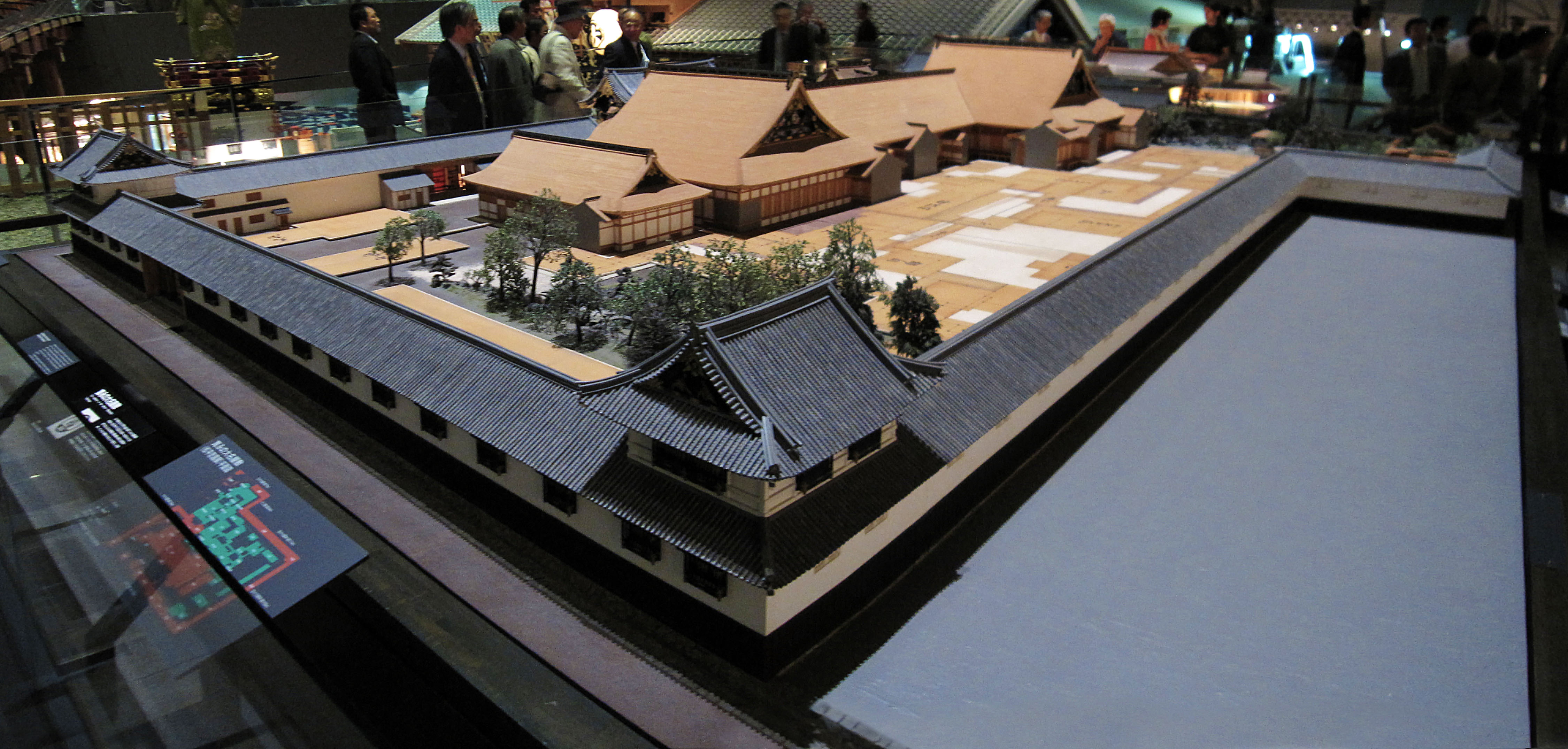
The permanent exhibition covers 400 years of urban transformation, from 1590 -- just before the Tokugawa shogunate established Edo as its capital -- through 1964, when the Tokyo Olympics signaled Japan's postwar return to the world stage. Meticulously detailed scale models recreate entire neighborhoods as they appeared during the Edo, Meiji, and Showa periods. Visitors walk past the Nakamuraza, one of Edo's licensed kabuki theaters, reconstructed at a scale that lets you peer into the audience. Merchant houses, daimyo mansions, and wartime shelters appear side by side, compressing centuries of change into a single floor. The seventh floor houses a library containing 560,000 texts and cultural artifacts related to Edo and Tokyo -- one of the most comprehensive collections of its kind. The museum was the first institution to attempt telling Tokyo's full story under one roof, and the scope of the permanent collection reflects that ambition.
Earthquake-Proof and Controversial
Kikutake was selected through a closed competition organized by Tokyo's city hall. The concept originated in the early 1980s with Governor Suzuki Shun'ichi, who envisioned it as part of the 'My Town Tokyo' campaign commemorating the tenth anniversary of Expo '70. Nine companies participated in the construction, coordinated by the Kajima Corporation. The whitish-silver exterior was inspired by the way sunlight reflects off traditional rooftops in Kyoto. To protect artifacts from earthquakes, 126 springs are embedded throughout the elevated structure, capable of absorbing 3.5 inches of vertical movement. The engineering is remarkable, but the building's sheer size has drawn criticism. At 30,000 square meters, it dominates the low-rise Ryogoku neighborhood, dwarfing everything around it except the sumo arena. Architectural critic Barrie Shelton called it 'distinctly Japanese in its monumentality' but noted the building is 'visually self-contained,' drawing attention to the plaza beneath rather than engaging with the surrounding streetscape.
The Divide Between Edo and Tokyo
Scholar M. William Steele argued that while the museum's interior serves its exhibits well, the floor plan creates a problematic split. The permanent exhibition physically separates the Edo and Tokyo sections into two distinct spaces, as though the city underwent a clean break when the shogunate fell in 1867 and the emperor arrived the following year. In reality, the transition was messier and more continuous than any architectural division suggests. Neighborhoods carried on. Merchants kept trading. The same wooden buildings burned in the same seasonal fires. The museum's layout, Steele contended, encourages visitors to see Edo and Tokyo as two different cities rather than phases of the same one. It is a tension that runs through Tokyo itself: a metropolis that constantly demolishes and rebuilds, struggling to decide how much of its past to preserve and how much to pave over.
A Storehouse That Outlasted Its Builders
The Edo-Tokyo Museum was originally owned and operated by the Tokyo Metropolitan Government, but is now run by the Tokyo Metropolitan Foundation for History and Culture. Across the city in Koganei Park, a companion facility -- the Edo-Tokyo Open Air Architectural Museum -- preserves actual historic buildings relocated from sites around Tokyo, offering the three-dimensional experience that the main museum's models can only approximate. The $300 million main building, for all its critics, has become inseparable from the Ryogoku skyline. It sits alongside the sumo arena and the Sumida River like a concrete version of the rice storehouses that once lined the banks of Edo's waterways -- elevated to keep the contents safe from flood and fire, massive enough to be seen from blocks away, and storing inside it the accumulated memory of a city that has reinvented itself more times than anyone can count.
From the Air
Located at 35.696N, 139.796E in the Ryogoku district of Sumida, Tokyo, on the east bank of the Sumida River. The museum's distinctive elevated concrete form -- a large rectangular block on stilts -- is identifiable from altitude, especially next to the Ryogoku Kokugikan sumo arena. The Sumida River provides a strong visual reference, running north-south immediately to the west. Tokyo Skytree (634 m) stands approximately 1 km to the north-northeast. Nearest airport is Tokyo Haneda (RJTT), about 15 km south. Narita International (RJAA) is 60 km east. Note: the museum has undergone extended renovation closures; check current status before visiting.