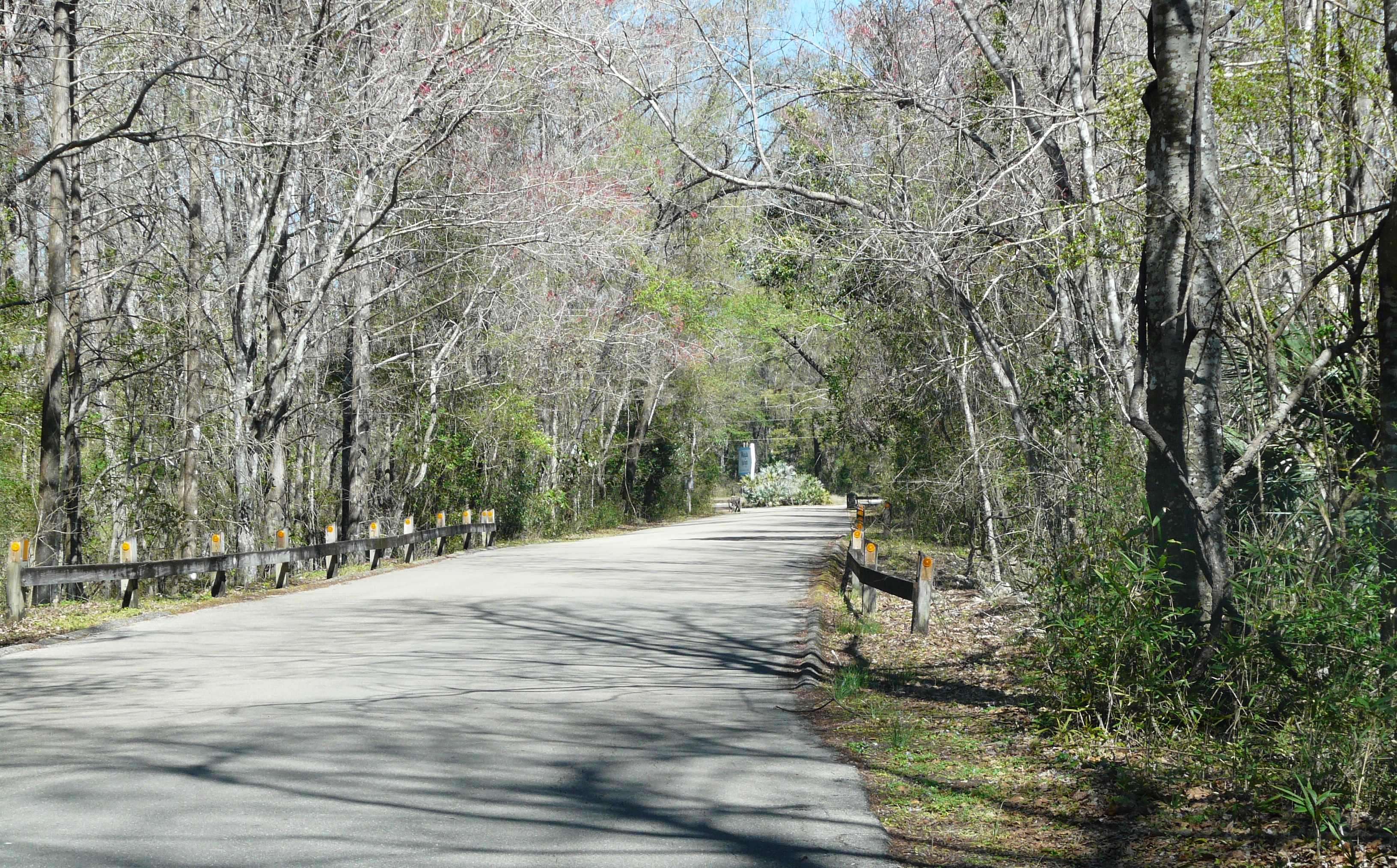
Edward Ball Wakulla Springs State Park
Twelve thousand years ago, Paleo-Indians camped at the edge of a spring so deep they could not see its bottom. They hunted mastodons and giant sloths along its banks, and when those animals died near the water, their bones settled into the limestone bowl below. The bones are still there. On clear days, passengers on boat tours at Wakulla Springs can peer down through 180 feet of crystalline water and see the remains of creatures that walked this landscape during the last Ice Age. The spring itself pumps an average of 400,000 gallons per minute from the Floridan Aquifer, feeding the Wakulla River on its short journey south to the Gulf of Mexico.
A Bone Yard at the Bottom of the World
The spring bowl at Wakulla is 315 feet in diameter and 185 feet deep, a vast opening into an underwater cave system that extends for more than 26 miles of explored passageways. Scientists have identified the remains of at least nine extinct mammal species in and around the spring, including mastodons, giant sloths, giant armadillos, and ancient camels. In 1850, a woman named Sarah Smith first reported seeing mastodon bones resting on the spring bottom, visible through the extraordinarily clear water. Fifty-four archaeological sites have been identified across the park, with excavations at the Wakulla Springs Lodge site revealing layer upon layer of human habitation stretching from Paleoindian through Seminole occupations.
Edward Ball's Grand Lodge
In 1934, Edward Ball, the financial manager for the DuPont family's Florida holdings, purchased Wakulla Springs and set about building a destination that balanced tourism with habitat preservation. The lodge he constructed in 1937 is a two-story Mediterranean Revival structure with a marble and wrought-iron Art Deco staircase, hand-painted ceiling murals depicting Florida wildlife, and 27 guest rooms furnished with period pieces. Ball operated the springs as a private attraction for decades, offering glass-bottom boat tours that drifted over the mastodon bones and through the crystal channels of the spring run. After Ball's death, his trust sold the property to the State of Florida in 1986, creating the 6,000-acre state park that exists today.
The Creature Surfaces
In 1954, a film crew arrived at Wakulla Springs to shoot the underwater sequences for Creature from the Black Lagoon. The spring's remarkable clarity and the lush vegetation along its banks provided the perfect stand-in for an Amazonian lagoon. Stuntman Ricou Browning donned the Gill-man suit and swam through the spring's depths, his movements captured by underwater cameras in footage that became iconic in horror cinema. The lodge where the crew stayed still operates as a hotel, and visitors today swim in the same waters where the Creature once surfaced. It is one of those rare intersections where natural wonder and Hollywood mythology occupy the same coordinates.
Into the Caves
Below the spring's opening, cave divers have pushed into miles of underwater tunnels, mapping a labyrinth that connects to the broader Woodville Karst Plain system. The Woodville Karst Plain Project has conducted major expeditions here, taking advantage of the spring's great depth and periodic clarity to advance diving research, technology, and safety techniques. In 1989, a professional cave diving expedition into Wakulla's underwater caverns was filmed for a National Geographic television special. Sally Ward Spring and Cherokee Sink are located within the park, and the nearby Leon Sinks Geological Area is part of the same karst network, a reminder that beneath the pine forests and cypress wetlands of north Florida lies a Swiss cheese of limestone tunnels through which an entire aquifer flows.
The Living Sanctuary
Above the spring, the park's 6,000 acres shelter pine forests, bald cypress wetlands, and hardwood hammock traversed by three trail systems open to hikers, cyclists, and horseback riders. White-tailed deer and wild turkey move through the uplands, while American alligators, gar, and bass patrol the spring run and surrounding swamps. In winter, West Indian manatees migrate into the warm spring waters, their dark shapes visible from the boat tours that still ply the river. The park's designation as both a National Natural Landmark and a National Register of Historic Places site reflects its dual identity: a place where geological time and human history converge at the edge of an ancient spring.
From the Air
Edward Ball Wakulla Springs State Park is located in Wakulla County, Florida, at 30.233N, 84.292W, approximately 14nm south of Tallahassee. From the air, look for the distinctive dark blue spring pool surrounded by dense forest canopy, with the Wakulla River flowing south toward the Gulf of Mexico. The Mediterranean Revival lodge building is visible near the spring head. Nearest airports: Tallahassee International (KTLH), approximately 14nm to the north, and Apalachicola Regional (KAAF), approximately 40nm to the west. Best viewed at 2,000-3,000 feet AGL to appreciate the spring, river, and surrounding forest.
Sources
- Edward Ball Wakulla Springs State Park
- Edward Ball Wakulla Springs State Park | Florida State Parks
- The Lodge at Wakulla Springs
- Wakulla Springs - Wikipedia
- Geology of Edward Ball Wakulla Springs State Park - Florida State Parks
- Ricou Browning - Wikipedia
- Historic Hotels - The Lodge at Wakulla Springs History