Edwin Fox
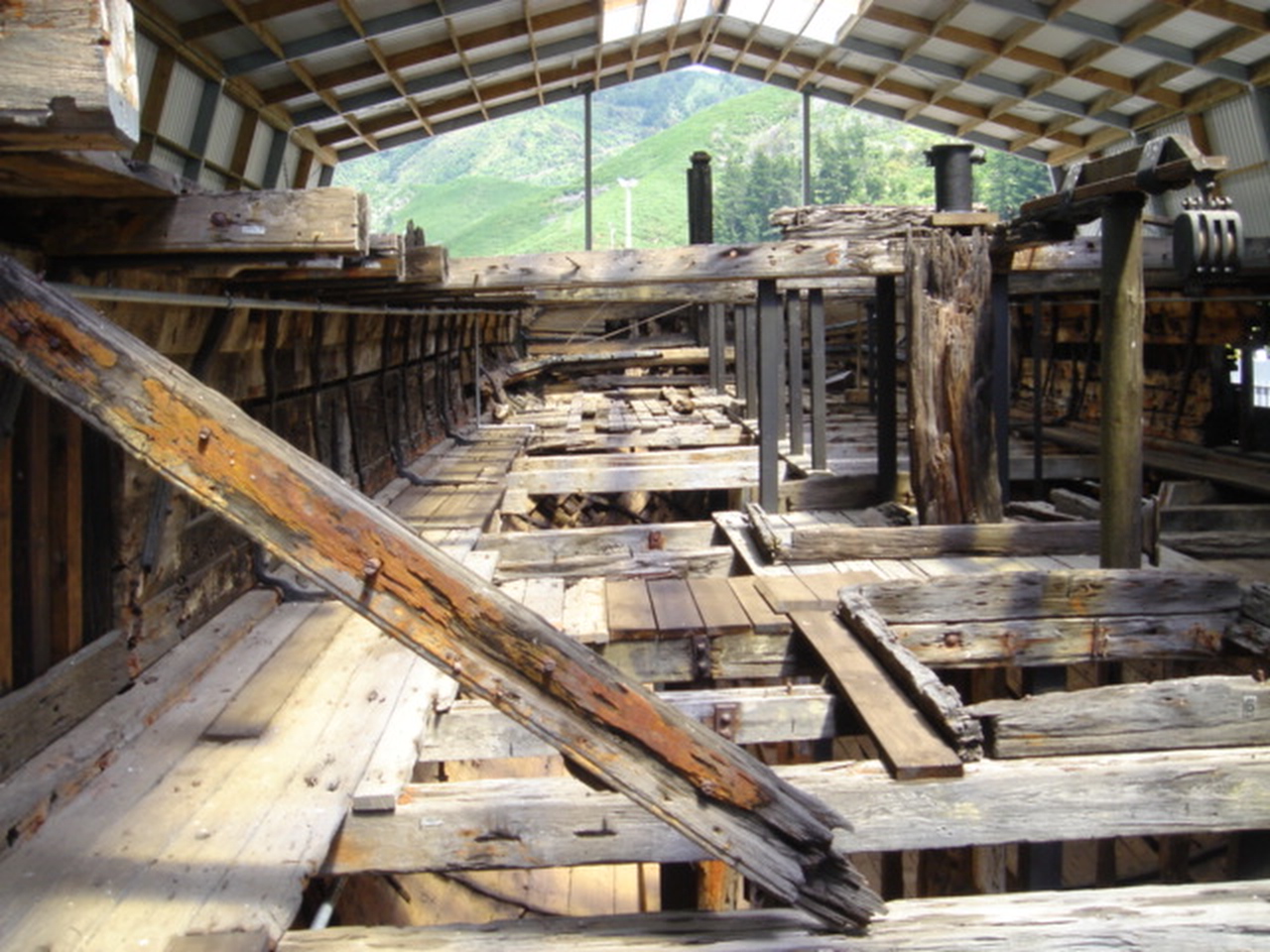
The price was one shilling. In 1965, a group calling themselves the Edwin Fox Society bought one of the oldest surviving merchant sailing ships in the world for a coin worth about ten cents. By then, the ship had been rotting at her berth in Picton for fifteen years, stripped of masts, rigging, and most fittings, with holes cut through her hull where workers had improvised doorways during her years as a floating freezer and coal store. That she survived at all is the kind of accident that only happens to objects nobody considers valuable enough to dismantle completely. Built of teak in Calcutta in 1853, the Edwin Fox is now dry-docked at the Edwin Fox Maritime Centre on the Picton waterfront, the only intact hull of a wooden deep-water sailing ship built to British specifications surviving outside the Falkland Islands.
From Calcutta to Crimea
The Edwin Fox was built during a period when Calcutta's shipyards were producing some of the finest wooden vessels afloat, using teak harvested from the forests of Burma and Bengal. Teak resists rot, repels insects, and holds fasteners without splitting, qualities that would prove essential to the ship's unlikely longevity. Her maiden voyage took her to London via the Cape of Good Hope, and she was quickly pressed into service during the Crimean War, carrying troops to the conflict that would kill more soldiers by disease than by combat. After the war, she shifted to the passenger and cargo trade, beginning her first voyage to Melbourne on 14 February 1856. She then moved to trading between Chinese ports before the British Government chartered her in 1858 as a convict ship bound for Fremantle, Western Australia. She is the only surviving vessel that transported convicts to Australia, a distinction that connects her hull to one of the largest forced migrations in modern history.
751 New Lives
In 1867, the Edwin Fox was converted from a full-rigged ship to a barque, reducing her sail plan and crew requirements. From 1873, she served on the emigrant route to New Zealand, making four voyages and carrying a total of 751 settlers to what promotional materials described as a land of opportunity. The reality of the three-month voyage was harsher than the brochures suggested. Luggage was strictly limited. Conditions belowdecks were cramped, dark, and poorly ventilated. Several passengers did not survive the crossing. Those who did often arrived to find a colony rawer and more demanding than they had been led to expect, cut off from family and friends in Europe by months of sailing time and, for many, permanently. Each of those 751 people carried a decision that could not be undone, a one-way passage to the far side of the world.
The Freezer and the Coal Bin
Steam made the Edwin Fox obsolete. By the 1880s, the age of sail was ending, and the ship was refitted as a floating freezer hulk for New Zealand's booming sheep export industry. She was towed to Picton in the South Island on 12 January 1897, where she initially continued processing frozen lamb. In 1905, she was further dismantled and converted into a coal store hulk. Workers cut holes in her sides for access, removed most remaining fittings, and stripped her of anything that could be repurposed. By this time, she had long since lost her masts and rigging. What remained was a teak shell, blackened with coal dust, serving the most mundane purpose a ship can serve. She stayed in use until 1950, then was simply abandoned at her berth. For fifteen years, she sat in the water and rotted, too worthless to scrap, too stubborn to sink.
One Shilling, One Ship
The Edwin Fox Society's purchase in 1965 began a preservation effort that would take decades. The ship was towed to Shakespeare Bay in 1967 and sat there for nineteen more years while the society raised funds. In 1986, she was refloated and moved to a purpose-built dry dock on the Picton waterfront, where the water was drained and serious preservation work could begin. The original plan called for a full restoration: new rigging, refurbished interiors, the works. But the teak timbers needed for proper restoration are no longer easily available, and the costs proved prohibitive. The society accepted a different vision. The Edwin Fox would be preserved as a hull, her teak bones exposed and honest, with an adjacent museum telling the stories of the soldiers, convicts, and settlers who sailed in her. In 2013, the preservation project received a World Ship Trust Award, the last the organization ever bestowed before winding down.
The Hull Remembers
Visitors to the Edwin Fox Maritime Centre can walk two of her decks, looking up at the teak frames that Calcutta shipwrights shaped in 1853. Some of the original copper plating still clings to the hull below the waterline, green with verdigris. In 2016, a 3D laser scanning project recorded the hull to within one millimetre of its actual dimensions, creating a digital twin that may someday allow a virtual restoration of the complete ship. Between 2016 and 2021, the hull was studied as part of a broader nautical archaeological project examining British colonial-built vessels. The ship and museum are now owned by the Marlborough District Council and carry Heritage New Zealand Category I registration, the highest level of protection. Neil Oliver featured the Edwin Fox on the BBC's Coast in 2015, and a book, Teak and Tide, was published the year before. The teak that made the Edwin Fox valuable to shipwrights in 1853 is the same teak that kept her from dissolving during her decades of neglect. The wood outlasted the empire that built her.
From the Air
Located at 41.29S, 174.01E at the Picton waterfront, at the head of Queen Charlotte Sound in New Zealand's South Island. The Edwin Fox Maritime Centre is visible on the waterfront near the Picton ferry terminal, which serves the Cook Strait crossing between the North and South Islands. Best viewed from 2,000-4,000 ft approaching Picton from the sound. Nearby airports include Woodbourne Airport (NZWB, also known as Blenheim Airport, approx 25 km south) and Wellington Airport (NZWN) across Cook Strait. The ship is in dry dock and visible as a dark hull shape on the waterfront adjacent to the commercial port area.