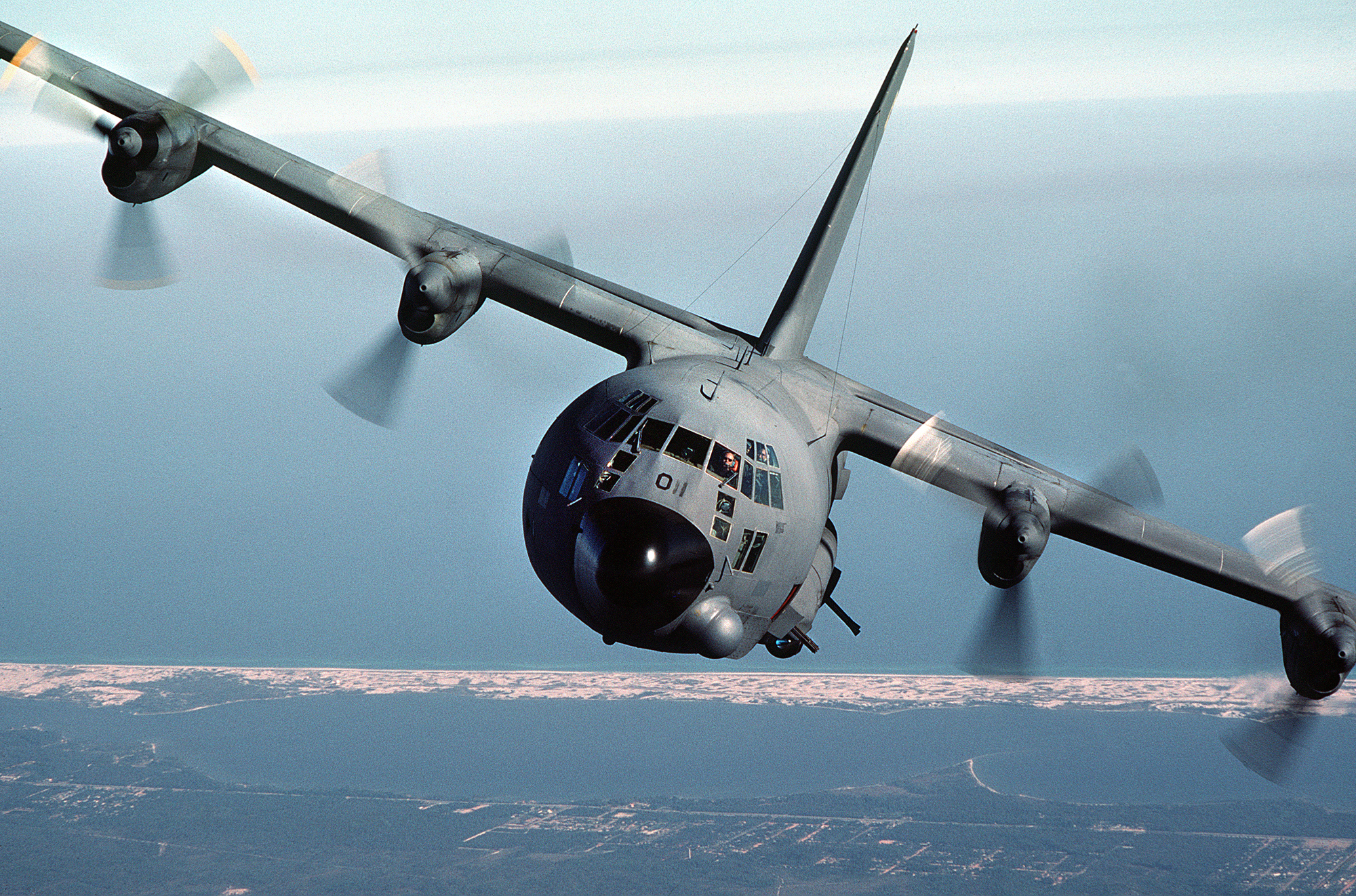
Eglin Air Force Base
The building is so large that weather forms inside it. The McKinley Climatic Laboratory at Eglin Air Force Base can simulate temperatures from minus 65 to 165 degrees Fahrenheit, hurricane-force winds, tropical rain, and desert sand -- all within a hangar originally built to house B-36 bombers. It is a fitting centerpiece for a base that has spent nine decades pushing the boundaries of what can be tested, built, and dropped from the sky. Eglin sprawls across 463,128 acres of the Florida Panhandle, making it one of the largest military installations in the free world. From its origins as a sandy clearing for a 1930s bombing range, it has grown into the Air Force's primary proving ground for every non-nuclear weapon in the American arsenal.
From Sand Strip to Superbase
Eglin's story begins in 1931, when Air Corps Tactical School personnel at Maxwell Field, Alabama, went looking for a bombing and gunnery range. They found what they needed in the sparsely populated forests around Valparaiso, Florida, backed by the vast expanse of the Gulf of Mexico. By 1933, workers had cleared an arrowhead-shaped parcel for the Valparaiso Airport. In 1935, it was formally designated the Valparaiso Bombing and Gunnery Base, and in 1937 it was renamed for Lieutenant Colonel Frederick I. Eglin, who had been killed in the crash of his Northrop A-17 attack aircraft. When World War II erupted, the U.S. Forest Service ceded over 400,000 acres of the Choctawhatchee National Forest to the War Department. At its wartime peak, the base employed more than 1,000 officers, 10,000 enlisted personnel, and 4,000 civilians. It was here that the Doolittle Raiders trained for their audacious 1942 bombing run on Tokyo, practicing short-field takeoffs from an auxiliary runway that mimicked the deck of an aircraft carrier.
The Weapons Factory
After the war, Eglin pivoted to the cutting edge of weapons technology. The 1st Experimental Guided Missiles Group was activated in 1946, launching American copies of Germany's V-1 flying bomb over the Gulf of Mexico. By the 1960s, as the Vietnam War drove demand for better conventional munitions, Eglin became the Air Force's centralized hub for research, development, test, and evaluation of non-nuclear weapons. The precision-guided revolution was born here: laser-guided, television-guided, and infrared-guided bombs all went through Eglin's proving grounds. The GBU-28 bunker-buster, rushed into production for Operation Desert Storm in 1991, was developed and tested at the base. So was the AMRAAM air-to-air missile. Today, the 96th Test Wing serves as the test and evaluation center for all air-delivered weapons, navigation and guidance systems, and command and control systems. The Eglin Gulf Test Range provides vast overwater airspace where these weapons can be put through their paces.
A City Within a Forest
Eglin is not just a weapons test range. It is a small city surrounded by one of the most biodiverse landscapes in North America. Over 50 threatened species in Florida are found on the base, including sea turtles nesting on its white-sand beaches and red-cockaded woodpeckers thriving in its longleaf pine forests. The base hosts one of the most extensive old-growth longleaf pine forests in the world, a remnant of a forest type reduced to just 5 percent of its former range. The 33d Fighter Wing, known as the "Nomads," trains pilots and maintainers on the F-35 Lightning II as the first joint training wing of its kind in the Department of Defense. The Army's 7th Special Forces Group relocated here from Fort Bragg in 2011. The 20th Space Control Squadron operates the Space Force's only phased-array radar dedicated to tracking objects in Earth orbit. The Destin-Fort Walton Beach Airport shares the base's runways, making Eglin one of the few military bases with scheduled commercial airline service.
Ghosts and Hollywood
Eglin's auxiliary fields carry the names of the dead. Wagner Field honors Major Walter J. Wagner, killed in 1943 when his Douglas XA-26B crashed east of the base. Hurlburt Field commemorates Lieutenant Donald Wilson Hurlburt, who survived B-17 combat missions over Europe only to die in a training crash at Eglin that same year. Duke Field -- where aircraft were stripped of identification for the Bay of Pigs invasion -- is named for a lieutenant killed in a Curtiss Shrike crash in Tennessee. Hollywood discovered Eglin early: scenes for "Thirty Seconds Over Tokyo" were filmed at Peel Field in 1944, and Duke Field stood in for the fictional 918th Bomb Group in the 1949 classic "Twelve O'Clock High." Author Hunter S. Thompson served at Eglin from 1956 to 1958. Thirteen airmen from the 48th Recovery Squadron even helped James Bond, performing a skydiving scene for the 1965 film "Thunderball" -- jumping from an HC-97 over Biscayne Bay.
Still Pushing the Envelope
Eglin continues to evolve. The base serves as a launch site for NASA sounding rockets, with 441 launches recorded between 1959 and 1980 reaching altitudes up to 686 kilometers. Concrete V-1 launch ramps from the 1940s still exist on the reservation and were placed on the National Register of Historic Places in 1996. The McKinley Climatic Laboratory, listed on the National Register since 1997, remains the go-to facility for extreme weather testing of military hardware. With more than 8,500 civilian employees and 4,500 military personnel, Eglin is the economic engine of the Crestview-Fort Walton Beach-Destin metropolitan area. Its mission -- the development, acquisition, testing, deployment, and sustainment of all air-delivered non-nuclear weapons -- ensures that virtually every bomb, missile, and precision munition carried by American aircraft has been shaped, refined, or validated somewhere on this sprawling piece of the Florida Panhandle.
From the Air
Located at 30.4894N, 86.5422W in the Florida Panhandle. Eglin AFB is enormous -- covering 463,128 acres with multiple auxiliary fields spread across Okaloosa, Santa Rosa, and Walton counties. The main runways are shared with Destin-Fort Walton Beach Airport (KVPS). CAUTION: Eglin airspace includes extensive restricted areas (R-2914, R-2915 complex) and military operations areas. Active weapons testing occurs over the Eglin Gulf Test Range. Contact Eglin Approach on 127.3 or check NOTAMs before entering the area. The AN/FPS-85 phased-array radar at Site C-6 is a distinctive ground feature. Choctawhatchee Bay to the east and Santa Rosa Sound to the south provide excellent visual references.