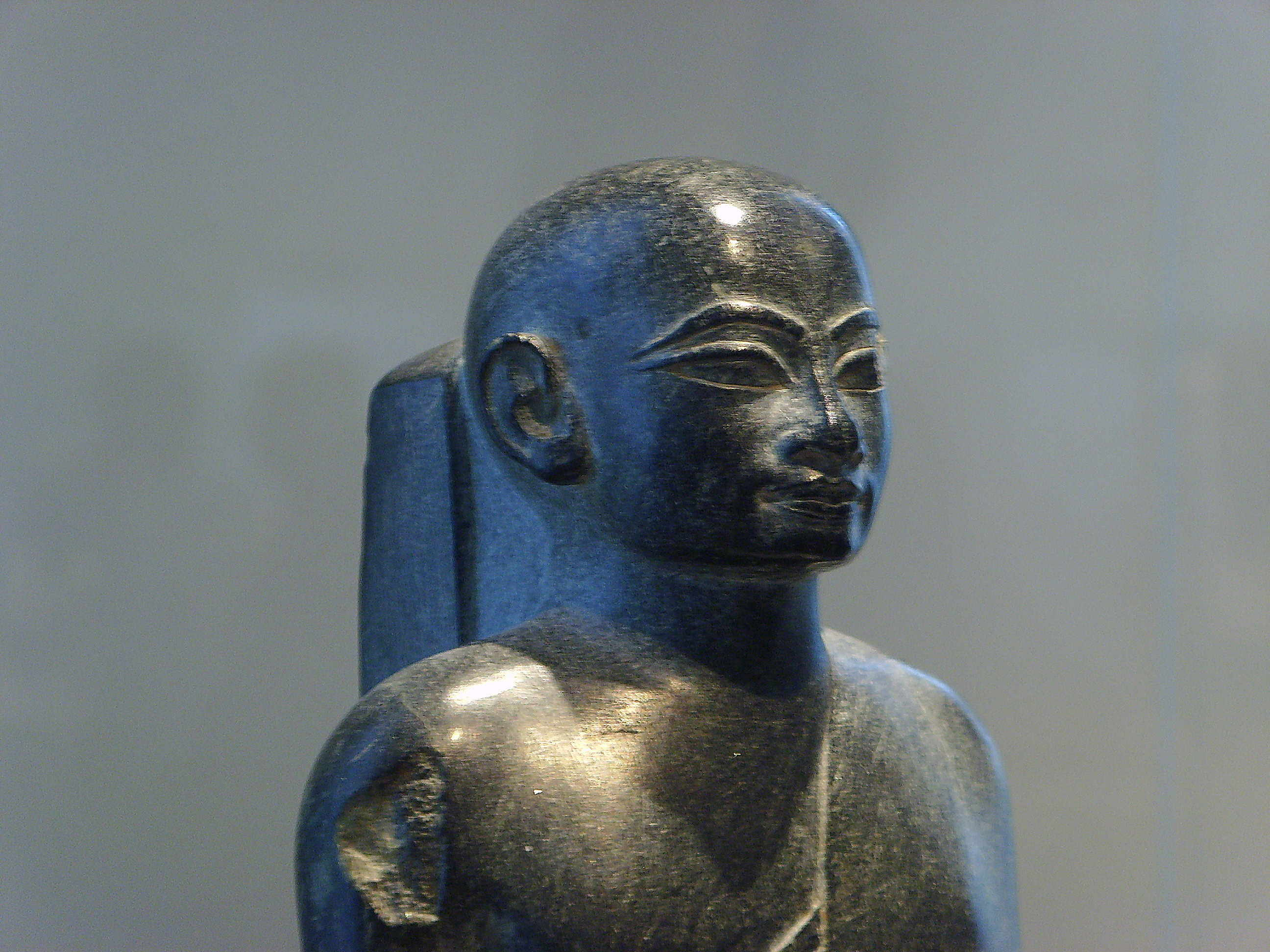
Egyptian Museum of Berlin
She is small, painted limestone with a plaster overlay, just under fifty centimeters tall. One eye is unfinished - the iris and pupil were never set into the empty socket. The other gazes out from beneath a tall flat-topped crown unique to her, with a calm intensity that has hypnotized visitors for more than a century. The bust of Nefertiti, sculpted around 1340 BCE in the workshop of the royal sculptor Thutmose at Amarna, is one of the most recognizable artifacts in the world. She lives now in a glass case in the Neues Museum on Berlin's Museum Island. Egypt has been asking for her back since 1924.
From Royal Cabinet to Museum Island
The collection that became the Egyptian Museum of Berlin began as Hohenzollern royal property in the 18th century, when the Prussian kings collected antiquities the way other princes collected Italian paintings. Alexander von Humboldt, the great naturalist and explorer, urged Friedrich Wilhelm III to formalize an Egyptian section, and the first objects arrived in Berlin in 1828. They were initially housed in the Monbijou Palace under the curatorship of Giuseppe Passalacqua, a Trieste merchant whose own collection from Egypt formed the foundation of the holdings. In 1842 the Prussian state funded a major scientific expedition to Egypt and Nubia led by Karl Richard Lepsius, who returned with thousands of artifacts that filled the new wing of the Neues Museum when it opened on Museum Island in 1855. The building was the work of Friedrich August Stuler, a student of Schinkel, and its interior frescoes alone made it one of the architectural marvels of mid-century Berlin.
The Bust That Came West
Nefertiti was excavated on December 6, 1912, by a German team under Ludwig Borchardt working at Tell el-Amarna - the short-lived capital city built by her husband, the heretic pharaoh Akhenaten. Under the partage system that governed archaeological work in Egypt at the time, finds were divided between the excavators and the Egyptian Antiquities Service. Borchardt's records of the division remain controversial. Egyptian officials have argued for a century that he misrepresented the bust's quality on the inventory list to ensure she went to Berlin rather than Cairo. The bust arrived in Germany in 1913, where it was kept in the private collection of the entrepreneur Henri James Simon until he donated it to the museum in 1920. By 1924 it was on public display, and Egypt's first formal request for its return came almost immediately. Hitler, who admired the bust, declared in 1933 that it would never leave Germany. It has not.
The Bombing and the Division
World War II almost ended the museum. The Neues Museum was heavily damaged by Allied bombing - hit repeatedly between 1943 and 1945 - and by 1945 stood as a partial ruin. The collection had been evacuated for safekeeping, but the war's end split it geographically. Items moved west of the Wall ended up in West Berlin and were displayed from 1967 in a building opposite Charlottenburg Palace. Items that remained in eastern hands went to the Bode Museum in East Berlin. For more than four decades the Egyptian Museum existed in two halves of the same divided city, with Nefertiti in the western collection. Reunification in 1990 made it possible to plan a single museum again. The reconstructed Neues Museum, restored over more than a decade by British architect David Chipperfield in a project that deliberately preserved bomb damage alongside new construction, reopened in October 2009. The collection came home to its 1855 building, divided no longer.
The Restitution Question
Egypt has continued to demand the bust's return. In 2007 Zahi Hawass, then secretary general of Egypt's Supreme Council of Antiquities, formally requested it. Berlin refused, citing its fragility and the legality of the original 1913 division. The arguments echo other debates: the Parthenon Marbles in London, the Benin Bronzes in European and American museums, the African artifacts French president Macron pledged to return in 2017. Where does heritage belong - in the country that produced it, or in the global institutions that have preserved and displayed it for generations of foreign visitors? The Egyptian Museum holds approximately 80,000 objects beyond Nefertiti: the Berlin Green Head, statues of Akhenaten and Queen Tiye, the Kalabsha Gate rescued from Lake Nasser as part of the Nubia salvage campaign, at least 23 mummified ancient Egyptians whose names mostly went unrecorded by their excavators. They ask the same question she does, more quietly. Berlin has no easy answer.
From the Air
The Egyptian Museum sits at 52.52 N, 13.40 E in the Neues Museum on Berlin's Museum Island - the UNESCO-listed cluster of five museums on a Spree island in central Mitte, immediately northwest of Berlin Cathedral. From the air the island reads as a distinctive ovoid landmass between the two arms of the Spree, with the green dome of the Bode Museum at its northern tip and the colonnaded Pergamon and Neues museums forming the heart of the ensemble. Berlin Brandenburg (EDDB) is 25 km southeast. Strict Class C airspace covers central Berlin - visual identification only from approved transit corridors.