Eigen-ji: The Temple of the Hidden Buddha
Behind a set of closed wooden doors inside the main hall of Eigen-ji sits a Buddha statue that almost no one alive has seen. The temple's principal image is a hibutsu -- a "hidden Buddha" -- sealed away from public view for decades at a stretch, its doors opened only once roughly every 25 years so that worshippers can briefly glimpse the figure within. The last such unveiling was in 2016. The next will not come until around 2041. This practice of concealment runs counter to every tourist instinct, and yet it captures something essential about Eigen-ji: a place where patience, restraint, and the unseen matter more than display. Tucked into a mountain valley in the city of Higashiomi in Shiga Prefecture, the temple serves as the head of one of the 14 autonomous branches of Rinzai Zen Buddhism -- a center of spiritual authority that has operated on these forested slopes for more than 660 years.
A Poet Finds His Mountain
Eigen-ji was founded in 1361 by Jakushitsu Genko, a Zen master who was also one of the great poets of medieval Japan. Jakushitsu established the temple under the patronage of Sasaki Ujinori, the shugo -- military governor -- of Omi Province. The site he chose sat in a valley along the western flank of the Suzuka Mountains, east of Lake Biwa, where forested ridges channel streams through narrow gorges. Jakushitsu's reputation as an eminent roshi drew monks from across Japan; by some accounts, more than 2,000 came to train at the temple during its early years. The legend of the temple's sacred image holds that Jakushitsu discovered a small statue of the bodhisattva Kanzeon, barely five centimeters tall, glowing with a mysterious light atop a rock in the mountains east of the temple. He commissioned the noted Buddhist sculptor Gotokan to create a larger seated Kanzeon figure, and concealed the tiny original inside its crown -- where it remains, hidden within the hidden.
Emperors and Revivals
Like many temples across the centuries, Eigen-ji endured periods of decline and renewal. During the Edo period, the temple was revived under the leadership of Isshi Bunshu, an abbot dispatched from the great Rinzai monastery of Myoshin-ji in Kyoto. This restoration carried extraordinary patronage: Emperor Go-Mizunoo himself, along with his consort Tofukumon-in and the powerful Hikone Domain, sponsored the rebuilding. That a Zen temple in a mountain valley could attract imperial attention speaks to the spiritual weight Eigen-ji carried within the Rinzai tradition. The temple's status as head of its own autonomous branch meant it was not simply a place of worship but a seat of institutional authority, training monks and overseeing subordinate temples across the region.
Cherry Blossoms and Crimson Leaves
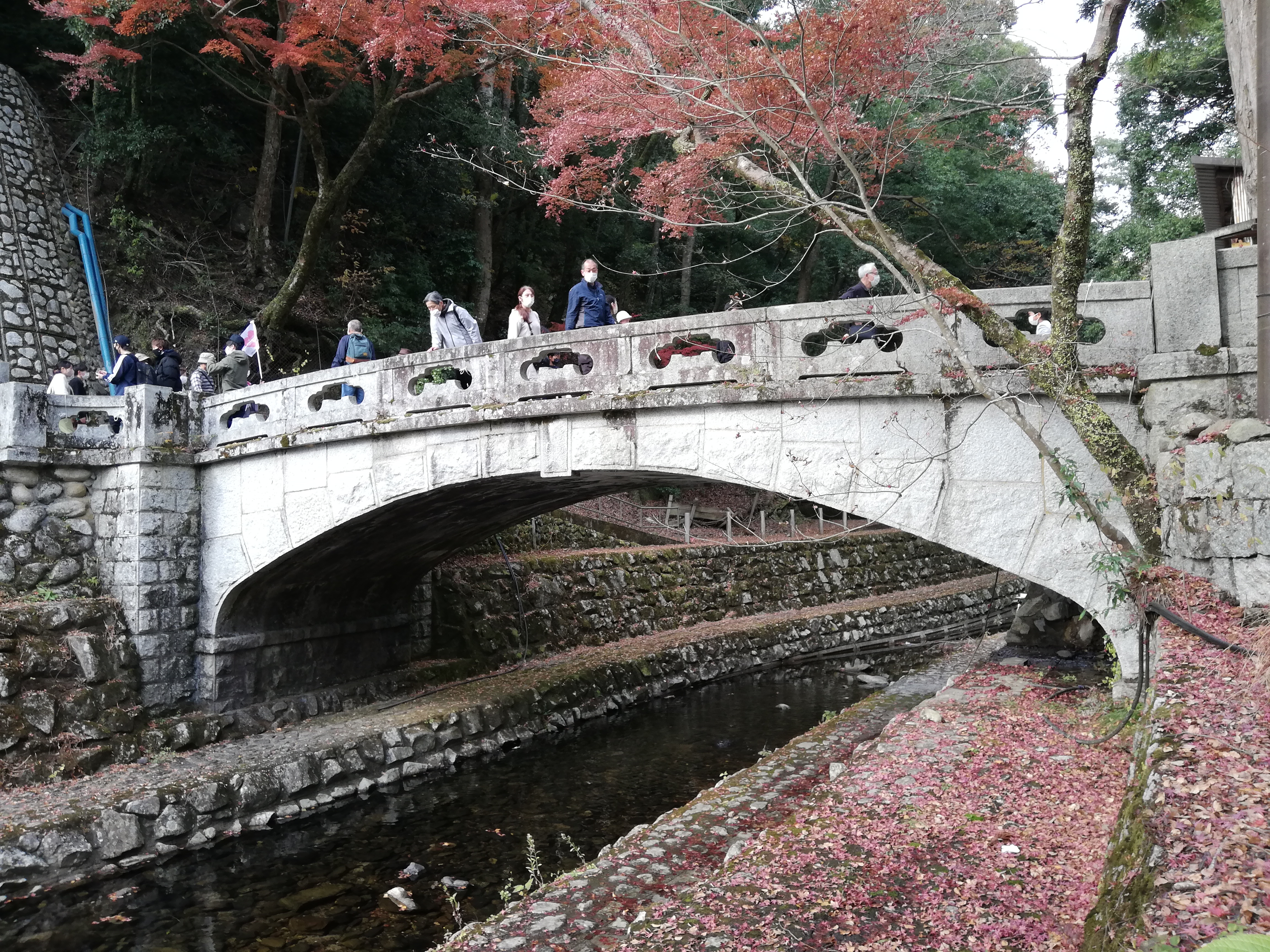
Eigen-ji is renowned for two seasonal spectacles. In spring, a distinctive variety of cherry blossom known as the Eigenji-zakura blooms across the temple grounds, its pale flowers framing the weathered wooden halls and stone pathways. The temple is recognized as one of the 100 Views of Nature in Kansai for these blossoms. In autumn, the transformation is equally dramatic: the maple trees that crowd the valley floor and climb the surrounding hillsides turn deep crimson and gold, drawing visitors who come specifically for the koyo -- the autumn color viewing that is a Japanese cultural institution as deeply rooted as hanami, its springtime counterpart. The temple's setting in a narrow mountain valley amplifies the effect, with color closing in from all sides and reflecting in the still water of garden ponds. Between these two seasons of spectacle, the rest of the year belongs to the quiet rhythms of Zen practice.
What the Doors Conceal
The hibutsu tradition is not unique to Eigen-ji -- temples across Japan keep sacred images veiled -- but few execute the idea with such dramatic patience. The principal image sits behind its closed doors year after year, decade after decade, visible only in memory and anticipation. When the doors finally open, the event becomes a pilgrimage, drawing worshippers who may have waited most of their adult lives for the moment. The practice reflects a core Zen idea: that the most sacred things are not diminished by being unseen, and that the act of waiting is itself a form of devotion. For visitors arriving between unveilings, the closed doors are their own kind of experience -- a reminder that not everything worth seeking can be seen on demand. The temple's mountain setting, its cherry blossoms and autumn maples, its history of poet-monks and imperial patrons, all surround a central absence. And that absence is the point.
From the Air
Located at 35.081°N, 136.320°E in a mountain valley in Higashiomi, Shiga Prefecture, on the western flank of the Suzuka Mountains east of Lake Biwa. From 3,000-5,000 feet AGL, the temple complex is nestled in a narrow valley with dense tree cover -- look for the break in the forest canopy where temple roofs emerge among cherry and maple groves. Lake Biwa, Japan's largest lake, dominates the view to the west. Nearest major airports are Kansai International (RJBB) approximately 70 nautical miles southwest and Chubu Centrair International (RJGG) approximately 50 nautical miles east. The Suzuka Mountains form a prominent ridge line to the east.