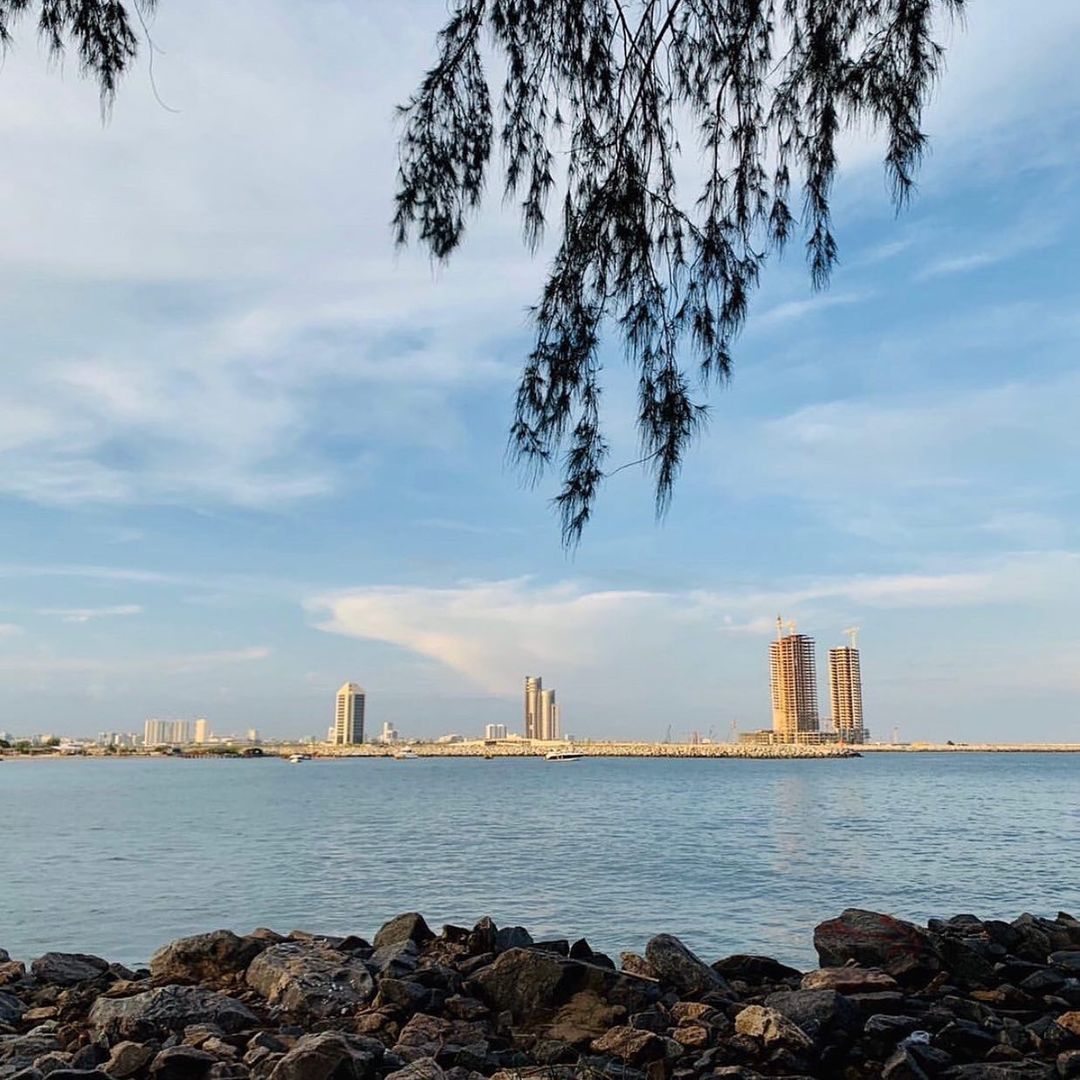
Eko Atlantic
For decades, the Atlantic Ocean ate Lagos's shoreline at a rate of thirty meters per year. Sand nourishment programs that began around 1960 could not keep pace -- the beach kept retreating no matter how much material was dumped onto it. Eko Atlantic is Nigeria's answer: a planned city rising on nine square kilometers of land reclaimed from the ocean itself, just off Bar Beach on the southern tip of Lagos. Officially named Nigeria International Commerce City, the project aims to house at least 250,000 residents, accommodate 150,000 daily commuters, and do what sixty years of stopgap measures could not -- hold the Atlantic at bay.
Building a City from the Seafloor
The scale of the engineering is hard to overstate. South Energyx Nigeria Ltd., a subsidiary of the Chagoury Group, leads the development as a public-private partnership with the Lagos State Government. China Communications Construction Group handles the dredging and landfill operations, pulling sand from the ocean floor and compacting it into solid ground. An 8.5-kilometer sea wall, constructed primarily of rock and faced with concrete accropode armor, protects the new land from the waves that destroyed the old coastline. The barrier was tested at the DHI Institute in Copenhagen against simulated storms ranging from one-in-a-hundred-year surges up to one-in-a-thousand-year events. Consultants from Royal Haskoning designed the traffic and transport systems. The project received a Clinton Global Initiative Commitment Certificate in 2009, drawing the kind of international attention that its backers hoped would attract investment.
A Self-Contained Metropolis
Eko Atlantic is planned not as a neighborhood but as a municipality in its own right -- with its own bureaucracy, its own energy supply, and its own offshore banking zone where investors can transfer money freely. The master plan includes commercial towers, residential blocks, hotels, and recreational facilities, all built to modern infrastructure standards including independent water, waste management, and security systems. On February 21, 2013, a ceremony marking the land reclamation milestone drew then-President Goodluck Jonathan, former U.S. President Bill Clinton, Lagos Governor Babatunde Fashola, and Bola Tinubu. By November 2020, the Eko Pearl Towers and several other buildings had been completed, and the city was hosting afro-concerts, the Lagos City Marathon, and the Copa Lagos sporting event. The project also secured an EDGE green building certification from the International Finance Corporation.
The Cost of Holding Back the Sea
Not everyone sees Eko Atlantic as salvation. Residents of neighboring communities say that the construction itself has worsened coastal erosion and triggered ocean surges in areas the project was supposed to protect. In August 2012, the Atlantic surged over its banks, sweeping sixteen people into the ocean -- several fatally -- and flooding Kuramo Beach, Victoria Island, and surrounding neighborhoods. An environmental expert attributed the disaster to the failure of contractors handling the sand-filling to implement adequate surge mitigation. The Lagos chapter of the People's Democratic Party blamed the state government's sand-filling activities directly and called for the project to be halted and bereaved families compensated. Critics have also questioned whether a luxury development serving Nigeria's wealthiest residents addresses the needs of a city where millions live in informal settlements without basic services.
Land Rising, Questions Remaining
The tension at the heart of Eko Atlantic is one that Lagos confronts everywhere: how to build for the future of a city growing faster than its infrastructure can keep up, while protecting the people already living on the margins. The sea wall holds, the towers keep rising, and the reclaimed land continues to expand into the Atlantic. Whether this new peninsula becomes the modern West African business capital its developers envision -- or a gated enclave that shields the wealthy while displacing the vulnerable -- depends on decisions that extend far beyond engineering. For now, what was open ocean a generation ago is becoming solid ground, and a city of 250,000 is taking shape on land that did not exist when most of its future residents were born.
From the Air
Located at 6.400N, 3.405E, Eko Atlantic is visible from the air as a dramatic land reclamation project extending into the Atlantic south of Victoria Island, Lagos. The 8.5 km sea wall is clearly visible as a curved barrier against the ocean. Best viewed from 3,000-5,000 feet AGL approaching from the south or west over the Gulf of Guinea. The contrast between the reclaimed land and the open ocean is striking. Nearest airport: Murtala Muhammed International Airport (DNMM), approximately 15 nm to the north.