El Boleo
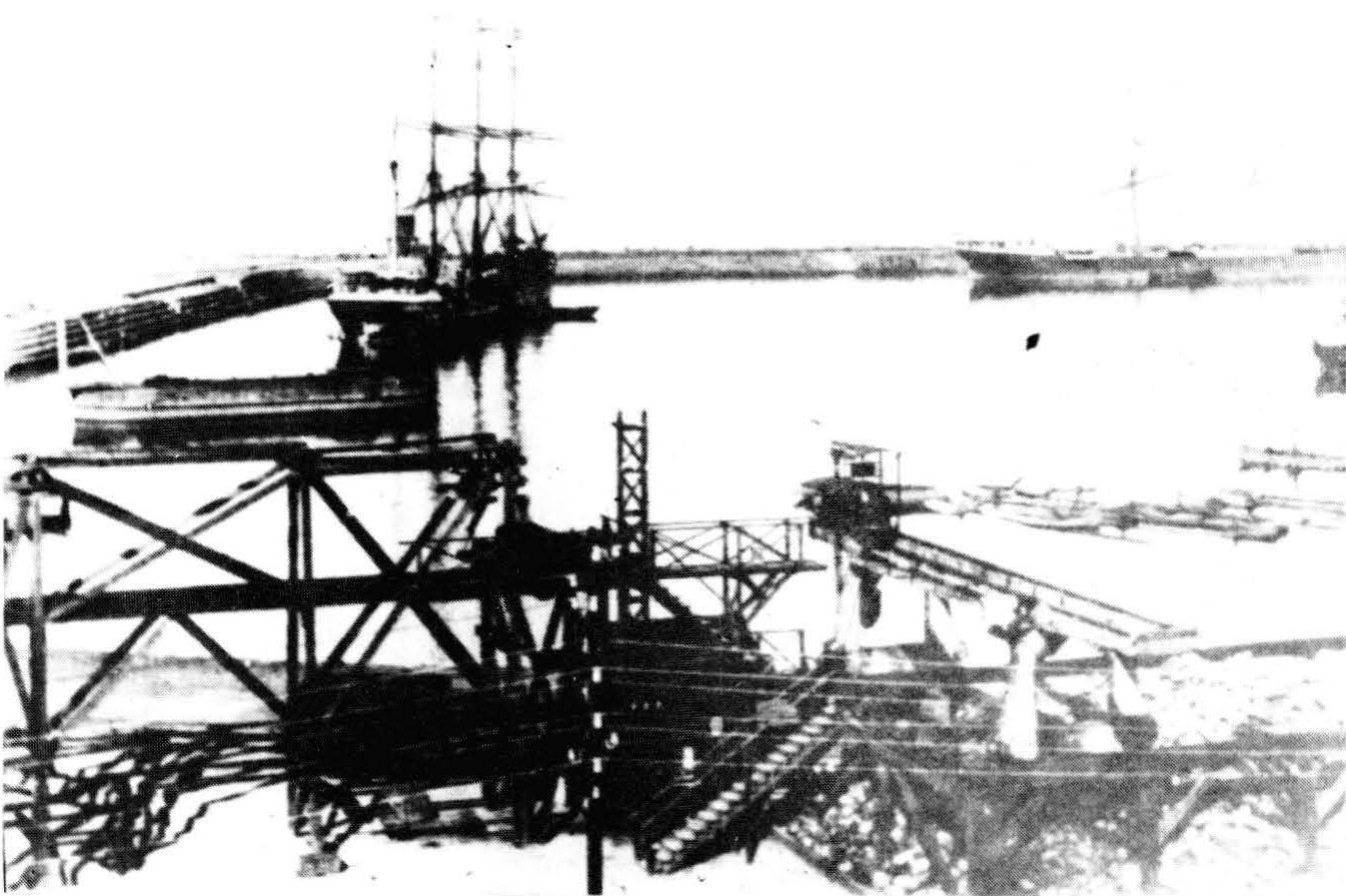
The harbor at Santa Rosalia is not natural. It was built from slag, the waste rock of a copper smelter that operated for nearly seven decades on the arid coast of Baja California Sur. Walk the waterfront today and you are walking on the literal byproduct of El Boleo, a copper deposit so rich that it once produced half of Mexico's total copper output, drew a French company across an ocean to manage it, and still tempts investors more than a century and a half after a rancher named Jose Rosas Villavicencio first noticed ore in the desert hills.
A French Company in the Mexican Desert
Villavicencio's 1868 discovery attracted small-scale Mexican and German operators, but the desolate location made the enterprise barely profitable. Everything changed in 1885 when the French Compagnie du Boleo secured an extensive concession and a 70-year tax exemption from President Porfirio Diaz, who hoped the mine would catalyze development in this empty corner of his country. The gamble worked, at least initially. The French built seven reverberatory furnaces, a smelter, and what was considered the most advanced electrical system in Mexico at the time. They built a hospital. They built the town of Santa Rosalia itself, which marks 1885 as its official founding. And they built that artificial harbor from smelter slag, a structure so solid it endures almost unchanged to the present day.
The Human Cost of Copper
The ore was extraordinarily rich, a complex mixture of copper oxides and sulfides running as high as 15 percent copper, concentrated enough to feed directly into the smelter with no processing beyond crushing. Extracting it, though, was brutal labor. The Compagnie du Boleo brought in Chinese, Japanese, Yaqui, and mestizo workers to dig in the desert heat. Many died of illness or accidents associated with poor working conditions. At its peak in the late 19th century, El Boleo was known as the Mexican capital of copper, producing 11,000 tonnes of pure copper annually. The wealth flowed to shareholders in France. The workers who made it possible rarely saw much of it, and the cobalt, zinc, and manganese locked in the ore alongside the copper were simply left unrecovered, the metallurgy too complex to bother with when copper alone was so profitable.
Boom, Bust, and Bust Again
When the tax exemption expired in 1954, the math collapsed overnight. The French company went bankrupt, and the Mexican government reopened the works under the name Compania Minera Santa Rosalia to prevent the town's economic collapse. The government operation ran continually at a loss, using the same increasingly archaic equipment, until it closed for good in 1984. Then came the Canadians. In 1992, new exploration confirmed that vast copper deposits remained, along with commercially viable quantities of cobalt, zinc, and manganese. A feasibility study, pilot campaigns, and over 38,000 meters of drilling followed. But the project's costs spiraled. By 2012, construction overruns threatened to kill it entirely.
Korean Chapter, Uncertain Future
A Korean consortium led by Korea Resources Corporation stepped in, taking majority ownership in exchange for funding the overruns. The $1.75 billion project finally achieved copper production on January 17, 2015, though the industrial complex arrived 18 months late and $750 million over budget. In 2014, Hurricane Odile struck Baja California Sur, killing El Boleo's Korean manager Kyong Jim Park when floodwaters swept away his vehicle. By 2017, output was running far below predictions. The mine sits in the desert as it always has, promising more than it delivers, a deposit that has outlasted every company and every nation that has tried to master it. The harbor made of slag still holds.
From the Air
Located at 27.32N, 112.28W on the Gulf of California coast of Baja California Sur, adjacent to the town of Santa Rosalia. The mine workings and the distinctive slag harbor are visible from altitude. Nearest airport is Santa Rosalia (MMSR). Best viewed at 3,000-5,000 feet AGL. The desert terrain stretches inland while the blue-green Gulf of California lies to the east. The French-influenced architecture of Santa Rosalia is notable, including a prefabricated iron church designed by Gustave Eiffel.