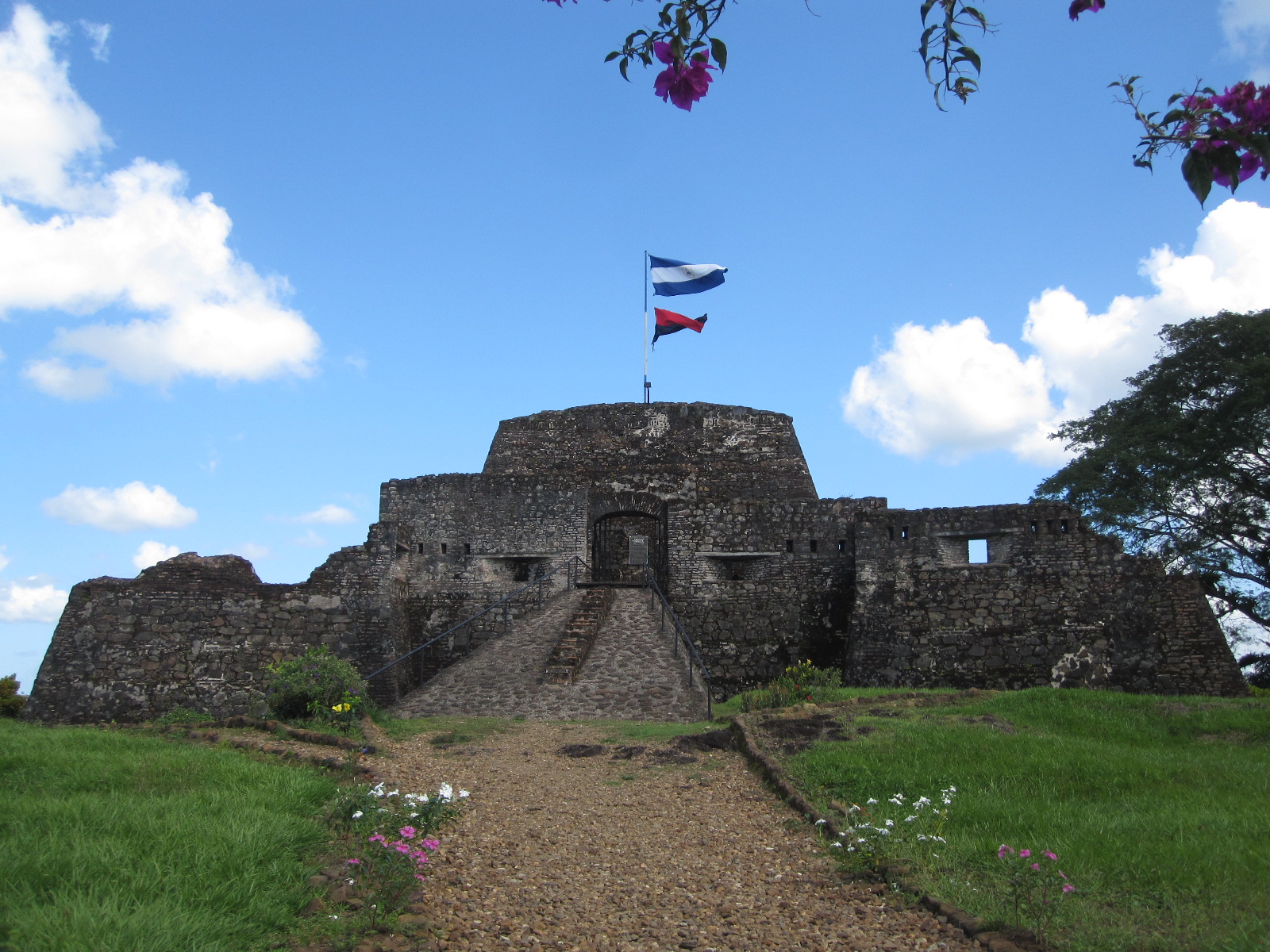
El Castillo, Nicaragua
Rafaela Herrera was nineteen years old when her father, the garrison commander, died unexpectedly. Eleven days later, a combined British and Miskito force sailed upriver from Jamaica and laid siege to the fortress she now effectively defended. According to the accounts that survived, she killed the British commander herself. The defenders held for six days until the attackers retreated. King Charles III of Spain later granted her a pension for life. That fortress -- the Castillo de la Inmaculada Concepcion -- still stands above the San Juan River in southeastern Nicaragua, and the village of El Castillo still clings to the riverbank beside it, a place whose entire existence grew from the decision, in 1673, to build a wall against pirates.
A Wall Against Buccaneers
Construction of the Fortaleza de la Limpia Pura e Inmaculada Concepcion began on March 10, 1673, on the southern bank of the San Juan River, roughly six kilometers from what is now the Costa Rican border. It was completed in 1675. The strategic logic was straightforward: the San Juan River connects the Caribbean Sea to Lake Nicaragua, and from the lake, ships can reach the colonial city of Granada. Pirates understood this route as well as the Spanish did. The fortress was meant to block them. It did not always succeed. On April 8, 1685, the buccaneer William Dampier plundered Granada and set it on fire despite the fortification downriver. But the fortress remained, and the village that grew around it persisted as a choke point on one of Central America's most consequential waterways.
Rafaela's Siege
The morning of July 26, 1762, brought seven large boats and several canoes around the river bend. The British expedition, launched from Jamaica, included Miskito allies and enough firepower to expect a quick victory. What the attackers did not know was that the garrison commander, Don Jose de Herrera y Sotomayor, had died eleven days earlier, leaving the defense in uncertain hands. His daughter Rafaela, just nineteen, stepped into the crisis. Her acts of heroism during the battle -- including, by multiple accounts, killing the British commander -- galvanized the garrison. Lieutenant Juan de Aguilar y Santa Cruz, serving as the pro tempore commander, led the defense through six days of fighting. On August 3, the British lifted their siege and retreated downriver. Nearly two decades later, in 1781, Charles III formally recognized Rafaela Herrera's role with a royal decree granting her a lifetime pension, an extraordinary honor for a young woman in colonial Central America.
Nelson on the River
Eighteen years after Rafaela's defense, the fortress faced another British assault, this time connected to the American Revolutionary War. After Spain entered the conflict in 1779, Major General John Dalling, the British governor of Jamaica, devised an ambitious plan: sail up the San Juan River, cross Lake Nicaragua, and capture Granada, effectively cutting Spanish America in half while opening potential access to the Pacific. The 1780 San Juan Expedition brought Colonel John Polson and a twenty-one-year-old captain named Horatio Nelson to the fortress walls. Nelson led his men through dense jungle to attack from a hill behind the fortification, and on April 29, 1780, the British captured it. They occupied the fortress for nine months before abandoning it in January 1781, defeated not by the Spanish garrison but by tropical disease and overstretched supply lines. Nelson, who would later become one of Britain's most celebrated naval commanders, carried the memory of this jungle campaign for the rest of his career.
The River Town Today
El Castillo's administrative capital is technically the village of Boca de Sabalos, whose name translates to "mouth of the tarpon," a nod to the Atlantic tarpon that once filled the river. Boca de Sabalos sits 350 kilometers from Managua and 55 kilometers downriver from the departmental capital of San Carlos. The village of El Castillo itself lies several kilometers further downstream, still hugging the riverbank below the fortress. The municipality borders Costa Rica to the south and stretches to the municipality of Bluefields to the north. The fortress has been restored and now serves as both a museum and a monument, its stone walls overlooking the same green river that brought pirates, British soldiers, and a young woman's unlikely moment of defiance. Reaching El Castillo still requires a boat journey down the San Juan, a reminder that the river remains the lifeline it has been for centuries.
From the Air
Located at 11.04N, 84.47W on the San Juan River in southeastern Nicaragua, approximately 6 km from the Costa Rican border. The fortress is visible from low altitude on the southern bank of the river. The San Juan River itself is clearly identifiable from cruising altitude, winding from Lake Nicaragua toward the Caribbean. The nearest significant town is San Carlos (MNSC), 55 km upriver at the southeastern corner of Lake Nicaragua.