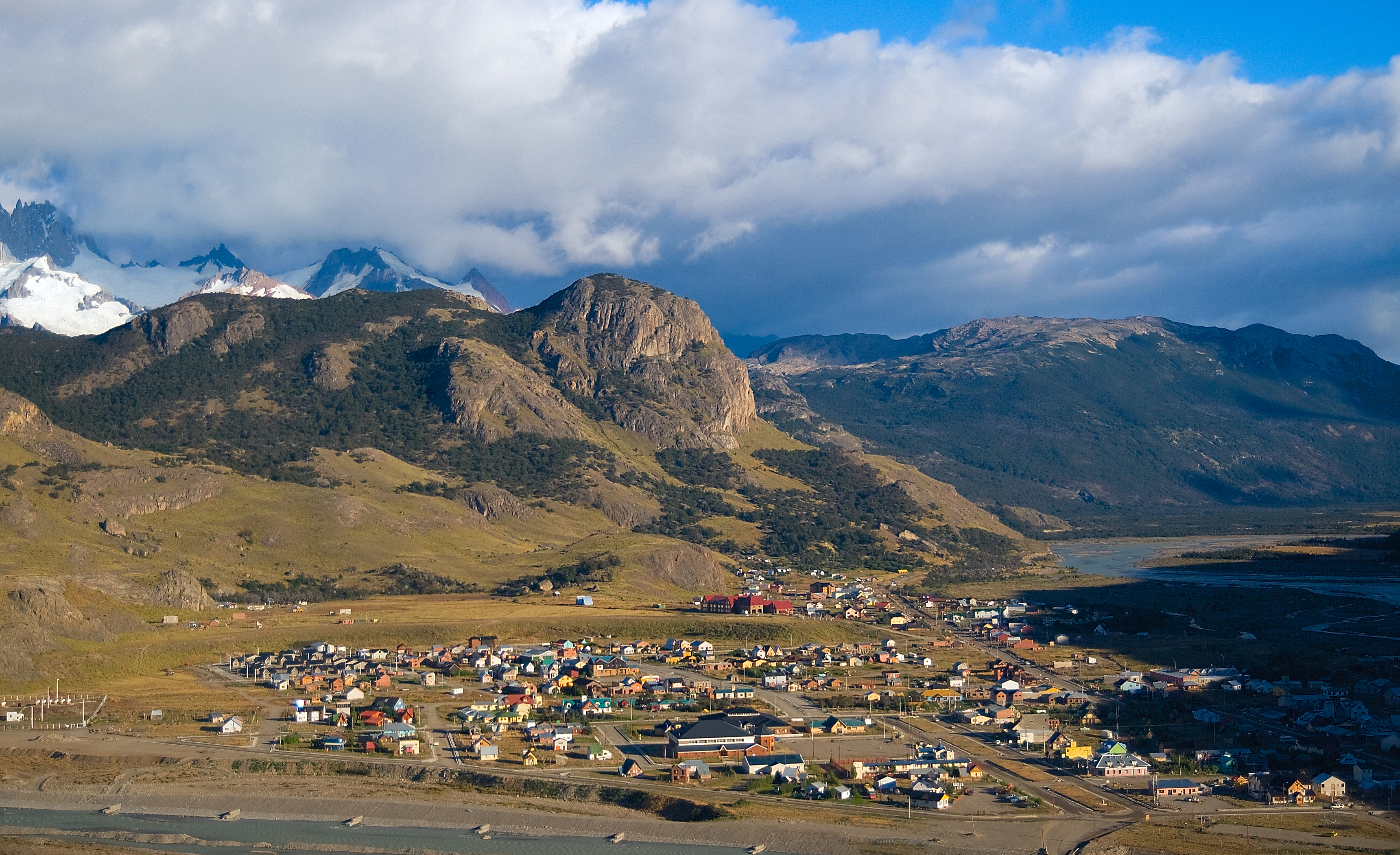
El Chaltén
The mountain appears through a gap in the clouds, and everyone on the trail stops breathing. Fitz Roy rises like nothing else on Earth - a vertical cathedral of granite and ice, striped with frozen waterfalls, crowned with a permanent plume of wind-driven snow. The Tehuelche people called it El Chaltén, 'the smoking mountain,' and on most days it lives up to the name, wrapped in cloud and mystery. But when it clears - in those precious golden hours of dawn or dusk - it reveals itself as one of the most dramatic peaks on the planet. The village below shares the name, a scattering of wooden buildings where every trail starts from the edge of town and the only reason anyone comes is to walk toward that impossible skyline.
Born from Politics
El Chaltén exists because of a border dispute. In 1985, Argentina hastily founded the settlement to strengthen its claim to this remote corner of Patagonia, contested by Chile. A few prefab buildings, some hardy pioneers, a flag planted in the wind - that was enough to establish sovereignty. What Argentina didn't fully anticipate was that they'd created the gateway to some of the finest trekking on Earth.
The village has grown since then - several hundred permanent residents, dozens of hostels and restaurants, a main street lined with outdoor gear shops. But it retains the feel of a frontier outpost, a place that exists for one purpose: to get hikers onto the trails. There are no banks, sporadic internet, limited cell coverage. The mountains don't care about connectivity, and neither, for a few days at least, do the people who come here.
The Trails
The beauty of El Chaltén is its accessibility. No entrance fee, no permits required for day hikes, no vehicles needed - just lace up your boots at the national park office and start walking. The trails fan out from town into the Fitz Roy massif, ranging from easy strolls to demanding scrambles.
Laguna de los Tres is the classic: a 25-kilometer round trip that climbs through lenga forest, crosses glacial streams, and delivers you to an amphitheater of rock and ice at Fitz Roy's base. Arrive at dawn, before the crowds, and watch the first light turn the granite pink. Laguna Torre offers a gentler approach to Cerro Torre, that impossible needle of rock that was once declared unclimbable. The Loma del Pliegue Tumbado gives views of both. And for those with more time, the trails connect - loops that take you into the backcountry, past glaciers and alpine lakes, into a silence broken only by wind and birdsong.
The Climbers' Mountain
Fitz Roy and Cerro Torre are among the most technically challenging climbs on Earth. It's not the altitude - Fitz Roy tops out at 3,405 meters, modest by Himalayan standards. It's the rock: sheer granite walls rising vertically for a thousand meters, swept by Patagonian storms that can pin climbers in their camps for weeks. Weather windows are rare and brief. Expeditions have failed after months of waiting.
The first ascent of Fitz Roy came in 1952, by a French team. Cerro Torre's history is more controversial - a claimed 1959 ascent was later disputed, and the peak wasn't indisputably climbed until 1974. Today, the villages's hostels fill with climbers from around the world, watching weather forecasts with the intensity of gamblers watching the odds. When a window opens, they move fast. When it doesn't, they wait - or they hike, like everyone else.
Weather Rules
Patagonian weather is not a suggestion; it's a command. The westerlies blow off the Southern Ice Field with a fury that can knock hikers off their feet. Cloud builds around the peaks with alarming speed. A morning of crystalline visibility can become an afternoon whiteout. Rain and snow are possible in any month, and wind is a near-constant companion.
But when the weather cooperates, there's nothing like it. Dawn light on granite. The silence of an alpine lake. Condors circling on thermals above the spires. The locals track conditions obsessively, checking WindGuru forecasts that predict the brief windows of calm. Flexible itineraries are essential. The mountain reveals itself on its own schedule, and the only rational response is patience.
Base Camp Living
El Chaltén operates on hiker time. Hostels serve early breakfasts for dawn starts. Cafes fill in the afternoon with mud-splattered trekkers comparing notes on trail conditions. The local microbrews - brewed with glacial water, they claim - taste better after twenty kilometers with a pack on your back. Patagonian lamb rotates on vertical spits called asadores in restaurant windows.
The vibe is international, democratic, united by blisters and weather complaints. Backpackers share tables with professional climbers. Languages mix. Everyone has the same topic: which trail, which weather window, which miradores. And everyone, sooner or later, looks up at the peaks - checking for cloud, hoping for clarity, quietly stunned that such mountains exist and that a trail leads toward them from this ramshackle little town.
From the Air
Located at 49.3°S, 72.9°W in southern Argentina's Santa Cruz Province. The village sits at the northern edge of Los Glaciares National Park, directly beneath the Fitz Roy massif. Mount Fitz Roy (3,405m) is unmistakable from altitude - a distinctive jagged granite spire, often cloud-capped, visible from considerable distance in clear conditions. Cerro Torre's needle-like summit rises nearby. No airport in town - nearest is El Calafate (FTE), 220km south by road (3 hours). The village appears as a small cluster of buildings at the end of Ruta 23, surrounded by forest and facing the peaks. Lago Viedma lies to the south. The Southern Patagonian Ice Field dominates the western horizon. Expect strong westerly winds, rapid weather changes, and frequent cloud around the peaks. Best flying conditions typically early morning before thermals and winds build.