El Kala National Park
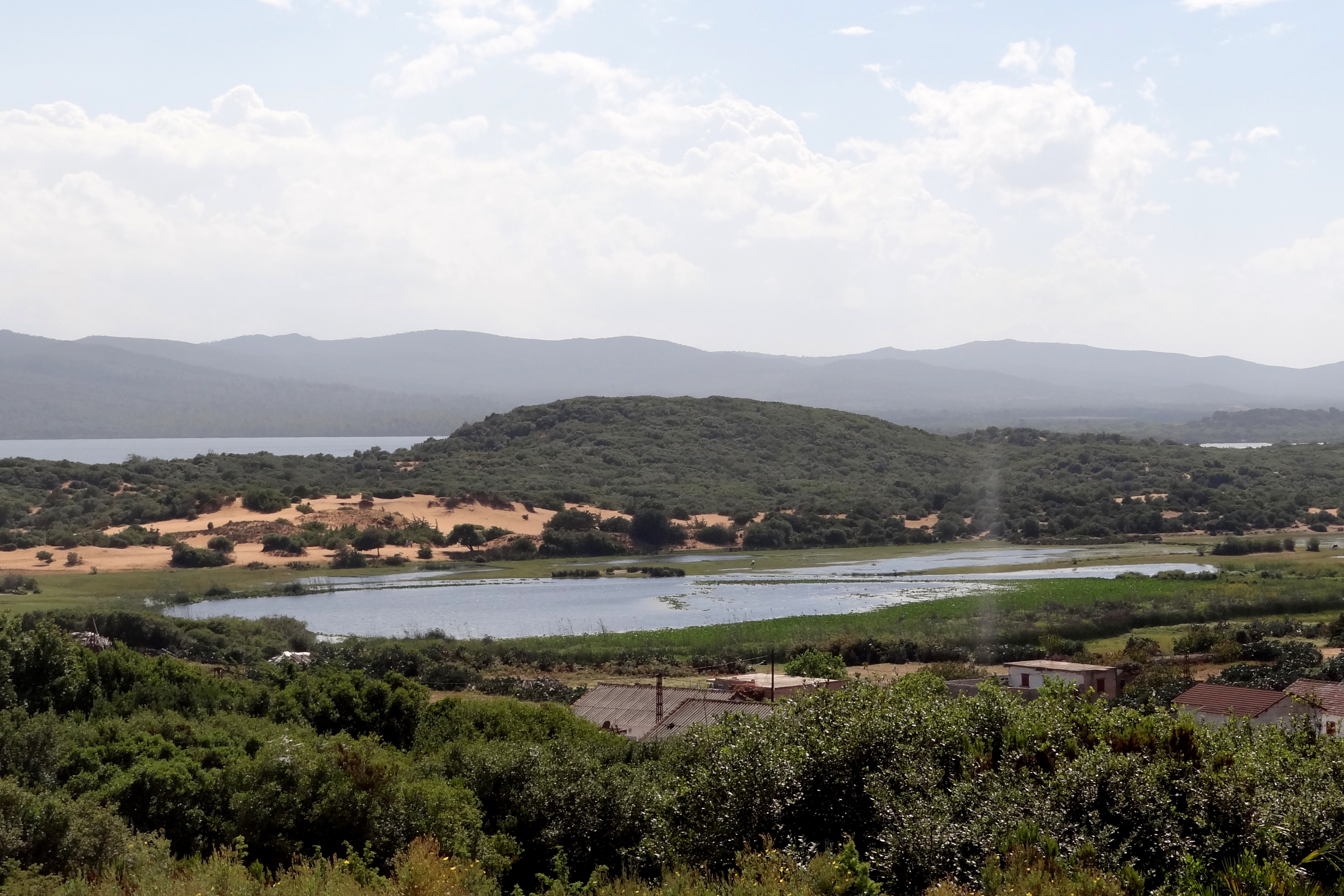
Where Algeria meets Tunisia and the Mediterranean, the landscape does something unexpected. Instead of the dry scrubland typical of North Africa's coast, dense cork oak forests slope down to freshwater lakes fringed with reeds, and those lakes open through channels to the sea. El Kala National Park protects 821 square kilometers of this anomaly -- a place so ecologically rich that UNESCO designated it a biosphere reserve, and the Ramsar Convention placed several of its wetlands on the list of internationally important sites. It is, by one measure, the most biodiverse protected area in North Africa.
The Last Refuge of the Atlas Deer
El Kala's forests are the final stronghold of the Barbary stag, also known as the Atlas deer -- the only native deer species in Africa. Once ranging across the mountains of North Africa from Morocco to Tunisia, the Barbary stag was hunted nearly to extinction during the colonial period. The population in El Kala's cork oak and Zeen oak woodlands represents the species' last viable refuge in Algeria. The forests themselves are remarkable. Cork oak dominates, but the canopy includes kermes oak, Aleppo pine, alders along the waterways, willows, and white poplars. Maritime pines, eucalyptus, acacias, and even bald cypresses appear in planted areas. An inventory conducted between 1996 and 2010 catalogued 1,590 plant species and 175 species of mushrooms within the park's boundaries.
Where Fresh Water Meets Salt
The park's defining feature is its chain of lakes and lagoons, each with its own character. Lake Tonga and Lake Oubeïra are freshwater bodies surrounded by marshes. The El Mellah lagoon connects to the Mediterranean, creating a brackish environment where freshwater and saltwater species overlap. These wetlands attract more than 60,000 migratory birds every winter -- glossy ibises, greater flamingos, storks, coots, and dozens of species of ducks and geese. The Mediterranean monk seal, one of the world's most endangered marine mammals, has been occasionally sighted along the park's 50 kilometers of coastline. Altogether, researchers have documented 718 animal species within the park, including 40 mammals, 25 birds of prey, 64 freshwater bird species, and 9 marine bird species.
Living in the Reserve
El Kala is not a wilderness emptied of people. Eighty-seven thousand people live within the national park and biosphere reserve -- farming, fishing, and managing cork harvests from the oak forests as their families have done for generations. This cohabitation is both the park's greatest challenge and its most distinctive quality. The cork oak economy, in particular, creates an incentive for forest conservation: the trees are worth more alive and producing bark than they would be as lumber. From 1994 to 1999, the World Bank financed a project to develop sustainable natural resource management models for the park, attempting to balance the needs of residents with the protection of ecosystems that have no equivalent elsewhere in the Mediterranean basin.
A Coast of Contrasts
The park's highest point, Djebel El-Ghorra, rises to 1,202 meters -- high enough to catch rainfall that the lower coast misses. Temperatures range from a winter average of 9 degrees Celsius to summer highs around 30. The result is a landscape of surprising contrasts within a relatively compact area: mountain forests give way to lakeside marshes, which give way to sandy beaches and rocky headlands along the Mediterranean. The park averaged 30,000 visitors in 2001, a modest number that reflects both its remoteness -- it sits in Algeria's extreme northeast, near the Tunisian border -- and the country's limited tourism infrastructure. For those who do reach it, El Kala offers something rare: a Mediterranean ecosystem that has not been hollowed out by development, where flamingos still wade in reed-fringed lakes and the Barbary stag still moves through forests that predate every human empire that claimed this coast.
From the Air
Located at 36.82N, 8.42E in extreme northeastern Algeria, near the Tunisian border. The park covers 50 km of Mediterranean coastline with visible lakes (Tonga, Oubeïra, El Mellah) behind the coast. Nearest airport: Rabah Bitat Airport, Annaba (DABB), approximately 70 km west. The transition from forested hills to coastal lagoons is clearly visible from cruising altitude. Djebel El-Ghorra (1,202 m) is the highest point.