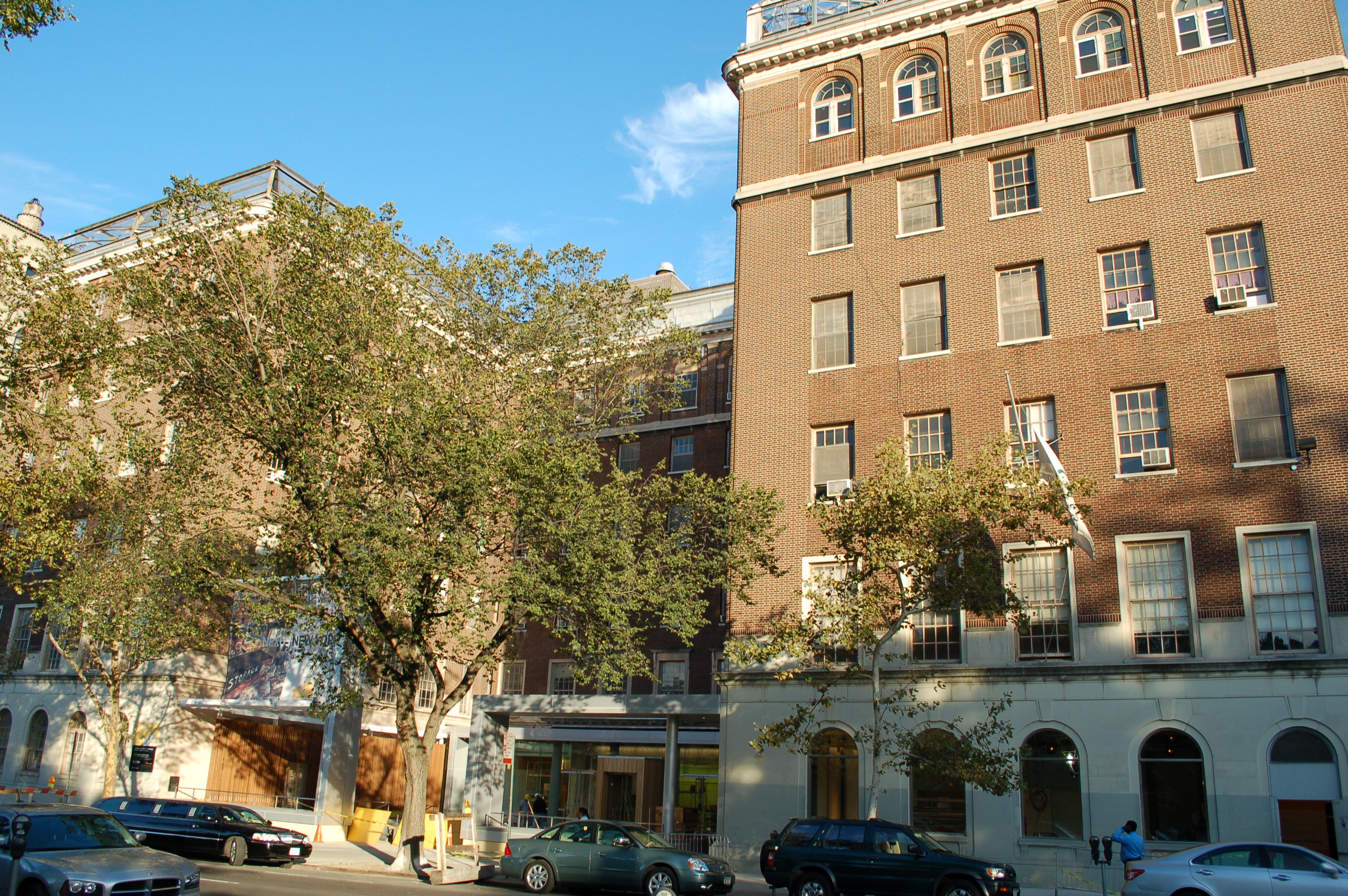
El Museo del Barrio
In 1969, a group of Puerto Rican and African-American parents in East Harlem confronted their school district with a simple demand: teach our children who they are. The city's educational programs had no room for the art, folklore, and history of the community that locals called El Barrio. William W. Frey, superintendent of school district 4, responded by appointing artist and educator Rafael Montanez Ortiz to develop materials highlighting Puerto Rican culture. Ortiz had a bigger idea. Instead of worksheets, he created a museum.
From Classroom to Fifth Avenue
El Museo del Barrio began in a public school classroom, born not from philanthropy or institutional ambition but from the Nuyorican Movement and the broader Civil Rights struggle. Ortiz wrote in the museum's founding documents that "the cultural disenfranchisement I experience as a Puerto Rican has prompted me to seek a practical alternative to the orthodox museum, which fails to meet my needs for an authentic ethnic experience." He served as director from June 1969 to spring 1971, establishing the museum's identity as a community institution first and an art institution second. Over the following decades, El Museo migrated from that classroom to 1230 Fifth Avenue, landing near the northern tip of Museum Mile -- just above the Museum of the City of New York and within walking distance of the Metropolitan Museum of Art. It is the oldest museum in the country dedicated to Latino art, a distinction that carries both pride and the ongoing tension of staying true to its origins.
Eight Hundred Years in One Collection
The permanent collection spans more than 800 years and holds over 6,500 pieces encompassing Puerto Rican, Latin American, Caribbean, and Latino art. Pre-Columbian Taino artifacts sit alongside traditional santos de palo -- the carved wooden saints that are a cornerstone of Puerto Rican folk art -- and the vivid, horned vejigante masks worn during carnival festivals. The twentieth-century holdings include drawings, paintings, sculptures, installations, prints, photography, and documentary films. El Museo has partnered with the New York Historical Society on the exhibition Nueva York and collaborated with the Queens Museum of Art and the Studio Museum in Harlem on Caribbean Crossroads. Each year, the museum hosts its annual Three Kings Day parade, a celebration that brings the streets of El Barrio to life in January with music, floats, and the tradition of Los Reyes Magos.
Growing Pains on the Mile
Success brought a familiar problem: the museum outgrew its space. For years, El Museo was confined to a single floor of a building it shared with a school and several private organizations. In the early 2000s, a plan emerged for the Museum of the City of New York to relocate to the historic Tweed Courthouse near City Hall, which would have freed its building for El Museo. Mayor Michael Bloomberg killed the plan by installing the Department of Education in the Tweed Courthouse instead. El Museo pivoted, launching a $35 million renovation that transformed its outdoor courtyard into a glass-walled lobby, cafe, and performance space. The redesigned museum reopened in October 2009 to mostly positive reviews, coinciding with the institution's fortieth anniversary. From 2018 to 2019, the Teatro was restored -- its fairytale paintings refreshed, forgotten chandeliers rehung from the ceiling, and the stage modernized for a new generation of performances.
The Identity Question
El Museo has grappled with a tension baked into its own success. As the institution expanded its mission to embrace Latin American and Caribbean art more broadly, some artists, academics, and community activists pushed back, arguing that the museum was drifting from its original purpose as a specifically Puerto Rican cultural space. Puerto Ricans remain the majority of New York City's Latino population, and the community that built El Museo from nothing has strong feelings about who it serves. The debate is not unique to this institution -- every community-born cultural organization faces the question of how to grow without losing the identity that made growth possible -- but at El Museo, the stakes feel particularly personal. The founding documents are not abstractions. They describe a specific cultural disenfranchisement, and the people who wrote them are still alive in the neighborhood's memory.
El Barrio's Living Room
In 1977, El Museo joined New York's Cultural Institutions Group, securing the public funding that helped it survive and expand. Patrick Charpenel became executive director in 2017, bringing international experience from his work in Mexico. But for all its institutional evolution, the museum remains rooted in the blocks that surround it. East Harlem is still El Barrio -- still predominantly Latino, still distinct from the Upper East Side wealth that begins just a few avenues to the west. El Museo sits at that boundary, a cultural embassy at 1230 Fifth Avenue that speaks for a community in a language the rest of Museum Mile understands. The collection inside tells 800 years of history. The building's mere existence, in that location, on that avenue, tells a more recent and equally important story about who gets to define culture in New York City.
From the Air
Located at 40.793°N, 73.951°W on Fifth Avenue at the northern end of Museum Mile in Upper Manhattan. From the air, look for the line of institutional buildings along the east side of Central Park. El Museo is at the corner of Fifth Avenue and 104th Street, just north of the Museum of the City of New York. The Harlem Meer (the small lake at Central Park's northeast corner) is a useful visual reference. Nearest airport: LaGuardia (KLGA), approximately 5 nm east. Best viewed at 1,500-2,500 ft AGL.